


The Gabbard-FBI Georgia Search: Conflicting Stories and Constitutional Concerns
Who Asked Tulsi Gabbard to Attend the FBI Search?
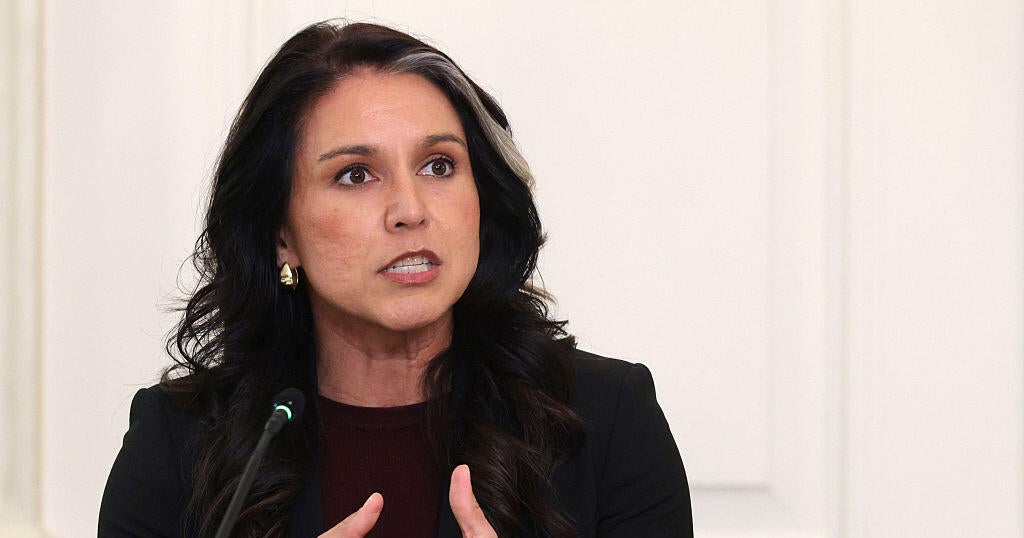
The story of how Director of National Intelligence Tulsi Gabbard ended up at an FBI search in Georgia has become a tangled web of conflicting accounts from the highest levels of government. According to her spokesperson, Alexa Henning, both President Trump and Attorney General Pam Bondi requested Gabbard’s presence when federal agents searched Fulton County’s elections headquarters. “As the president said, he asked for Director Gabbard to be there,” Henning explained on social media, adding that “Attorney General Bondi also asked for her to be there. Two things can be true at the same time.” However, this explanation came only after inconsistencies emerged between what the president and Gabbard herself had said about the unusual situation.
In a letter addressed to Democratic lawmakers, Gabbard stated clearly that her presence at the search “was requested by the president.” She further revealed that while there, she helped arrange a brief phone conversation between President Trump and the FBI agents conducting the operation, though she maintained that the president didn’t give the agents any specific instructions during that call. This raised immediate red flags among Democrats and civil liberties advocates, who questioned why the nation’s top intelligence official would be present at a domestic law enforcement operation—a practice that blurs the lines between intelligence gathering and criminal investigation in potentially troubling ways.
Presidential Contradictions at the Prayer Breakfast
The confusion deepened when President Trump addressed the matter at the National Prayer Breakfast on Thursday morning. Speaking to the gathered audience, he placed the responsibility squarely on Attorney General Bondi’s shoulders, saying Gabbard attended “at Pam’s insistence.” The president elaborated, “She took a lot of heat two days ago because she went in, at Pam’s insistence, she went in, and she looked at votes that want to be checked out from Georgia. They say, ‘Why is she doing it?’ Right, Pam? ‘Why is she doing it?’ Because Pam wanted her to do it.” This version of events contradicted what Gabbard had written in her letter to lawmakers just days earlier.
Making matters even more perplexing, the president had given an entirely different answer just the day before. During a Wednesday interview with NBC News, when directly asked why Gabbard was present at the search, President Trump responded simply, “I don’t know.” He then pivoted to discussing broader concerns about election security, stating, “But a lot of the cheating comes from, it’s international cheating.” This comment appeared to be an attempt to justify the intelligence director’s involvement by framing election security as a national security matter with international dimensions. The shifting explanations left observers wondering which account, if any, represented the truth about how and why Gabbard came to be at the FBI search.
White House Damage Control
When White House press secretary Karoline Leavitt faced reporters during Thursday’s briefing, she was pressed to explain the apparent contradictions between the president saying he didn’t know why Gabbard was present and Gabbard claiming he had directed her to attend. Leavitt defended the president’s statements by arguing that critics were cherry-picking his words rather than considering his complete response. “I was in the room for that NBC interview, and he just said exactly what I told you which is election security is essential to national security,” Leavitt explained. “We need to ensure that our elections are free and are fair and are free of foreign interference. And he spoke about how Ms. Tulsi Gabbard is involved in that effort. So you’re taking like the first three words that he said to one question and not looking at his entire response.”
This explanation attempted to reframe the entire situation as being about protecting America’s elections from foreign interference, thereby justifying the involvement of the Director of National Intelligence. However, the defense didn’t address the fundamental inconsistencies in the timeline of who knew what and who authorized Gabbard’s attendance. It also sidestepped the concerns raised by lawmakers and legal experts about whether it was appropriate for the DNI to be present at a domestic law enforcement operation, regardless of who asked her to be there.
Democratic Outrage and Calls for Accountability
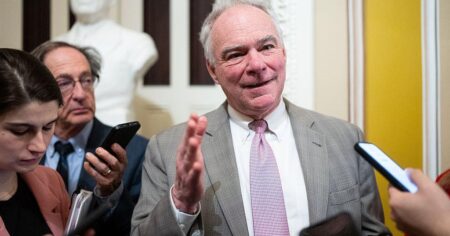
Democrats in Congress responded forcefully to the news of Gabbard’s involvement in the FBI search, viewing it as an inappropriate mixing of intelligence operations with domestic law enforcement. Virginia Senator Mark Warner, who serves as the top Democrat on the Senate Intelligence Committee, led the charge by calling for Gabbard to testify under oath about her actions. “She needs to explain why she believed it was appropriate to involve herself in a domestic criminal investigation,” Warner stated, capturing the concerns of many who see clear boundaries between the roles of intelligence agencies and law enforcement organizations.
The criticism reflects longstanding American principles about the separation of intelligence gathering from domestic policing, protections put in place to prevent the kind of government overreach that characterizes authoritarian regimes. The Director of National Intelligence oversees agencies focused on foreign threats, while the FBI handles domestic criminal investigations. When these lines blur, critics argue, it opens the door to potential abuses of power, political interference in law enforcement, and the targeting of domestic political opposition under the guise of national security concerns.
Fulton County Fights Back and Historical Context
Meanwhile, officials in Fulton County, Georgia, are fighting to get their election materials back. County Commission Chairman Robb Pitts held a news conference on Wednesday to announce that local officials had formally asked a federal judge to order the return of the 2020 election ballots and other materials seized by the FBI. “This is a serious case,” Pitts declared with evident frustration. “Our Constitution is at stake in this fight. The Constitution is the law of the land. It is not a suggestion.” His strong words reflected the tension between local election officials trying to maintain custody of their records and federal authorities investigating election processes years after the fact.
The historical context makes this situation particularly significant. Georgia played a pivotal role in the 2020 presidential election, with Joe Biden winning the state by fewer than 12,000 votes in what was one of the tightest margins in the nation. That narrow result was subsequently confirmed through multiple recounts and audits, all of which verified Biden’s victory. Despite this thorough vetting process, President Trump has persistently claimed, without credible evidence, that the 2020 election was rigged and stolen from him. The fact that Trump won Georgia in the 2024 election adds another layer of complexity to the ongoing investigation of 2020 election materials. Critics see the FBI search and Gabbard’s involvement as part of a continued effort to undermine confidence in the 2020 election results, while supporters argue it represents legitimate concerns about election security and potential foreign interference. Whatever the motivations, the conflicting explanations from top government officials about such a sensitive operation raise serious questions about transparency, accountability, and respect for the constitutional boundaries that have traditionally governed American democracy.