


Sheriff Dawanna Witt Opens Up About Immigration Crackdown in Minneapolis
Feeling Scapegoated While Seeking Solutions
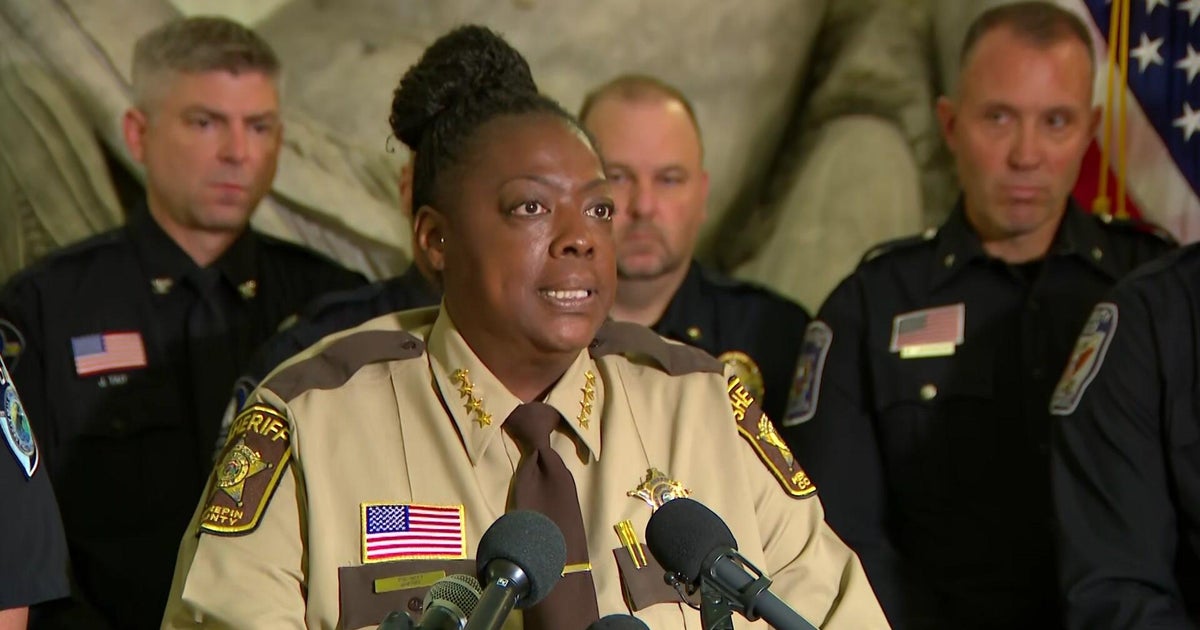
Sheriff Dawanna Witt of Hennepin County has finally broken her silence about the federal immigration enforcement operation that has turned Minneapolis upside down. In her first major interview since “Operation Metro Surge” began, Witt opened up about feeling unfairly blamed for problems she didn’t create, while simultaneously expressing willingness to find common ground with federal authorities. She’s tired of being portrayed as the villain in a situation where she believes everyone shares responsibility. “We’ve definitely been scapegoated,” she said plainly, explaining that she’s actively looking for people who understand what real negotiation means—not a one-sided takeover, but genuine collaboration. The Trump administration has repeatedly pointed fingers at Minnesota officials, claiming they’re releasing dangerous criminals rather than cooperating with Immigration and Customs Enforcement (ICE). But Witt pushes back hard against this narrative. Her office has worked alongside federal agencies like the ATF, DEA, U.S. Marshals, and Homeland Security Investigations for years on serious criminal cases involving human trafficking and sexual exploitation. The difference, she emphasizes, is that her department doesn’t do civil immigration enforcement—and never has. When White House border czar Tom Homan requested blanket access to her jails, Witt’s response was straightforward: get a judge to sign a warrant. When Homan suggested there might be too many cases for judicial warrants, Witt didn’t mince words, pointing out there are fewer than 100 immigration detainers in county jails statewide. If that’s overwhelming the system, she argues, then the problem isn’t with local sheriffs—it’s with the immigration system itself.
The High Cost of Federal Operations on Local Law Enforcement
The last two weeks have taken an enormous toll on Hennepin County’s law enforcement resources, both financially and emotionally. Witt described the period as “exhausting” for her deputies, who’ve been pulled from their regular duties to manage protests around the Whipple Federal Building where federal immigration operations are centered. The financial impact alone has been staggering—over half a million dollars in overtime expenses, money pulled from a department that was already understaffed and in the middle of conducting a formal staffing study to address those shortages. This isn’t sustainable, and Witt knows it. Her county is Minnesota’s largest, housing the state’s biggest jail, which typically operates at about 85% capacity. More than 90% of the people locked up there face violent felony charges. As she put it bluntly, there simply isn’t room for people whose only violation is a civil immigration matter. The strain on resources comes at the worst possible time, when her community needs effective local policing more than ever. Witt expressed concern that criminals are watching closely, looking for opportunities to take advantage while Minneapolis law enforcement is stretched thin dealing with the federal operation. She can’t afford to take her eyes off ongoing local crime while managing the chaos created by Operation Metro Surge. The sheriff is painfully aware that when federal agents eventually leave town, it’ll be local authorities left to pick up the pieces and rebuild whatever trust remains between law enforcement and the community.
The Tragedy That Shook Trust to Its Core
Nothing has damaged trust between law enforcement and the Minneapolis community more than the fatal shooting of Alex Pretti. When asked about the incident, captured on video that circulated widely, Witt was clear and emotional in her response. “People film us all the time. Mr. Pretti should not be dead,” she said without hesitation. The idea that filming police could somehow justify shooting someone struck her as absolutely absurd. The Hennepin County Medical Examiner has since ruled Pretti’s death a homicide, adding official weight to what many in the community already felt in their hearts. For Witt, who chose law enforcement as her profession, the incident represents a fundamental betrayal of what policing should be. “I can’t fathom where in one of the most noble professions that becomes acceptable,” she said, her frustration evident. She believes more people in law enforcement need to speak up when they witness unacceptable conduct, rather than remaining silent. The tragedy has compounded an already difficult situation, further eroding whatever fragile trust existed between Minneapolis residents and anyone wearing a badge—local, state, or federal. Witt recognizes that the actions of some federal agents during Operation Metro Surge have tarnished the reputation of all law enforcement. She’s received stacks of constituent emails and call logs complaining about federal conduct, and it clearly weighs on her. She worries about the good cops doing everything right who now face public anger for things they didn’t do, and she knows that when the federal operation finally ends, local authorities will be left trying to repair relationships that took years to build but only weeks to destroy.
The Children Paying the Highest Price
Perhaps nothing troubles Sheriff Witt more than the impact this operation is having on children. When the Columbia Heights School District closed for a day due to a credible threat, Witt spoke not just as a sheriff but as a mother. Her own daughter works as a special education assistant teacher in that district and has witnessed firsthand the fear and trauma students are experiencing. “We talk about trauma all the time—and here we are,” Witt said, her voice tight with emotion. “Haven’t we learned anything?” According to school district records, at least six students have been detained by federal immigration authorities since the surge began in December. One case particularly stands out—that of five-year-old Liam Ramos, an Ecuadorian preschooler held for more than a week with his father at an immigration facility in south Texas before a federal judge ordered his return. For Witt, these cases represent a fundamental failure to protect the most vulnerable. “We are traumatizing these kids. We are robbing them of their futures,” she said passionately. Minnesota’s educational outcomes have already fallen behind, and this is the last thing schools need. Children should feel safe at school and confident their families will be there when they get home. They shouldn’t carry adult worries at such young ages. The long-term impact concerns Witt deeply—many schools in her county have requested additional patrols and assistance around their facilities because students and staff are frightened. When asked whether federal officials are listening to the concerns of parents and families, Witt’s response was blunt: “If they are, I haven’t seen it. All I hear is, ‘This is your fault—blue cities, blue states.’ No—it’s everybody’s fault.”
Walking a Fine Line Between Duty and Community
Sheriff Witt finds herself in an impossible position, criticized from multiple sides for simply trying to do her job. Some critics have accused her of siding with ICE by deploying deputies and National Guard members near the federal courthouse. Witt pushed back firmly against this characterization, pointing out that the Whipple building is within her primary patrol area—protecting it is literally part of her job description. The building houses federal offices including an immigration court and ICE detention facilities, making it a natural focal point for protests. Her presence there, she insists, has been about de-escalation and protecting protesters’ First Amendment rights, not about helping federal immigration agents. She recalls the criticism police faced in 2020 when people asked, “Where were the police?” during civil unrest. Now her deputies are present, and people accuse them of helping ICE—she can’t win either way. Despite the criticism, many residents have expressed gratitude to her for keeping protests peaceful, which gives her some measure of reassurance that she’s on the right path. “We protect life, property, and liberty—even when people are angry,” Witt remarked, summarizing what she sees as the core mission of law enforcement. This philosophy reflects her attempt to serve everyone in her community fairly, regardless of their immigration status or political views. She’s willing to consider notifying ICE before releasing people accused of the absolute worst crimes—murder, rape, and violent felonies—but draws a hard line at holding anyone even one minute past their court-ordered release. The legal liability is too great, and if they slow-walk releases, her department will face lawsuits. It’s a delicate balance between cooperating with federal partners on serious criminal matters and protecting the constitutional rights of everyone in her custody.
Looking Toward a Difficult Future
As Sheriff Witt looks ahead, she’s focused on getting the right people to the table to figure out what actually needs to change. She wants the U.S. attorney from Minneapolis involved to clarify what’s legal, what isn’t, and what must realistically happen to enable a drawdown of federal agents from the Twin Cities. Behind the scenes, she’s been reaching out to sheriffs across the country and former federal prosecutors to reconcile conflicting legal interpretations, quietly working as a conduit for change even while publicly defending her position. Her top priority remains keeping her community safe—period. She and border czar Tom Homan agree on one fundamental point: the immigration system is broken. They just disagree on how to fix it. While Homan has mentioned working on a plan to reduce the federal presence in Minnesota, Witt says she hasn’t seen any evidence of that actually happening yet. What worries her most is the long-term impact on how young people view law enforcement. Hennepin County still feels the effects of George Floyd’s killing by Minneapolis police in May 2020, and Witt fears that a prolonged, aggressive federal operation will compound that trauma. “If this continues, kids will grow up thinking fear of law enforcement is normal,” she said soberly. “That cannot be the norm.” She understands that trust, once broken, takes years to rebuild, and every day Operation Metro Surge continues makes that rebuilding harder. Witt remains open to cooperation, but on terms that respect both the law and the dignity of everyone in her community. She’s not looking for a one-sided victory for either federal authorities or local officials—she’s looking for actual solutions that acknowledge the complexity of immigration, public safety, and constitutional rights. Whether such solutions can be found in the current political climate remains uncertain, but Witt seems determined to keep trying, even when it means standing in the uncomfortable middle ground where everyone seems angry at her.