

Federal Judge Blocks Deportation of 350,000 Haitian Immigrants in Last-Minute Ruling
Court Issues Emergency Protection for TPS Beneficiaries
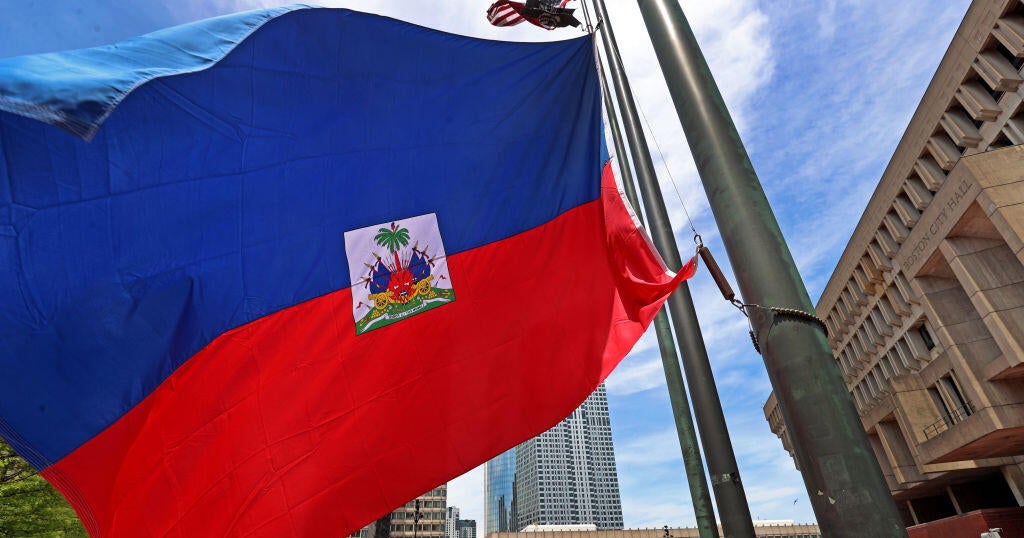
In a dramatic eleventh-hour decision, a federal judge stepped in on Monday to protect hundreds of thousands of Haitian immigrants from losing their legal status in the United States. U.S. District Court Judge Ana Reyes halted the Trump administration’s plan to terminate the Temporary Protected Status (TPS) program for Haiti, which would have stripped approximately 350,000 immigrants of their deportation protections beginning Tuesday. The ruling doesn’t just delay the termination—it indefinitely suspends it, preventing the government from canceling work permits, revoking legal status, or arresting and deporting those currently enrolled in the program. For the thousands of Haitian families who had been living in uncertainty and fear, the decision offered a temporary but significant reprieve from the threat of forced return to a country many haven’t seen in over a decade.
Judge Condemns Decision as “Arbitrary” and Racially Motivated
Judge Reyes didn’t simply block the administration’s action—she delivered a scathing critique of how Homeland Security Secretary Kristi Noem reached her decision to end Haiti’s TPS designation. In her written opinion, Reyes determined that Noem’s decision violated the Administrative Procedures Act by being “arbitrary and capricious,” meaning it lacked proper justification and failed to follow required legal processes. Most significantly, the judge found that the decision ignored “overwhelming evidence of present danger” facing people in Haiti today. The Caribbean nation continues to struggle with severe political instability, rampant gang violence that has overtaken much of the capital, and crushing poverty that affects the majority of its population. Perhaps most controversially, Judge Reyes concluded that racial prejudice played a role in the decision-making process. She pointed to derogatory statements made by both Secretary Noem and President Trump about Haiti and immigrants as evidence of “racial animus” influencing policy. While acknowledging that Noem has First Amendment rights to her opinions, the judge firmly stated that as Secretary, she has constitutional and legal obligations to apply facts faithfully when implementing programs like TPS—something Reyes found she failed to do.
Administration Vows to Fight Ruling at Supreme Court
The Trump administration wasted no time signaling its intention to challenge Judge Reyes’ decision. Tricia McLaughlin, spokesperson for the Department of Homeland Security, dismissed the ruling as “lawless activism” and announced plans to take the case to the Supreme Court, expressing confidence that the administration would ultimately prevail. McLaughlin defended the decision to end Haiti’s TPS by arguing that the program had outlived its original purpose. She noted that Haiti’s TPS designation was initially granted following a devastating earthquake more than 15 years ago and was never meant to serve as a permanent solution. According to the administration’s perspective, what was designed as temporary humanitarian relief has been misused by previous administrations as “a de facto amnesty program” that has continued for decades beyond its intended scope. This framing reveals the fundamental disagreement at the heart of the case: whether TPS should respond to ongoing conditions in the home country or be strictly limited to the specific disaster that initially triggered the designation.
Understanding Temporary Protected Status and Its History
To fully grasp what’s at stake in this legal battle, it’s important to understand what TPS actually is and how it’s supposed to work. Congress created the Temporary Protected Status program in 1990 as a humanitarian tool that allows the United States to provide legal refuge to foreign nationals when their home countries become unsafe due to specific circumstances. These can include armed conflict, environmental disasters like earthquakes or hurricanes, epidemics, or other extraordinary conditions that would make returning people to those countries dangerous or untenable. Both Democratic and Republican administrations have used TPS over the past three decades, granting protections to people from various countries experiencing crises. Recipients of TPS can legally live and work in the United States for designated periods, with the possibility of extensions if dangerous conditions in their home countries persist. The program was designed with flexibility in mind—recognizing that disasters and conflicts don’t always resolve on predictable timelines. Haiti’s designation following the catastrophic 2010 earthquake is one of the longest-running TPS programs, which has made it a focal point in debates about whether these “temporary” protections should have limits regardless of ongoing危险.
Broader Implications: Hundreds of Thousands Face Uncertainty
The legal challenge over Haiti’s TPS is just one piece of a much larger policy shift underway. The Trump administration has taken steps to dismantle most TPS programs across the board, potentially affecting hundreds of thousands of immigrants from nearly a dozen countries. People from Afghanistan, Cameroon, Ethiopia, Honduras, Myanmar, Nepal, Nicaragua, Somalia, South Sudan, Syria, and Venezuela all face the prospect of losing their legal protections under the administration’s actions. For these immigrants—many of whom have lived in the United States for years or even decades, built careers, purchased homes, and raised American-born children—the termination of TPS would mean an impossible choice: return to countries they may barely remember and where danger still exists, or remain in the United States without legal status, living in the shadows and vulnerable to deportation. The administration’s rationale for these sweeping changes rests on two main arguments: first, that TPS programs create an incentive for illegal immigration, as people hope to eventually benefit from such protections; and second, that Democratic administrations have abused these programs by extending them far beyond their reasonable lifespan, turning temporary relief into semi-permanent immigration status.
The Human Reality Behind the Legal Battle
Behind the legal arguments and political rhetoric are real people whose lives hang in the balance. The 350,000 Haitians with TPS aren’t recent arrivals—many have been in the United States since the 2010 earthquake or even earlier disasters. They’ve become nurses and construction workers, small business owners and teachers. They pay taxes, contribute to their communities, and have children who are American citizens. For them, Monday’s court decision means they can breathe a little easier, at least for now. They can continue going to work without fear of arrest, continue supporting their families, and continue living the lives they’ve built. But the reprieve is shadowed by uncertainty about what comes next. If the administration succeeds in its Supreme Court appeal, or if Judge Reyes’ injunction is eventually lifted, they’ll face the terrifying prospect of return to a Haiti that remains desperately dangerous. Port-au-Prince and other major cities are largely controlled by armed gangs, government services have collapsed in many areas, and the political situation remains chaotic. For many TPS holders, being sent back would mean returning to a country they barely recognize, where they have few remaining connections and where their safety cannot be guaranteed. This human dimension—families torn between two countries, children who’ve only known America, workers who’ve contributed to their communities for over a decade—is what makes the TPS debate so much more than an abstract legal or political issue. It’s about people’s lives, their safety, and fundamental questions about America’s humanitarian obligations and immigration values.