

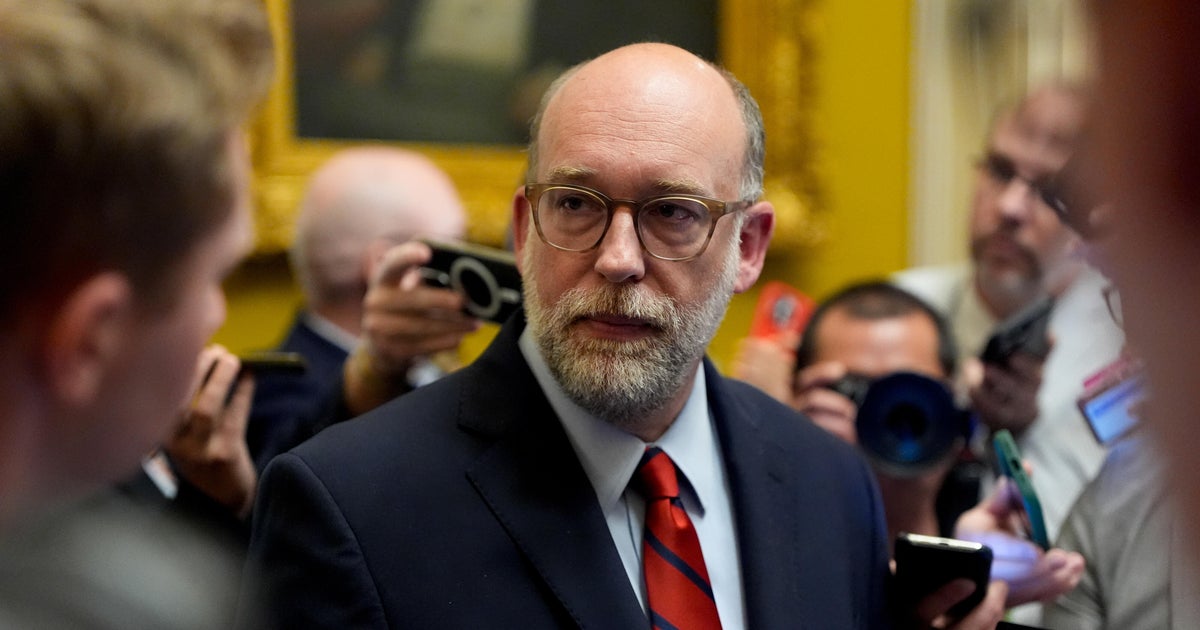

Maryland Man Arrested for Alleged Plot Against Trump Official Russell Vought
A Politically-Motivated Threat Unfolds
In a chilling case that highlights the dangerous intersection of political extremism and mental health crisis, a 26-year-old Maryland man now faces serious criminal charges after allegedly targeting a high-ranking Trump administration official. Colin Demarco of Rockville was arrested on January 22 by Arlington County Police and charged with attempted murder. According to court documents and sources close to the investigation, Demarco appeared at the Northern Virginia home of Russell Vought, the Director of the Office of Management and Budget, wearing a surgical mask and gloves in what authorities believe was a premeditated attack. The incident occurred in August, but the investigation took months as U.S. Marshals pieced together evidence from doorbell camera footage, digital communications, and interviews with Demarco himself. He is scheduled to appear in court on February 23 to answer for charges that could result in significant prison time. The case has drawn attention not only because of its severity but also because it represents the growing threat of political violence against government officials in an increasingly polarized America.
The Investigation and Disturbing Evidence
The investigation into Demarco’s activities revealed a deeply troubled individual who had allegedly been planning violence for months. On August 10, Ring doorbell camera footage captured Demarco at Vought’s Arlington home, dressed suspiciously in gloves, a backpack, sunglasses, and a surgical mask. He was seen rifling through Vought’s mailbox and approaching a neighbor to inquire whether anyone was home. The neighbor later told investigators that Demarco appeared to have a gun concealed under his shirt, though he initially misidentified the suspect. U.S. Marshals eventually confirmed Demarco’s identity and interviewed him at his Rockville residence. During questioning, Demarco admitted to traveling to Arlington but claimed he was looking for a job—a story investigators found implausible given the circumstances. He eventually acknowledged that he went to Vought’s home to confront him about Project 2025, the controversial conservative policy blueprint, though he denied having a weapon or any intention to harm anyone. However, the digital evidence told a different story. When investigators obtained a warrant for Demarco’s iCloud account, they discovered deeply concerning notes, including one titled “Body Disposal Guide” with instructions like “always wear rubber gloves” and “make an airtight alibi.” Another note, called “Dad’s Gun Stash,” mentioned a fully loaded .357 Magnum Colt revolver, though a partial search of his room didn’t locate any weapons.
Political Desperation and Dangerous Admiration
What makes this case particularly alarming is the insight it provides into Demarco’s mindset and motivations. According to the criminal complaint, Demarco told federal agents that the November 2024 election was “the lowest point in his life” and that he feared an “impending war and a fascist takeover” following President Trump’s reelection. This political anxiety apparently drove him to contemplate violence as a solution. Even more disturbing, Demarco expressed admiration for Luigi Mangione, the man charged with murdering former UnitedHealth CEO Brian Thompson in a high-profile case that shocked the nation. This connection suggests that Demarco may have been inspired by other acts of politically or ideologically motivated violence. His Discord messages, uncovered during the investigation, painted an even darker picture. In these private communications, Demarco allegedly wrote about his desire to kill President Trump himself, stating: “The more Trump does shit like this, the more I wanna grab a gun and try to shoot him… I am at my wits’ end and this might be the final straw. I want to get a gun, head to DC and kill him.” In other messages, he appeared to reference Vought specifically, telling someone he had found “this guy’s address” and later asking, “Are you willing to put your livelihood on the line and seek out the guy’s home to Luigi him?”—an apparent reference to attacking Vought in the manner Mangione allegedly attacked Thompson.
A History of Mental Health Crisis
Demarco’s case also highlights the complex relationship between mental health struggles and potential violence. According to court documents, he had previously come to law enforcement’s attention in November 2024, when he was taken into custody in Maryland under a mental illness emergency petition. During that incident, Demarco reportedly asked a police officer to either run him over or shoot him, expressing that he wanted to die because Trump had been elected president. Even more chilling, he told authorities at that time that he had created a manifesto and that once it was completed, he would “kill people.” Despite this clear warning and his temporary detention, Demarco was apparently released and continued to plan what prosecutors allege was an attempt on Vought’s life. This raises serious questions about the gaps in the mental health system and the mechanisms designed to prevent individuals in crisis from harming themselves or others. The fact that someone who explicitly stated an intention to kill people after completing a manifesto was later found at a government official’s home with what appeared to be a weapon suggests potential failures in follow-up care, monitoring, or intervention. Mental health professionals and law enforcement officials nationwide are grappling with how to identify and help individuals who pose genuine threats while respecting civil liberties and providing appropriate care rather than simply criminalization.
Russell Vought: A Controversial Figure Under Threat
Russell Vought has become one of the most polarizing figures in the Trump administration, making him a natural target for those who oppose the president’s agenda. As the architect of Schedule F—a regulatory framework designed to reclassify thousands of federal workers to make them easier to fire—Vought has been at the center of what critics call an unprecedented assault on the civil service. In private speeches made before Trump took office, Vought reportedly said he wanted to put career civil servants “in trauma,” according to reporting by ProPublica. He has led mass firings of federal government employees during Trump’s second administration and played a key role in developing Project 2025, the Heritage Foundation-backed initiative that proposes a radical restructuring of government to consolidate power in the executive branch. These controversial positions and actions have made Vought the subject of numerous credible threats, according to court filings and sources familiar with the matter. He now requires a security detail from the U.S. Marshals Service, the same federal law enforcement agency that investigated Demarco’s alleged plot. An OMB spokesperson expressed gratitude “for the work of law enforcement in keeping Director Vought and his family safe.” Vought is not alone in facing such threats—several sources told CBS News that Health and Human Services Secretary Robert F. Kennedy Jr. also receives government protection due to the volume and credibility of threats against him.
Unanswered Questions and the Path Forward
Several aspects of this case remain unclear as it moves through the legal system. Perhaps most puzzling is why Demarco is facing state charges in Arlington County rather than federal charges from the U.S. Attorney’s Office for the Eastern District of Virginia. The case was primarily investigated by the U.S. Marshals Service, a federal agency, and Demarco crossed state lines from Maryland to Virginia—circumstances that would typically warrant federal prosecution. For comparison, that same U.S. Attorney’s Office obtained an indictment in mid-January against another individual for leaving a threatening message for Kennedy Center president Richard Grenell, just days before Demarco’s arrest. The decision to pursue state rather than federal charges may involve prosecutorial strategy, jurisdictional considerations, or other factors not apparent in public documents. Demarco has retained legal counsel, though the Arlington public defender’s office declined to provide details about his representation. As the case proceeds toward his February 23 court appearance, it will likely raise broader questions about political violence, the responsibility of political rhetoric in inspiring such acts, the adequacy of mental health interventions, and the security challenges facing government officials in an era of extreme polarization. Regardless of one’s political views, this case serves as a sobering reminder that the heated language of contemporary politics can have real and dangerous consequences when it intersects with individual instability and grievance.