

Republicans Push Back Against Democratic Immigration Reform Demands as Funding Deadline Looms
Growing Tensions Over Homeland Security Funding
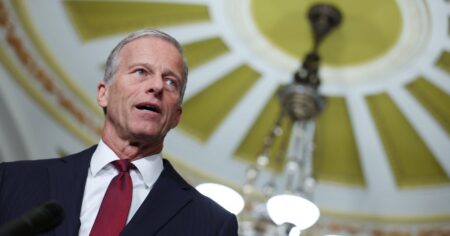
The political standoff in Washington intensified this week as Senate Republicans sharply criticized a comprehensive list of immigration enforcement reforms presented by Democratic leadership, casting serious doubt on whether lawmakers can reach an agreement to keep the Department of Homeland Security funded beyond next week’s critical deadline. Senate Majority Leader John Thune didn’t mince words when he addressed his colleagues on the Senate floor Thursday, making it crystal clear that negotiations have hit a significant roadblock. “As of right now, we aren’t anywhere close to having any sort of an agreement that would enable us to fund the Department of Homeland Security,” Thune stated, his comments reflecting the deep partisan divide that continues to plague efforts to keep this vital government agency operational.
The brewing crisis comes after the House managed to pass legislation earlier this week to fund most government operations following a four-day partial shutdown that left many Americans anxious about essential services. However, lawmakers deliberately chose to extend funding for the Department of Homeland Security only through February 13th, creating an extremely tight window for negotiations. This short-term extension was intended to provide breathing room for both parties to hammer out a longer-term funding solution while simultaneously addressing growing concerns about immigration enforcement practices that have dominated headlines and town halls across the country in recent months.
Democrats’ Comprehensive Reform Proposals
On Wednesday evening, Senate Minority Leader Chuck Schumer and House Minority Leader Hakeem Jeffries unveiled an ambitious package of policy proposals designed to impose what they called “guardrails” on the Department of Homeland Security and its immigration enforcement operations. The Democratic leaders framed their demands as common-sense accountability measures that respond to legitimate concerns from constituents across America who have witnessed troubling incidents during immigration enforcement operations. Their proposals included several specific operational changes to how Immigration and Customs Enforcement agents conduct their duties in communities nationwide.
Among the most notable demands was a requirement that immigration agents be prohibited from wearing masks while on duty, coupled with mandates that they prominently display identification and utilize body cameras during all enforcement activities. The Democratic proposal also called for strict limitations on agents entering private property without first obtaining judicial warrants, addressing concerns that have been raised by civil liberties advocates and immigrant communities about potential constitutional violations. Perhaps most significantly, the Democrats insisted that agents must verify that individuals are not U.S. citizens before placing them in immigration detention facilities, a response to several high-profile cases where American citizens were mistakenly detained or even deported.
“The American people rightfully expect their elected representatives to take action to rein in ICE and ensure no more lives are lost,” Schumer and Jeffries wrote in their joint statement. “It is critical that we come together to impose common sense reforms and accountability measures that the American people are demanding.” The Democratic leaders went even further, outlining immediate steps they want the administration to take as a show of “good faith,” including the controversial demand for the removal of DHS Secretary Kristi Noem from her position and a complete wind-down of immigration operations currently underway in Minneapolis, which has become a flashpoint in the national debate over immigration enforcement tactics.
Republican Response and Counterarguments
Senate Majority Leader Thune, representing South Dakota, didn’t hold back in his assessment of the Democratic proposals, characterizing them as “unrealistic and unserious” and expressing frustration that Democrats weren’t “even willing to engage in a negotiation and discussion to try and reach a result.” His comments reflected a broader Republican perspective that the Democratic demands represent political theater rather than genuine attempts at compromise. “This is not a blank-check situation where Republicans just agree to a list of Democrat demands,” Thune emphasized, making clear that his party expects meaningful negotiation rather than one-sided capitulation to Democratic priorities.
Senator Katie Britt of Alabama, who has been designated to lead negotiations on behalf of Senate Republicans, responded swiftly and forcefully to the Democratic proposal on social media Wednesday night. She dismissed it as a “ridiculous Christmas list of demands for the press,” suggesting that Democrats were more interested in scoring political points with their progressive base than in finding workable solutions. “This is NOT negotiating in good faith, and it’s NOT what the American people want,” Britt declared. “They continue to play politics to their radical base at the expense of the safety of Americans. DHS, FEMA, Secret Service, and the Coast Guard run out of money in 9 days. Democrats don’t seem to care one bit.” Her comments highlighted Republican concerns that the funding crisis encompasses not just immigration enforcement but also critical agencies like the Federal Emergency Management Agency, the Secret Service, and the Coast Guard, all of which face operational disruptions if funding lapses.
However, away from the public posturing on the Senate floor, Thune struck a somewhat more conciliatory tone when speaking with reporters. He acknowledged that while many items on the Democratic list appeared designed primarily for “messaging” purposes, there might be “some room there” for actual negotiations. “There’s some things that could get done,” Thune conceded, “but, you know, you have to have people at the table to do that.” This suggests that beneath the heated rhetoric, there may still be potential pathways to compromise, though the extremely compressed timeline makes reaching any agreement exceptionally challenging.
Republican Priorities and Concerns
Thune used his floor speech to outline what Republicans view as essential elements that must be addressed in any immigration enforcement discussion. He pointed to what he characterized as a “climate of harassment — and worse — that law enforcement has been facing, simply trying to do their jobs,” suggesting that immigration agents themselves need protection and support as they carry out enforcement operations. This perspective reflects a fundamental disagreement between the parties about whether recent immigration enforcement activities represent necessary law enforcement or constitute overreach that threatens civil liberties and community safety.
The Republican leader also emphasized the need to address cooperation between federal and local law enforcement agencies, criticizing what he described as situations where “too many jurisdictions prohibit local law enforcement from cooperating with Immigration and Customs Enforcement.” This comment appeared directed at so-called sanctuary city policies, which Republican lawmakers have consistently opposed and which have become a major point of contention in immigration debates. Republicans argue that these policies undermine federal immigration enforcement and create safe havens for individuals who have violated immigration laws, while Democrats and local officials in these jurisdictions counter that such policies are necessary to maintain trust between immigrant communities and local police departments.
Thune placed the responsibility for moving negotiations forward squarely on Democratic shoulders, noting that Democrats had insisted on the short two-week funding extension that created the current time crunch. “We have one week and one day left to pass the Department of Homeland Security appropriations bill,” he observed. “The onus is on Democrats to negotiate in good faith and reach an agreement quickly.” He argued that reopening negotiations means “taking up ideas and priorities from both sides” and expressed hope that Democratic colleagues would be “ready to have some conversations with the White House about these and other issues.”
Seeking Middle Ground Amid Political Pressure
Despite the harsh public statements from both sides, there are some indications that room for compromise may exist. Thune pointed to recent administrative actions as evidence that “the White House has demonstrated that it’s taking things seriously,” specifically highlighting a decision to require all immigration agents operating in Minneapolis to wear body cameras and the withdrawal of some personnel from that city. These moves came in response to intense criticism of enforcement operations in Minneapolis, suggesting that the administration may be willing to implement certain reforms even without congressional mandate.
The challenge facing negotiators is finding common ground on reforms that satisfy Democratic concerns about civil liberties and accountability while addressing Republican priorities regarding law enforcement support and inter-agency cooperation. The body camera requirement that the administration has already implemented in Minneapolis could potentially serve as a template for broader reforms that both parties might accept. Similarly, there may be room for agreement on identification display requirements and verification procedures that protect U.S. citizens from mistaken detention while still allowing effective immigration enforcement.
However, the extremely tight timeline compounds the difficulty of reaching any comprehensive agreement. With only nine days until funding expires for the Department of Homeland Security and all its component agencies, there is precious little time for the detailed negotiations, legislative drafting, and procedural steps necessary to pass funding legislation through both chambers of Congress. The consequences of failure extend well beyond immigration enforcement, potentially affecting disaster response capabilities through FEMA, presidential security through the Secret Service, and maritime safety through the Coast Guard. This broader impact creates additional pressure on negotiators to find solutions, even as partisan divisions on immigration policy remain as wide as ever. As both parties continue their public posturing, the coming days will reveal whether genuine compromise is possible or whether the nation faces another crisis of government funding and essential services.