


Israel Escalates Military Operations in Lebanon Amid Growing Humanitarian Crisis
Expansion of Military Activity and Evacuation Orders
The conflict between Israel and Hezbollah has entered a dangerous new phase as Israeli Defense Minister Israel Katz announced plans to significantly expand military operations in Lebanon. Speaking from a military operations center in Tel Aviv on Thursday, Katz delivered a stark warning to the Lebanese government, making it clear that Israel would take matters into its own hands if Lebanese authorities failed to control Hezbollah’s activities. The Israeli Defense Forces (IDF) issued a new and expanded evacuation order for southern Lebanon, dramatically increasing the area from which civilians must flee. The evacuation zone now stretches beyond the Litani River all the way to the Zahrani River, encompassing significantly more territory than previous orders. Most notably, the city of Nabatieh, home to at least 35,000 residents, has been added to the evacuation list, forcing tens of thousands of people to leave their homes with little notice. Katz’s message was unequivocal: if the Lebanese government cannot prevent Hezbollah from threatening northern Israeli communities and launching attacks, Israel will occupy the territory and secure it themselves. Both the Prime Minister and Defense Minister have instructed the IDF to prepare for this expanded military presence, with the stated goal of restoring peace and security to Israel’s northern border communities.
A Long-Term Military Commitment
The Israeli military’s chief of staff, Lieutenant General Eyal Zamir, made it abundantly clear during a visit to the Northern Command that this will not be a brief military operation. Zamir emphasized that Israel is preparing for a sustained campaign, with plans to deploy additional troops and military capabilities to the northern region. His words signal a potentially lengthy engagement that could have far-reaching consequences for both Lebanon and the broader Middle East. The military buildup is substantial, with the Northern Command receiving reinforcements of hundreds of additional troops and intelligence officers, along with enhanced intelligence collection systems and firepower capabilities. Zamir expressed confidence in the operation’s progress so far, citing what he called “excellent results” from the military activities in Lebanon. According to his assessment, Israeli forces have eliminated dozens of militants, intercepted most missile launchers after they fired, and struck numerous terrorist infrastructure sites in Beirut itself. Among the claimed successes, Zamir highlighted the targeting and elimination of the commander of Hezbollah’s Imam Hussein Division, along with his deputy and many of the division’s staff officers. These statements paint a picture of a military campaign that Israel views as both necessary and successful, though such assessments often differ significantly from accounts on the ground.
Devastating Strikes on Beirut and Civilian Areas
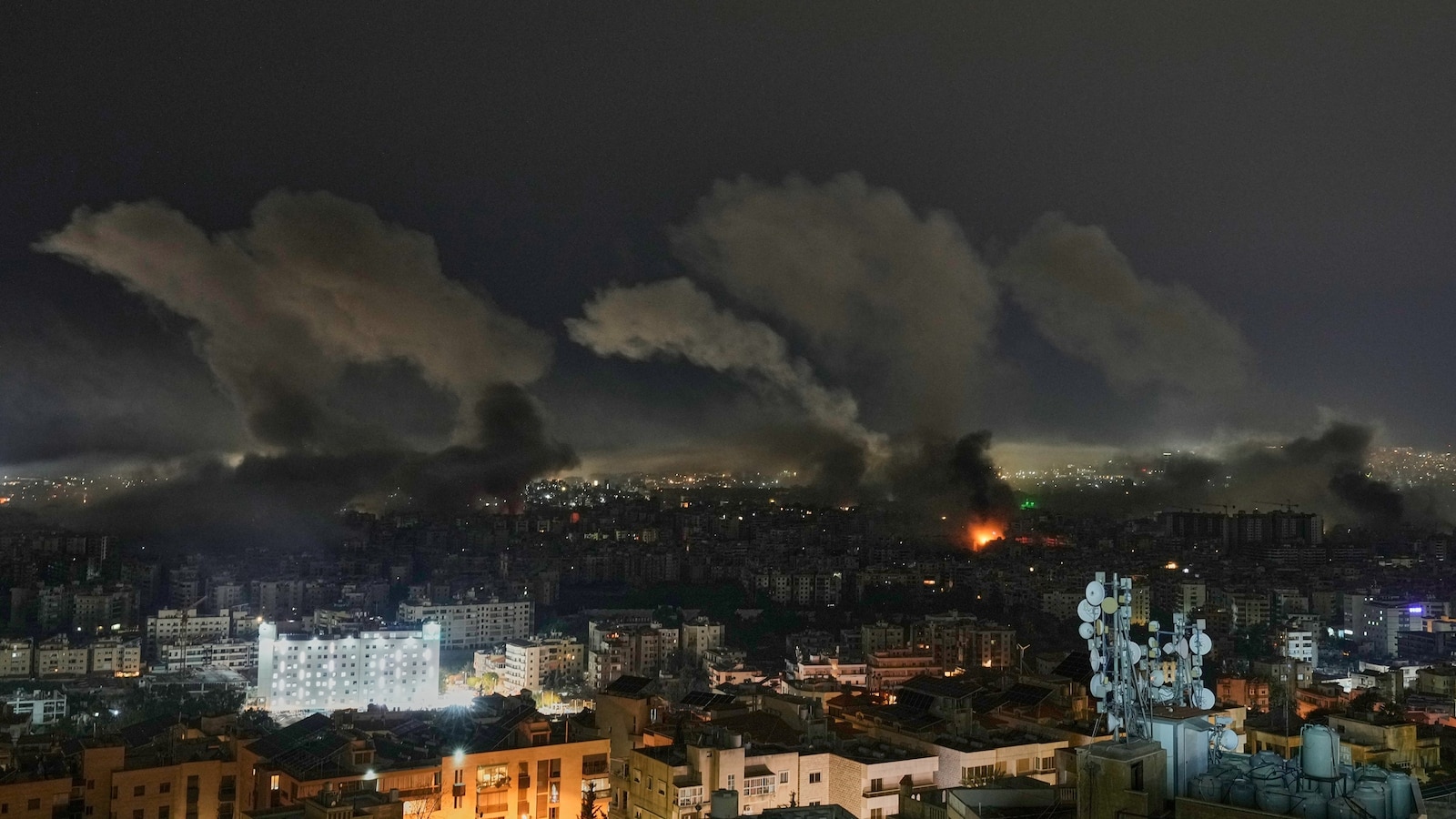
The human cost of this escalating conflict became tragically apparent in recent strikes on Beirut, particularly in areas where civilians had sought refuge. In a deeply troubling development, Israeli airstrikes hit Beirut’s Corniche, a popular seafront area where many residents had evacuated to following IDF orders to leave southern Beirut neighborhoods. These southern areas, known as Hezbollah strongholds, have been subjected to intense bombing over the past twelve days. The overnight strikes on the Corniche killed at least eight people and injured dozens more, according to Lebanon’s Ministry of Public Health. This incident highlights the impossible situation facing many Lebanese civilians, who find themselves caught between evacuation orders and deadly strikes even in areas they believed to be safer. The IDF defended its actions in a statement, saying it continues to conduct extensive waves of strikes from both air and sea in the Beirut area against Hezbollah targets. The military listed terrorist infrastructure, weapons storage facilities, central headquarters, and an Islamic Revolutionary Guard Corps (IRGC) Air Force headquarters in Beirut among the targets struck. The suburb of Dahiyeh in particular has faced intense bombardment, with the IDF announcing a “large-scale wave of strikes on Hezbollah infrastructure” after issuing what it termed an “urgent and dangerous” evacuation alert. In one particularly intense period, Israeli forces struck ten Hezbollah facilities in just thirty minutes, including intelligence headquarters and command centers.
Massive Displacement and Humanitarian Emergency
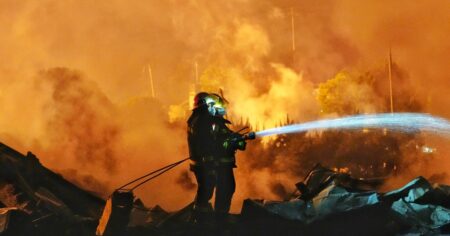
The humanitarian consequences of this military escalation have been catastrophic, with Lebanese officials reporting that approximately 800,000 people have been displaced from their homes in southern Lebanon and Beirut. This massive displacement represents a humanitarian crisis of enormous proportions, with hundreds of thousands of civilians forced to flee with minimal belongings, uncertain of where to find safety or when they might return home. Many of these displaced people are now living in temporary shelters, with relatives in other parts of Lebanon, or in increasingly overcrowded areas that have not yet been targeted by Israeli strikes. The speed and scale of the displacement have overwhelmed local resources and aid organizations trying to provide assistance. Since March 2, when Israel began issuing evacuation warnings amid its airstrikes, the toll has been devastating: over 630 people have been killed and nearly 1,600 injured in Lebanon, according to the Lebanese health ministry. These numbers represent real people—families torn apart, children traumatized, communities destroyed, and lives forever changed. The civilian infrastructure has also suffered tremendous damage, with homes, businesses, and public buildings reduced to rubble. Images from the affected areas show smoke and flames rising from buildings, destroyed homes, and residents standing amid the wreckage of their former lives, trying to comprehend the scale of destruction.
The Cycle of Attacks and Retaliation
The current escalation is part of an ongoing cycle of attacks and counterattacks between Israel and Hezbollah that has intensified dramatically in recent days. Hezbollah has not remained passive in the face of Israeli strikes, launching its own operations against Israeli territory. On Wednesday, the group announced a new operation and launched dozens of rockets toward Israel, demonstrating that despite Israeli military pressure, Hezbollah retains significant capacity to strike back. These rocket attacks have reached central Israel, causing damage to homes and forcing Israeli civilians into shelters. The images from Israel show people standing next to damaged houses, missile interceptions lighting up the sky over cities like Ashkelon, and the constant threat of incoming projectiles. This exchange of fire has created a situation where civilians on both sides of the border live in fear and uncertainty. The intensified Israeli attacks targeting Hezbollah began last week, following Israeli strikes on Iran, Hezbollah’s main backer and sponsor. This broader context connects the current Lebanon operation to the larger regional confrontation between Israel and Iran, with Lebanon serving as one battlefield in this wider conflict. The involvement of the Iranian Revolutionary Guard Corps, with Israel claiming to have struck an IRGC Air Force headquarters in Beirut, further illustrates how this conflict extends beyond just Israel and Hezbollah to encompass the broader geopolitical tensions in the Middle East.
An Uncertain Future and Growing Concerns
As this conflict continues to escalate, serious questions arise about where it might lead and what the ultimate consequences will be for the region. Israel’s stated intention to expand its military operations and potentially occupy parts of southern Lebanon represents a significant escalation that could have long-lasting implications. The warning delivered to the Lebanese president essentially places responsibility on the Lebanese government for controlling Hezbollah, despite the reality that the group operates with significant autonomy and is heavily armed and financed by Iran. The Lebanese government, weakened by years of economic crisis and political instability, has limited capacity to constrain Hezbollah’s actions, making Israel’s ultimatum extremely difficult to fulfill. The prospect of a prolonged Israeli military presence in Lebanon evokes memories of Israel’s previous occupation of southern Lebanon, which lasted from 1982 to 2000 and was marked by sustained conflict, casualties on all sides, and ultimately ended with Israeli withdrawal without achieving its stated objectives. Many observers worry that a new occupation could follow a similar pattern, becoming a protracted engagement with mounting costs and uncertain outcomes. For the people of Lebanon, already suffering through one of the worst economic crises in modern history, this new conflict represents an almost unimaginable additional burden. The massive displacement, loss of life, destruction of property and infrastructure, and the trauma inflicted on entire communities will have effects that last for years, if not generations. As international attention focuses on this escalating conflict, calls for restraint and diplomatic solutions grow louder, but so far, the military actions continue to intensify, suggesting that more suffering lies ahead before any resolution is reached.