
A Political Veteran’s Decision: Jim Clyburn Announces Run for 18th Congressional Term
Standing Strong at 85: Clyburn’s Commitment to Public Service
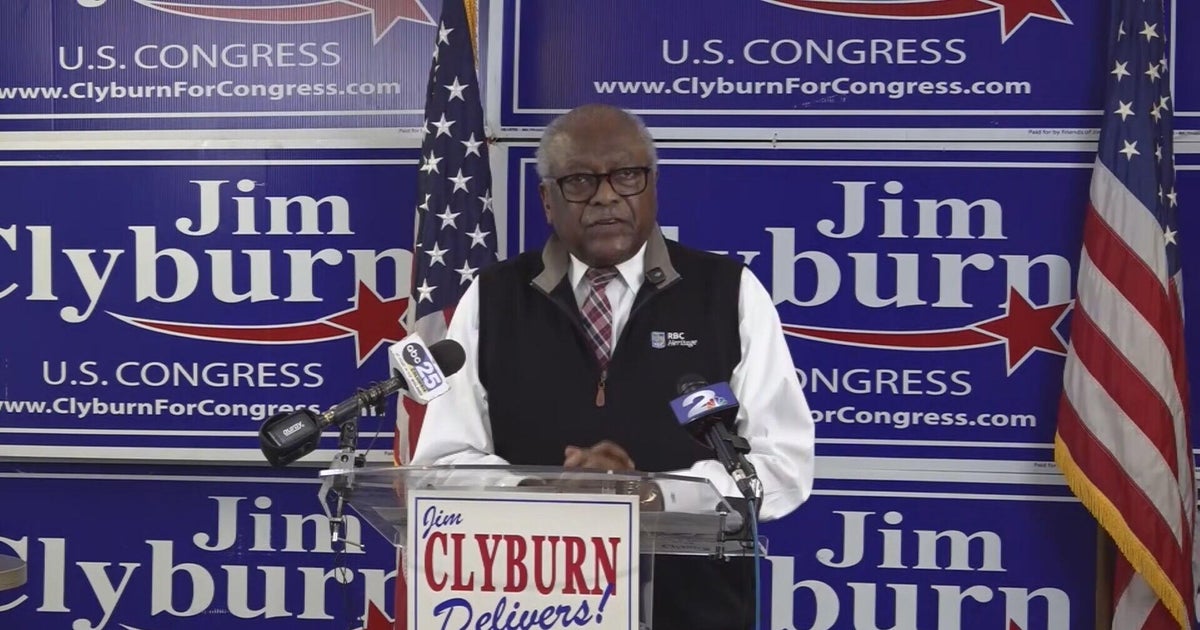
In a significant moment for American politics, Democratic Representative Jim Clyburn of South Carolina stepped before supporters and cameras this Thursday to announce what many had been wondering about for months: he would be running for an unprecedented 18th term in Congress. At 85 years old, Clyburn’s decision carries particular weight, as he now stands as the last remaining member of his generation of House Democratic leadership still seeking to remain in office. Speaking from the South Carolina Democratic Party headquarters in Columbia, surrounded by longtime supporters and political allies, Clyburn didn’t shy away from addressing the elephant in the room—his age and whether he still has what it takes to serve effectively. With characteristic determination, he promised a “very vigorous campaign” and made it clear that this wasn’t a decision he took lightly. The seasoned politician began signing the necessary paperwork immediately, demonstrating that this wasn’t just an announcement but a commitment to action.
The Constitutional Calling: Why Clyburn Says There’s More Work to Do
When Clyburn addressed the question that everyone wanted answered—why continue at this stage of life—he turned to the founding principles of American democracy itself. Referencing the preamble of the U.S. Constitution, he framed his decision in terms that transcended personal ambition or political legacy. “We exist in pursuit of a more perfect union,” he reminded those gathered, emphasizing that this fundamental goal remains unfinished business. For Clyburn, the work of perfecting American democracy isn’t something that simply gets completed; it’s an ongoing mission that requires experienced hands and dedicated hearts. He assured his audience and constituents that he wouldn’t be making this run if he didn’t genuinely believe he was up to the challenge, both mentally and physically. The congressman made a point of emphasizing his health and capability, stating plainly: “If I were not up to it, I would not do it.” This wasn’t bravado but rather a straightforward assessment from someone who has spent decades in the intense environment of national politics and understands exactly what the job demands. He also revealed something deeply personal about his decision-making process—the extensive consultations he held with his three daughters, whose unanimous support ultimately helped him reach this decision.
A Legacy of Leadership: Clyburn’s Historic Role in Congress
To understand the significance of Clyburn’s continued presence in Congress, one must appreciate the historic role he has played in American politics over the past several decades. Since first taking office in 1993, Clyburn has been far more than just another congressman from South Carolina. From 2007 to 2023, he served as the third-ranking Democrat in the House of Representatives, a position that placed him in the inner circle of Democratic Party strategy and legislation. More importantly, during this entire period, he held the distinction of being the highest-ranking African American lawmaker in Congress, making him a trailblazer and a symbol of progress in a institution that has historically lacked diversity in its leadership ranks. His influence extended beyond just his formal title; Clyburn became known as a consensus-builder, someone who could bridge different factions within the party and help forge the compromises necessary to move legislation forward. His leadership style combined Southern charm with political savvy, making him both well-liked and highly effective. Even after stepping down from his position as House Democratic whip in 2023 and serving briefly as assistant leader, Clyburn remained a respected elder statesman whose opinion carried considerable weight in Democratic circles.
The Changing of the Guard: Last of a Generation
Clyburn’s decision to run again comes at a moment when the Democratic Party has been actively wrestling with questions of generational change and new leadership. His announcement takes on added significance because he now stands alone among his cohort of longtime Democratic leaders who are still seeking to remain in Congress. The landscape has shifted dramatically in recent months, with major figures from his era stepping away from the political stage. Former Speaker Nancy Pelosi of California, who became a household name during her years leading the House Democrats, has announced her retirement from Congress. Similarly, former Majority Leader Steny Hoyer of Maryland, another towering figure in Democratic politics, has also decided to hang up his congressional hat. Both Pelosi and Hoyer had previously stepped down from their leadership positions, paving the way for younger Democrats to take the reins, but their complete departure from Congress marks the end of an era. Clyburn had followed a similar path, relinquishing his whip position in 2023, and many assumed his complete retirement wouldn’t be far behind. However, his decision to continue running makes him the sole representative of that previous generation of House Democratic leadership still seeking reelection, a position that is both lonely and remarkable.
The Kingmaker’s Power: Clyburn’s Pivotal Role in Presidential Politics
Beyond his formal positions in House leadership, Clyburn has wielded influence in ways that have literally shaped the presidency and the direction of the nation. Perhaps no single moment better illustrates his political clout than his endorsement of Joe Biden before South Carolina’s Democratic primary in 2020. At that point in the campaign, Biden’s presidential hopes appeared to be on life support—he had performed poorly in Iowa and New Hampshire, and many political observers were beginning to write obituaries for his campaign. Then Clyburn stepped in with his endorsement, and everything changed. In a state where Clyburn had spent years building relationships, earning trust, and establishing himself as a respected voice in the African American community, his backing of Biden carried immense weight. The result was a resounding victory for Biden in South Carolina that completely revived his campaign, provided crucial momentum, and ultimately propelled him to the Democratic nomination and then the presidency. This wasn’t a fluke or happy accident—it was the result of decades of work that Clyburn had put into understanding his constituents, building credibility, and using his influence wisely. This kingmaker status isn’t something that can be easily replicated or passed down; it’s earned through years of service, and it’s one of the reasons why Clyburn remains such a valuable figure in Democratic politics.
Looking Ahead: The Campaign and What It Means
As Clyburn prepares for what will be his 18th campaign for Congress, the path ahead seems relatively clear from an electoral standpoint. He represents South Carolina’s 6th Congressional District, which has been solidly Democratic territory, giving him a significant advantage in the upcoming primary scheduled for June 9. However, the real story isn’t about whether Clyburn will win—most observers expect he will—but rather what his continued presence means for the Democratic Party and for the ongoing conversation about leadership, age, and experience in American politics. In an earlier interview with the Washington Post this month, Clyburn had hinted at his thinking, revealing that he had conducted polling, talked extensively with constituents, and worked through the decision with his family, even though they hadn’t initially agreed on what he should do. His comment that he was “leaning towards doing it” turned out to be an understatement of his actual commitment. Now, as he embarks on this campaign, Clyburn represents something of a counterargument to those calling for wholesale generational change in politics. His position seems to be that experience, institutional knowledge, and proven effectiveness shouldn’t be discarded simply because of a number. At the same time, his solo status among his generation of leaders acknowledges that change is indeed happening, just perhaps not as rapidly or completely as some might prefer. Whether voters beyond his district agree with this approach will be tested not just in his own race but in the broader political conversations happening across the country about who should lead and what qualifications matter most in these challenging times.