
Remembering Robert Duvall: A Hollywood Legend Passes at 95
The End of an Extraordinary Era
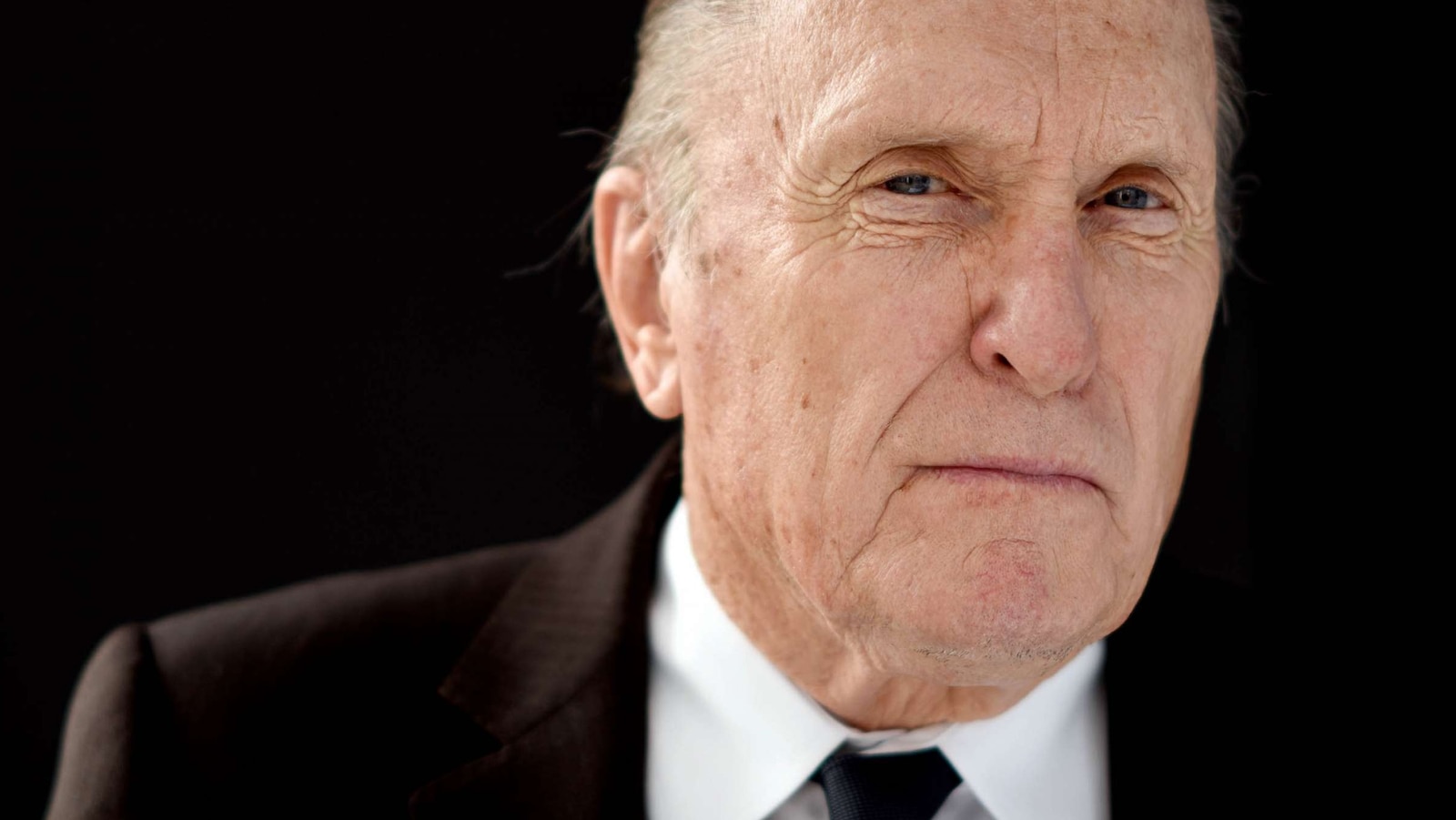
The world of cinema has lost one of its most revered talents with the passing of Robert Duvall at age 95. The Academy Award-winning actor, whose career spanned an incredible seven decades, died peacefully at his home in Middleburg, Virginia, on February 15, 2026. His wife, Luciana Duvall, was by his side during his final moments. In a heartfelt statement shared on the actor’s official Facebook page, Luciana bid farewell to her “beloved husband, cherished friend, and one of the greatest actors of our time.” True to Duvall’s character and wishes, there will be no formal funeral service. Instead, the family has asked those who wish to honor his memory to do so in ways that reflected how he lived his life – by watching a great film, sharing stories with friends around a dinner table, or taking a drive through the countryside to appreciate the simple beauty of the world. This request perfectly encapsulates the down-to-earth nature of a man who, despite achieving the highest honors in his profession, remained fundamentally connected to life’s authentic pleasures.
A Career Built on Quiet Intensity
Robert Duvall brought something special to every role he inhabited – a naturalistic acting style that set him apart from his contemporaries. Unlike actors who relied on theatrical flourishes or dramatic gestures, Duvall infused his characters with a calm, understated intensity that made them feel remarkably real. This approach was particularly striking given that those who worked with him knew he could be hot-tempered on set; yet on screen, he embodied a composed authenticity that drew audiences into his performances. His film career began with one of cinema’s most memorable debuts in 1962’s “To Kill a Mockingbird,” where he played the mysterious Boo Radley without speaking a single word – a testament to his ability to communicate volumes through presence alone. From that auspicious beginning, Duvall went on to appear in more than 90 films, collaborating with Hollywood’s finest directors and actors. He stood opposite John Wayne as the outlaw Ned Pepper in “True Grit,” originated the role of the uptight Major Frank Burns in Robert Altman’s dark comedy “MAS*H,” and starred in George Lucas’s first feature film, the dystopian “THX 1138,” before Lucas went on to create the Star Wars universe.
Iconic Roles That Defined American Cinema
Among Duvall’s extensive filmography, certain roles stand as defining moments in American cinema. His portrayal of Tom Hagen, the calm and calculating consigliere to the Corleone family in “The Godfather” and its sequel, allowed him to work alongside his acting idol, Marlon Brando, and cemented his status as a serious dramatic actor. His performance in 1976’s “Network” as the ruthless television executive Frank Hackett showcased his ability to embody corporate ambition and moral compromise. But perhaps no single role became more culturally embedded than his turn as Lieutenant Colonel Bill Kilgore in Francis Ford Coppola’s “Apocalypse Now.” The image of Duvall, shirtless and wearing a cowboy hat, declaring “I love the smell of napalm in the morning” has become one of cinema’s most quoted lines, perfectly capturing both the absurdity and horror of the Vietnam War. Yet for all these memorable performances, it was his work in 1983’s “Tender Mercies” that earned Duvall his greatest individual honor – the Academy Award for Best Actor. Playing Mac Sledge, a washed-up, alcoholic country music singer seeking redemption, Duvall delivered a performance of such quiet dignity and emotional truth that it remains a masterclass in screen acting.
The Role He Loved Most
Despite appearing in some of the most celebrated films in American history, when asked about his favorite role, Duvall consistently pointed to one that appeared on television rather than in theaters. As retired Texas Ranger Augustus “Gus” McCrae in the 1989 miniseries “Lonesome Dove,” Duvall found a character that resonated with him on a profound level. He referred to the series as “The ‘Godfather’ of Westerns,” and his performance as the charismatic, philosophical, and ultimately tragic Gus McCrae showed the full range of his considerable talents. The role allowed him to blend humor, wisdom, romance, and heartbreak in a way that few parts ever offered. Television proved to be a fruitful medium for Duvall throughout his career. He won a Golden Globe for his chilling portrayal of Soviet dictator Josef Stalin in the 1992 HBO film “Stalin,” and earned a Primetime Emmy Award not only for acting in but also for producing the 2006 AMC Western miniseries “Broken Trail.” In a 2003 interview with Charlie Gibson, a then-72-year-old Duvall reflected on his craft by quoting his beloved “Lonesome Dove” character: “The older the violin, the sweeter the music. Maybe that applies somewhere.” This perspective on aging and artistry defined Duvall’s approach to his later career – he continued working not out of necessity but out of a genuine love for the craft and a belief that experience only deepened his abilities.
From San Diego to Broadway and Beyond
Born on January 5, 1931, in San Diego, California, Robert Selden Duvall was the middle son of three boys. His father, William, was a rear admiral in the United States Navy, while his mother, Mildred, was an amateur actress – perhaps the first hint of where Robert’s future would lead. The family moved to Annapolis, Maryland, home of the U.S. Naval Academy, where young Robert spent most of his formative years. Though his father hoped he would follow in his military footsteps by attending the Naval Academy, Robert chose a different path, graduating from Principia College in Illinois with a degree in drama in 1953. He did serve his country, however, enlisting in the U.S. Army and receiving an honorable discharge two years later. Following his military service, Duvall moved to New York and used the GI Bill to attend the prestigious Neighborhood Playhouse School of Theatre. During this period, he roomed with another struggling young actor named Dustin Hoffman, who had recently arrived from California. Through Hoffman, Duvall also befriended Gene Hackman, forming connections with two men who would also go on to become legendary actors. After graduating, Duvall worked primarily in regional theater before making his television debut in 1959, eventually appearing in approximately 50 episodes of various TV series throughout the 1960s, including popular shows like “The Twilight Zone,” “The Fugitive,” and “The Outer Limits.” He even made two Broadway appearances, including a role in the original production of David Mamet’s celebrated play “American Buffalo.”
A Legacy of Excellence and Authenticity
Robert Duvall’s career achievements read like a summary of the highest honors the entertainment industry can bestow. He received seven Academy Award nominations throughout his career, with his final nomination coming at age 84 for “The Judge,” making him then the oldest actor ever nominated in the Best Supporting Actor category. Beyond his Oscar win for “Tender Mercies,” he collected four Golden Globes, an Emmy, a BAFTA for “Apocalypse Now,” and a Screen Actors Guild Award for “A Civil Action,” among countless other accolades. In 2005, President George W. Bush awarded him the National Medal of Arts, recognizing his contributions to American culture. Yet when asked how winning an Oscar changed his life, Duvall’s response was characteristically understated: “I became more recognizable in airports. That’s about it.” This humility persisted throughout his life, even as he continued working well into his eighties, appearing in films like “Crazy Heart,” the Tom Cruise thriller “Jack Reacher,” and “The Judge” opposite Robert Downey Jr. When asked how he kept working into his ninth decade, Duvall explained, “Well, you hang out with young people. I can learn from them; they can learn from me. I think that’s what keeps me going, at least.” He added with his characteristic directness, “The day will come when they definitively wipe the drool and you call it quits. Until that time comes, you try to live life to the fullest.” Duvall was married four times, with his final marriage in 2005 to Luciana Pedraza, who remained with him until the end. Though he had no children, he leaves behind an extraordinary body of work that will continue to inspire actors, filmmakers, and audiences for generations to come. Robert Duvall didn’t just act in films; he inhabited characters so completely that they became part of our cultural consciousness, teaching us about complexity, authenticity, and the quiet power of truth in performance.