



North Korea’s Future Leadership: Kim Jong Un’s Teenage Daughter Emerges as Likely Successor
Intelligence Agency Confirms Kim Ju Ae’s Rising Political Status
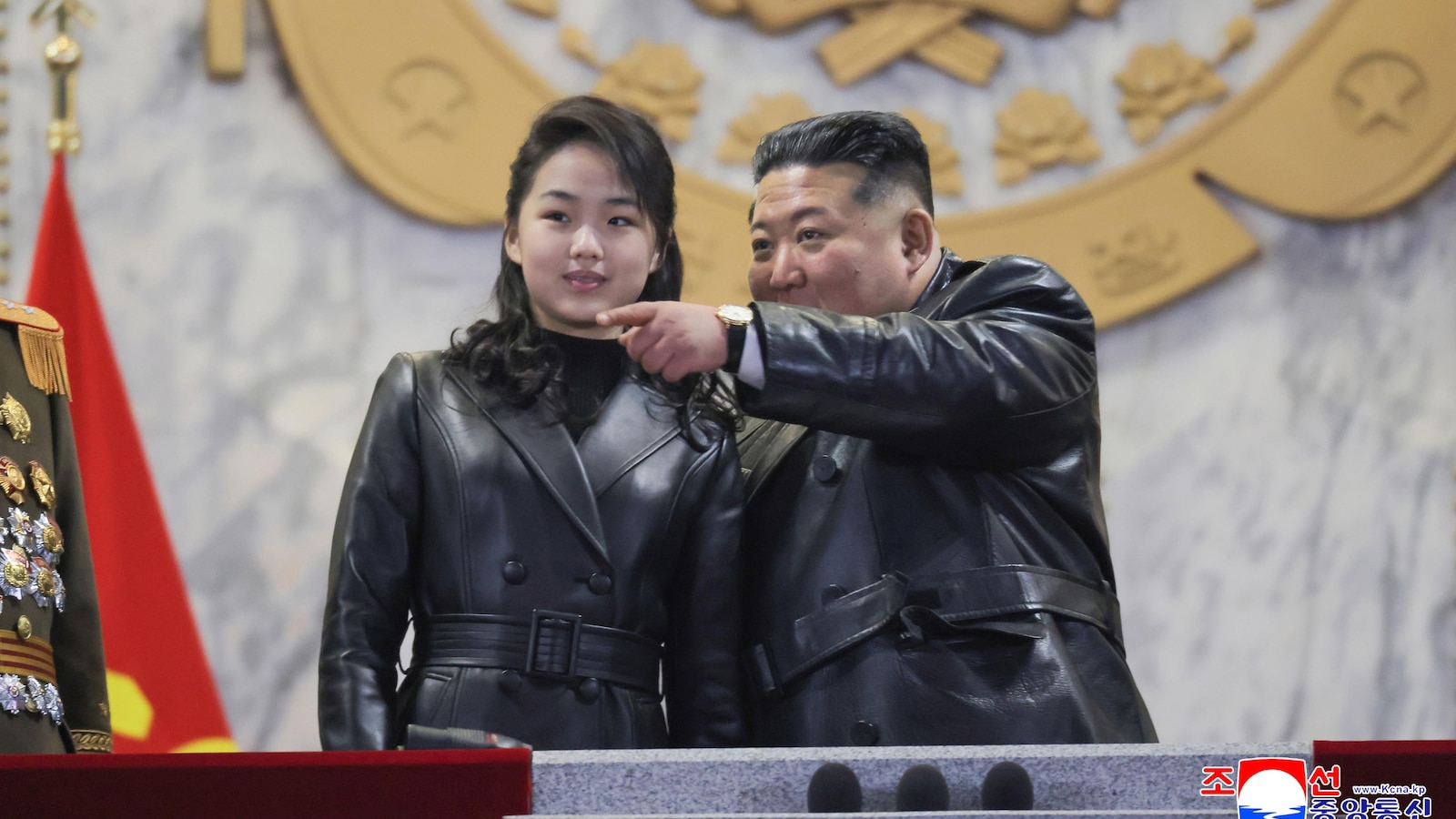
South Korea’s National Intelligence Service (NIS) has issued its most definitive statement yet regarding the political future of North Korea, declaring that it is now reasonable to view Kim Jong Un’s teenage daughter as his designated heir. This assessment marks a significant development in understanding the leadership trajectory of one of the world’s most secretive nations. The announcement came during a confidential briefing at South Korea’s National Assembly, where NIS Director Lee Jong-seok responded to lawmakers’ inquiries about the girl’s increasingly prominent role in North Korean state affairs. The young woman, believed to be named Kim Ju Ae and approximately thirteen years old, has been strategically positioned in the public eye since late 2022, appearing alongside her father at numerous high-profile state events. If this succession plan comes to fruition, it would mark the fourth generation of Kim family rule in North Korea, extending a dynastic leadership that has governed the isolated nation since its establishment in 1948.
A Strategic Public Relations Campaign Since 2022
The deliberate nature of Kim Ju Ae’s public introduction has not gone unnoticed by international observers and intelligence analysts. North Korean state media has consistently referred to her using exceptionally honorific language, describing her as Kim Jong Un’s “most beloved” or “respected” child—terminology that carries significant weight in the highly symbolic communication style of the North Korean regime. Her carefully orchestrated appearances have ranged from attending military parades and missile launches to participating in cultural events and state celebrations. Each public outing appears designed to familiarize the North Korean population with her image and establish her legitimacy as a future leader. The frequency and prominence of these appearances have steadily increased over the past two years, suggesting a systematic approach to building her public profile. Intelligence services and North Korea watchers worldwide have been analyzing every detail of these appearances, from her positioning relative to her father and other officials to the specific language used to describe her in state media broadcasts.
Evolving Intelligence Assessments and Political Implications
The NIS’s assessment of Kim Ju Ae’s status has progressively strengthened over time, reflecting either increased confidence in their intelligence or genuine acceleration in North Korea’s succession planning. In early 2024, the agency first officially described her as the likely heir apparent, marking the first time South Korean intelligence formally acknowledged her potential grooming for leadership. By February of this year, the assessment had evolved further, with the NIS stating they believed she was approaching official designation as the country’s future leader. Now, in the most recent briefing, Director Lee Jong-seok has gone even further, stating it is “fair to view” her as Kim’s successor. This progression in language—from “likely heir” to “close to being designated” to now being directly identified as successor—suggests that internal developments within North Korea’s power structure are moving forward according to a deliberate timeline. The NIS has reportedly based these assessments on what they describe as “reliable intelligence,” though the specific sources remain classified for obvious security reasons.
Questions About Kim Yo Jong and the Power Structure
One of the most intriguing aspects of this succession development involves Kim Yo Jong, Kim Jong Un’s younger sister, who has long been considered the second-most powerful figure in North Korea’s government. During the National Assembly briefing, lawmakers specifically questioned the NIS director about potential objections or resistance from Kim Yo Jong to her niece’s elevation. The response was surprising and revealing: Director Lee indicated that despite her prominent public role and perceived influence, Kim Yo Jong actually possesses no substantial independent powers. This assessment challenges the conventional wisdom that has developed around Kim Yo Jong, who has served as her brother’s spokesperson on numerous occasions and has been the public face of North Korea’s diplomatic outreach and hostile messaging to South Korea. If the NIS assessment is accurate, it suggests that Kim Yo Jong’s prominence is entirely derivative of her brother’s authority rather than representing an independent power base. This would make the transition to Kim Ju Ae less complicated from a succession planning perspective, as there would be no rival faction within the immediate family circle to challenge the arrangement.
Skepticism and the Gender Question in North Korean Society
Despite the increasingly confident assessments from South Korean intelligence, significant skepticism remains within the expert community about whether a female leader could actually assume power in North Korea. Critics of the succession theory point to North Korea’s deeply patriarchal society, where traditional gender roles remain extremely rigid and women are largely excluded from top positions of political and military power. The entire history of North Korean leadership has been exclusively male, with Kim Il Sung founding the nation and establishing the personality cult that has defined its governance, followed by Kim Jong Il and then Kim Jong Un—three generations of father-to-son succession. Additionally, some analysts argue that Kim Jong Un, at only 42 years old, is far too young to be seriously contemplating succession planning. In most political systems, designating a successor while still in one’s early forties could be seen as a sign of weakness or poor health, potentially undermining the current leader’s authority. These observers suggest that Kim Ju Ae’s prominence might serve other purposes, such as humanizing Kim Jong Un, demonstrating family continuity, or simply preparing for a distant future without actually committing to a specific succession plan at this time.
Building Military Credentials and Breaking Gender Barriers
Perhaps the most telling aspect of Kim Ju Ae’s public role has been the recent emphasis on military activities and demonstrations of martial capability. Recent appearances have shown the young teenager driving tanks during military training exercises supervised by her father, and photographs have been released showing both father and daughter firing pistols during an inspection visit to a light munitions factory. These highly symbolic activities appear designed to address the very skepticism about female leadership that experts have identified. According to the NIS assessment shared with lawmakers, North Korean authorities are deliberately organizing these military-focused events to build Kim Ju Ae’s credentials as a potential commander-in-chief and to “reduce skepticism about a woman successor.” In North Korea’s military-first political ideology, known as Songun, the ability to command respect from the armed forces is essential for any leader. By showing Kim Ju Ae participating in military activities from a young age, the regime may be attempting to normalize the concept of female military leadership and establish her credibility with the officer corps that will ultimately be crucial to any succession. Whether this campaign will prove successful remains to be seen, but it represents an unprecedented social engineering effort in North Korean history. The outcome of this succession planning will have profound implications not only for North Korea’s internal politics but also for regional security and international relations in Northeast Asia for decades to come.