
Surfer’s Harrowing Escape: A Father’s Fight for Survival After Shark Attack in Northern California
The Terrifying Moment That Changed Everything
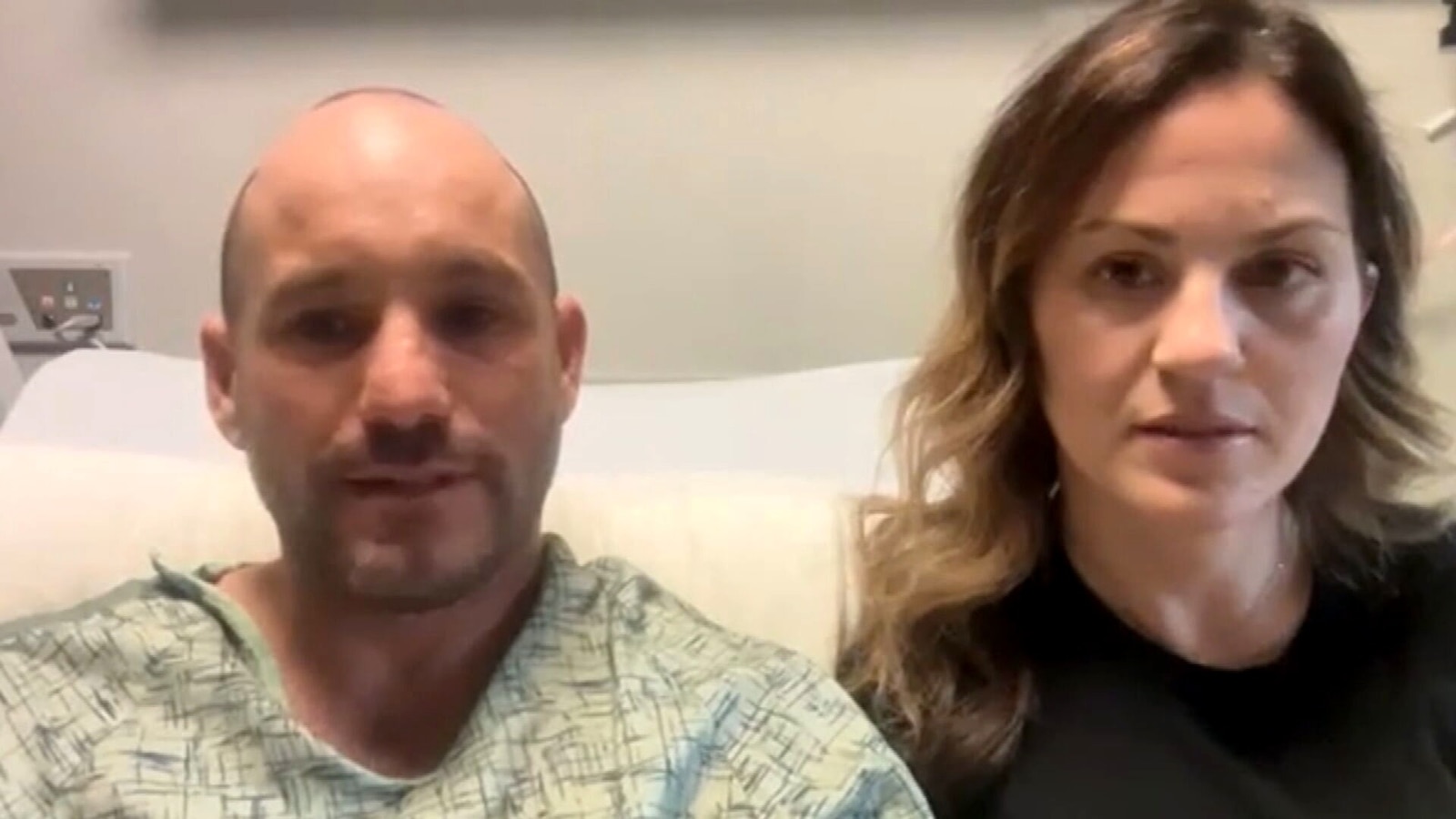
On what should have been an ordinary Wednesday evening, James Eastman found himself face-to-face with every surfer’s nightmare. The 39-year-old father was catching a few quick waves at Big River Beach inside Mendocino Headlands State Park around 5 p.m., planning to wrap up in time to pick up his 9-month-old child from daycare. Instead, he became the victim of a shark attack that would test his will to survive. As Eastman paddled in the coastal waters off Northern California, a shark suddenly emerged, its head breaking through the water’s surface in what would become a life-or-death struggle. In that critical moment, with the shark latched onto him, Eastman’s thoughts immediately turned to his family—his wife and young child waiting for him on shore. “I thought of my wife and my kid and I was just like, I cannot die. I can’t die right now,” he recalled from his hospital bed later. This powerful instinct to return to his loved ones would fuel the incredible courage and quick thinking that ultimately saved his life.
Fighting Back: A Battle for Survival
When confronted with one of nature’s most feared predators, Eastman’s survival instincts kicked into high gear. Rather than panicking or freezing, he took decisive action to defend himself against the attacking shark. Drawing on whatever knowledge he had about shark encounters, Eastman began striking the shark’s nose, one of its most sensitive areas, in a desperate attempt to break free from its grip. This technique, often recommended by marine safety experts, proved effective in his terrifying situation. The shark had inflicted injuries to both of his legs during the attack, but Eastman’s determination to fight back and his refusal to give up ultimately paid off. After what must have felt like an eternity but was likely only moments, the shark finally released him and swam away, leaving Eastman injured but alive in the water. Remarkably, despite his injuries and the trauma of the attack, Eastman managed to stay on his surfboard—a crucial factor in his survival. He began paddling back toward shore, each stroke bringing him closer to safety and back to the family that had been foremost in his mind during the attack.
Heroes in the Water: An Extraordinary Rescue
Eastman’s luck held when it mattered most—he wasn’t alone in the water that day. Three off-duty lifeguards who happened to be surfing nearby witnessed the attack or its immediate aftermath and sprang into action without hesitation. These trained professionals raced through the water to reach Eastman, providing crucial assistance in getting him safely back to shore. Their presence and quick response were vital in ensuring that Eastman received immediate help following the traumatic incident. Once on shore, emergency services were called, and Eastman was transported by ambulance to Adventist Hospital in Fort Bragg for treatment of his leg injuries. In a twist of fate that adds an almost surreal dimension to the story, his wife Chloe works as an emergency room nurse at the very hospital where he was taken. Imagine being at work on what seems like a routine shift when suddenly your worst nightmare becomes reality—your husband is being brought in as a trauma patient after a shark attack. Chloe described her reaction to ABC News: “I’m in the middle of work in the ER and I just like dropped to the ground like, ‘What?'” She added that a shark attack happening to her husband was “my worst fear too.”
Understanding the Risk: Rare But Real
While this attack understandably captured headlines and sent shockwaves through the local surfing community, experts are quick to point out that shark encounters with humans remain exceptionally rare, even in California waters where sharks are common inhabitants. John Ugoretz, who serves as the pelagic fisheries and ecosystem program manager for the California Department of Fish and Wildlife, provided important context about the statistical reality of shark-related incidents. He told ABC News that since 1950—a span of more than 70 years—California has recorded only 234 shark-related incidents. To put this in perspective, millions of people have visited California beaches and entered the ocean during those seven decades, making the actual risk of a shark encounter extraordinarily low. “So while it’s not unexpected, it is certainly not something that happens all the time,” Ugoretz explained regarding attacks of this nature. This data helps frame the incident in proper perspective: while sharks certainly inhabit California coastal waters and encounters can occur, the vast majority of beach visits and surf sessions proceed without any problems whatsoever. The ocean remains a relatively safe place for recreation, despite the inherent risks that come with entering a wild environment that serves as home to various marine species.
The Aftermath and Investigation
Following the attack, California Department of Wildlife officials quickly mobilized to investigate the incident and gather as much information as possible. According to their statement to ABC News, officials “collected DNA samples and will work to gather additional information to better understand the circumstances of the incident.” This scientific approach helps researchers track shark populations, understand their behavior patterns, and potentially identify the specific shark involved in the attack. Such information proves valuable for both public safety and marine conservation efforts. Officials also warned that “while sharks are highly mobile and travel long distances quickly, it is possible it remains in the area,” a cautionary note for other water users in the region. In response to the attack, California State Parks took immediate action by posting warning signs and implementing a 48-hour beach closure for nearby beaches. This precautionary measure gives time for any potentially aggressive shark to move on while also allowing heightened awareness among beachgoers planning to enter the water. In their official statement, State Parks emphasized an important ecological perspective: “State Parks would like to remind visitors that sharks are an important part of the coastal ecosystem and that interactions between people and sharks are rare.” This balanced message acknowledges the legitimate concern following an attack while also recognizing the vital role these apex predators play in maintaining healthy ocean ecosystems.
A Surfer’s Resilience and Return to the Waves
Perhaps the most remarkable aspect of Eastman’s story is his attitude following the attack. Despite the physical trauma and what must have been a psychologically terrifying experience, he’s already contemplating a return to the sport he loves. Speaking from his hospital bed, still recovering from his injuries, Eastman expressed gratitude for the outpouring of support from his community and reflected on his future relationship with surfing. “I love surfing so much and I would be very sad if I didn’t surf again,” he told reporters, demonstrating the deep connection many surfers feel with the ocean despite its inherent risks. He also acknowledged the fortunate outcome of his ordeal, adding, “As far as everything else is concerned, I was extremely lucky.” This recognition shows a mature perspective on his survival—while he fought bravely and kept his wits about him during the attack, he understands that many factors aligned to allow him to make it back to shore alive and to receive prompt medical attention. His story has resonated throughout the surfing community and beyond, serving as both a sobering reminder of the ocean’s wild nature and an inspiring testament to human resilience, quick thinking, and the powerful motivation that love for family can provide in life’s most challenging moments. As Eastman continues his recovery, his story will likely join the collection of shark encounter narratives that surfers share, discuss, and learn from—a rare but real reminder that when we enter the ocean, we’re visitors in an environment that belongs to creatures far older and more adapted to that realm than ourselves.