


Joe Brady Steps Into the Spotlight as Buffalo Bills’ New Head Coach
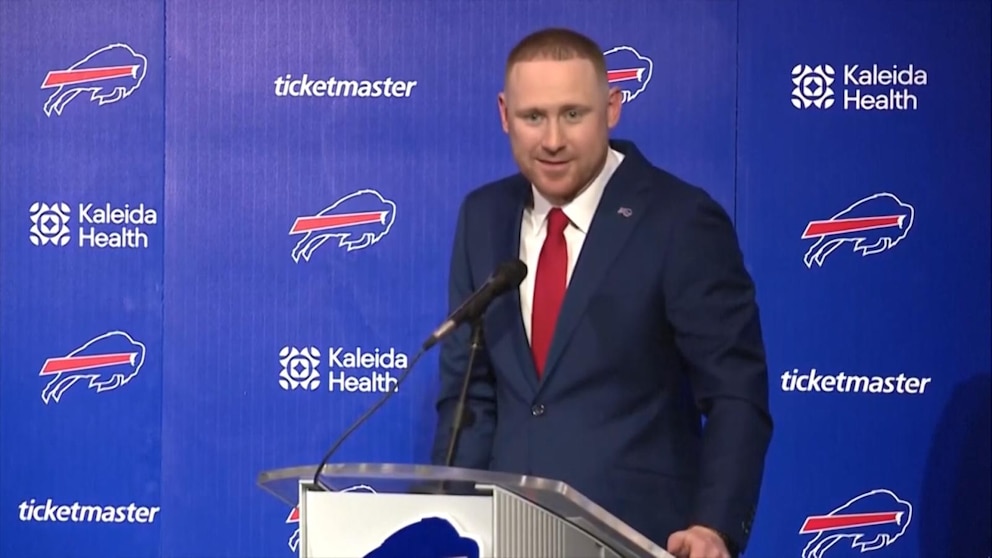
The Buffalo Bills have officially entered a new era, introducing Joe Brady as their head coach in what marks one of the most significant transitions in recent franchise history. After years of success under Sean McDermott, the organization has placed its faith in the 35-year-old offensive coordinator, betting that his innovative mindset and quarterback development expertise will be exactly what’s needed to push the team over the championship hump. Brady’s journey from college assistant to NFL head coach has been nothing short of remarkable, and his appointment represents the Bills’ commitment to evolving their offensive identity while maintaining the winning culture that has defined the team in recent seasons. The introductory press conference showcased a confident, articulate leader who understands both the opportunity and the enormous responsibility that comes with guiding one of the AFC’s most talented rosters. For Bills Mafia, this represents a moment filled with both excitement and uncertainty—the thrill of fresh possibilities tempered by the reality that their team is moving on from a coach who helped transform the franchise from perennial underachievers into legitimate Super Bowl contenders.
Brady’s introduction was marked by genuine enthusiasm from the organization’s leadership, with general manager Brandon Beane and team owners Kim and Terry Pegula expressing unwavering confidence in their new coach. The decision to promote from within rather than conduct a lengthy external search signals the Bills’ belief that continuity matters, particularly when you have a franchise quarterback like Josh Allen entering his prime years. During his remarks, Brady emphasized his vision for an aggressive, innovative offense that will maximize Allen’s unique skill set while incorporating lessons learned from his time working with some of football’s brightest offensive minds. He spoke passionately about the importance of creating a players-first environment where accountability and creativity coexist, where veterans are empowered to lead and young players are developed with patience and precision. The new head coach didn’t shy away from acknowledging the pressure that comes with the position, particularly in a football-obsessed market like Buffalo where expectations have never been higher and anything short of a Super Bowl appearance will likely be viewed as disappointment.
From LSU Legend to NFL Rising Star: Brady’s Impressive Journey
Joe Brady’s path to becoming an NFL head coach is a testament to talent recognition, perfect timing, and the ability to maximize opportunities when they present themselves. His reputation was essentially made during the 2019 season at Louisiana State University, where he served as passing game coordinator and helped orchestrate one of the greatest offensive seasons in college football history. Working alongside head coach Ed Orgeron and alongside names like Joe Burrow, Justin Jefferson, and Ja’Marr Chase, Brady helped LSU score points at a historic rate, with Burrow winning the Heisman Trophy and the Tigers capturing the national championship. That single season catapulted Brady into the NFL spotlight, earning him the Carolina Panthers’ offensive coordinator position at just 30 years old—making him one of the youngest coordinators in league history. Though his tenure in Carolina proved challenging amid a roster in transition and organizational instability, Brady continued developing his coaching philosophy and refining his approach to quarterback development and offensive scheming.
His arrival in Buffalo prior to the 2023 season as offensive coordinator proved to be the perfect marriage of coach and situation. Working with an established star in Josh Allen and inheriting a talented roster, Brady had the opportunity to implement his concepts with NFL-caliber personnel who could execute at a high level. The results spoke for themselves as the Bills’ offense continued ranking among the league’s most productive units, with Allen posting career-best efficiency numbers while the supporting cast flourished in Brady’s creative scheme. His ability to adapt his system to his personnel rather than forcing players into uncomfortable roles earned respect throughout the locker room, while his attention to detail and collaborative coaching style made him popular among assistants and players alike. League observers noted Brady’s growth as a leader and communicator, qualities that ultimately convinced the Pegulas and Beane that he possessed the complete package necessary to succeed as a head coach rather than just a coordinator with good ideas.
Building a Championship-Caliber Staff and Culture
One of Joe Brady’s first and most important tasks as head coach involves assembling a coaching staff that shares his vision while bringing diverse perspectives and expertise to complement his offensive background. During his introductory comments, Brady emphasized the importance of surrounding himself with experienced assistants who can challenge his thinking and provide honest feedback, particularly on the defensive side of the ball where he’ll need to delegate significant responsibility. The Bills are expected to pursue a veteran defensive coordinator who can maintain the aggressive, turnover-focused identity that has characterized Buffalo’s defense in recent years, someone who can work collaboratively with Brady while possessing the autonomy to run that side of the ball without constant oversight. Names being mentioned in league circles include experienced coordinators looking for another opportunity as well as rising position coaches ready for expanded roles, with Brady reportedly prioritizing teaching ability and communication skills over rigid scheme preferences.
Beyond the X’s and O’s, Brady has spoken extensively about the culture he intends to cultivate—one that balances intensity with intelligence, where players are held to high standards but also treated as partners in the process rather than simply pieces to be moved around. He’s drawn inspiration from coaches he’s worked with and competed against, taking elements from each while developing his own authentic leadership style. The emphasis on mental health, family balance, and treating players as complete human beings rather than just athletes has become increasingly important in modern NFL culture, and Brady appears committed to creating an environment where players can thrive both on and off the field. His age and relatively recent playing experience (he was a college receiver at William & Mary) may actually prove advantageous in connecting with players, as he can relate to their experiences and challenges in ways that older coaches sometimes struggle to do. The early feedback from Bills players has been overwhelmingly positive, with several veterans publicly expressing excitement about Brady’s promotion and confidence in his ability to lead the team to championship success.
The Josh Allen Factor: Maximizing a Franchise Quarterback
Perhaps no single factor influenced the Bills’ decision to promote Joe Brady more than his relationship with and development of Josh Allen, the franchise cornerstone whose performance will ultimately determine Brady’s success or failure as head coach. Since Brady’s arrival as offensive coordinator, Allen has displayed improved decision-making, better anticipation, and more consistent accuracy while maintaining the explosive playmaking ability that makes him one of the NFL’s most dangerous weapons. Brady’s scheme has featured more rhythm throws, better-designed play-action concepts, and creative ways to get Allen outside the pocket where his combination of arm strength and mobility becomes nearly impossible to defend. The trust between quarterback and coordinator has been evident, with Allen frequently praising Brady’s communication, creativity, and willingness to incorporate player input into the game planning process. Now, with Brady elevated to head coach, that relationship becomes even more critical as he’ll need to balance his responsibilities across the entire team while ensuring Allen continues receiving the detailed attention that has contributed to his growth.
Brady has been candid about viewing his role partially through the lens of maximizing Allen’s prime years, understanding that franchise quarterbacks of Allen’s caliber represent rare opportunities that must be seized before the championship window inevitably closes. At 29 years old, Allen is theoretically entering the peak years for an NFL quarterback—old enough to have extensive experience and refined skills, yet still young and physically gifted enough to make plays that few others can duplicate. Brady’s offense will continue evolving to feature Allen’s strengths while protecting against his occasional tendency toward risky decisions, creating a system that provides structure without stifling the improvisation that makes Allen special. The head coach has also emphasized the importance of surrounding Allen with weapons and protection, suggesting that roster construction conversations with Brandon Beane will focus heavily on maintaining offensive firepower and upgrading where possible. For Bills fans, the hope is that Brady’s promotion represents continuity in Allen’s development rather than disruption, allowing the quarterback to continue ascending without the setbacks that sometimes accompany coaching changes.
Navigating Expectations in a Championship-or-Bust Environment
Joe Brady inherits not just a talented roster but also enormous expectations from a fanbase and organization that has waited decades for a Super Bowl championship. The Bills have been to the AFC Championship game multiple times in recent years and have consistently ranked among the conference’s elite teams, yet they’ve fallen short of the ultimate goal repeatedly—sometimes heartbreakingly so. Brady acknowledged these expectations directly during his introduction, stating that he welcomes the pressure and understands that success in Buffalo will be measured by championships rather than regular season wins or playoff appearances. This represents a significant shift from his previous roles where simply showing offensive improvement or developing young quarterbacks was sufficient to be considered successful. Now, every decision will be scrutinized through the lens of championship pursuit, from game management to roster construction input to in-game adjustments.
The challenge for Brady will be maintaining perspective and patience even while operating in an environment that demands immediate results. History shows that first-year head coaches often experience growing pains as they adjust to the vastly expanded responsibilities compared to coordinator roles, from media obligations to personnel decisions to managing a much larger staff. Brady will need to delegate effectively, trust his assistants, and avoid the common pitfall of trying to do too much himself—particularly on game days when his background might tempt him to over-focus on offensive play-calling at the expense of broader head coaching responsibilities. The Bills’ front office has reportedly discussed potentially bringing in an experienced offensive coordinator to handle play-calling duties, which would free Brady to focus on the bigger picture, though no final decisions have been announced. Regardless of the structure, Brady’s ability to grow quickly into the head coaching role while keeping the team competitive in the brutal AFC will determine whether this hire is remembered as a bold, successful decision or a well-intentioned mistake. For now, though, the Bills organization and their passionate fanbase are choosing optimism, believing that Joe Brady represents the fresh voice and innovative thinking needed to finally bring a championship to Buffalo.