


Hangin’ With Herm: ESPN Analyst Herm Edwards Recaps Week 11 of NFL Action
The Quarterback Injury Crisis Continues to Plague the League
Week 11 of the NFL season brought another wave of quarterback injuries that has teams and fans alike holding their breath every time their signal-caller drops back to pass. ESPN analyst and former NFL head coach Herm Edwards sat down with ABC News’ Gio Benitez to discuss the ongoing injury concerns that seem to be affecting quarterbacks at an alarming rate this season. Edwards, who spent years on the sidelines as both a player and coach, expressed genuine concern about the physical toll the modern game is taking on these crucial players.
The injury bug affecting quarterbacks has become one of the season’s most troubling storylines, forcing teams to dig deep into their depth charts and test backup quarterbacks who may not have expected significant playing time. Edwards emphasized that while football has always been a physical game, the current rash of quarterback injuries seems particularly severe this year. He noted that these injuries aren’t just affecting the teams’ immediate game plans but are having cascading effects on entire organizations, from offensive coordinators who must simplify playbooks for inexperienced backups to front offices frantically working phones to find veteran help. The situation has reinforced what coaches have always known: you can never have too much quality depth at the quarterback position, and next man up isn’t just a saying—it’s a survival strategy in today’s NFL.
Denver’s Remarkable Resurgence in the AFC
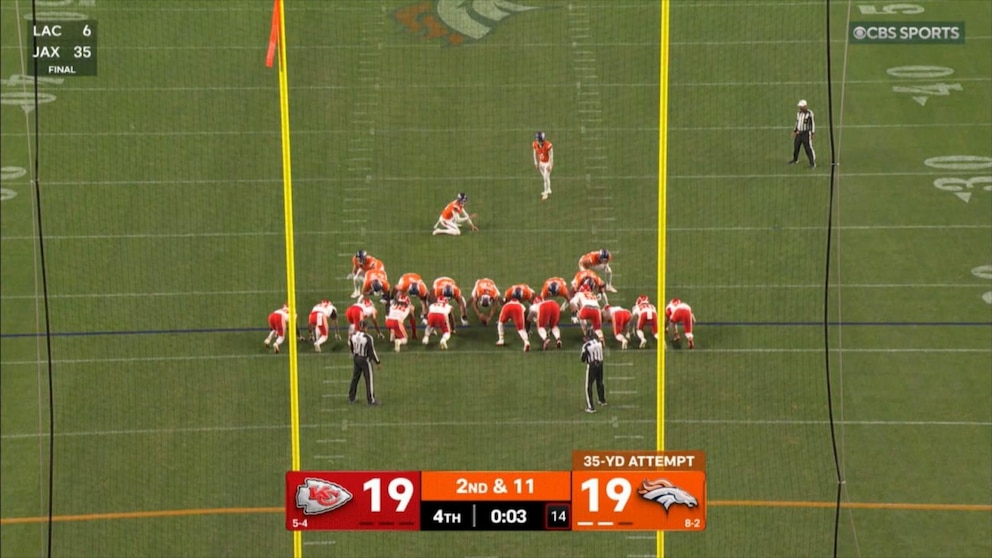
One of the most surprising and compelling storylines from Week 11 has been the Denver Broncos’ rise to the top of the AFC standings. Edwards couldn’t hide his enthusiasm when discussing the Broncos’ remarkable turnaround, a development that few analysts predicted at the season’s start. The team that many had written off before the season began has somehow managed to piece together a winning formula that has them sitting atop one of football’s toughest conferences.
Edwards broke down what he believes are the key factors behind Denver’s success, pointing to a combination of strong defensive play, efficient offense, and most importantly, excellent coaching that has maximized the talent on the roster. He praised the Broncos’ ability to win in multiple ways—sometimes with dominant defensive performances, other times with timely offensive execution when it matters most. The veteran analyst emphasized that the Broncos haven’t necessarily blown teams away with flashy statistics or highlight-reel plays; instead, they’ve won the old-fashioned way by executing fundamentals, winning the turnover battle, and making fewer mistakes than their opponents. Edwards noted that this type of disciplined football is sustainable and particularly dangerous in the playoffs, where games are typically decided by small margins. The Broncos’ ability to stay healthy at key positions, particularly at quarterback where so many other teams have struggled, has also been a critical factor in their unexpected rise to AFC prominence.
The Art of Coaching Through On-Field Drama
As someone who has stood on NFL sidelines through countless high-pressure situations, Edwards offered valuable insights into one of coaching’s most challenging aspects: managing on-field drama while maintaining team focus and cohesion. In today’s NFL, where cameras capture every sideline exchange and social media amplifies every moment of conflict, coaches must navigate an increasingly complex landscape when personalities clash or emotions boil over during games.
Edwards spoke candidly about his own experiences dealing with heated moments during games, explaining that the key is understanding that football is an emotional game played by passionate competitors. When players argue on the sideline or show frustration, it doesn’t necessarily signal a team in disarray—sometimes it’s simply the byproduct of competitors who care deeply about winning. However, Edwards was quick to distinguish between productive passion and destructive behavior. The former coach explained that great leaders must recognize the difference and address situations accordingly, sometimes in the heat of the moment and other times waiting until cooler heads can prevail in the locker room or film room.
The challenge for modern coaches, Edwards noted, is managing these situations while being fully aware that everything is being recorded and scrutinized. A private coaching moment that might have stayed on the field twenty years ago now becomes instant content for sports networks and social media debates. Despite this added pressure, Edwards insisted that coaches cannot let the cameras change their approach to leadership. Players need honesty, accountability, and sometimes tough love, regardless of who might be watching. The best coaches, according to Edwards, establish clear standards and communication channels long before dramatic moments occur, creating a team culture where players know how to channel their emotions productively and understand that individual frustrations must ultimately be subordinated to team goals.
Lessons from a Coaching Career and the Evolution of the Game
Drawing from his extensive experience as both an NFL player and head coach, Edwards reflected on how the game has evolved and what lessons from his coaching days remain relevant in today’s NFL. His perspective offers a unique bridge between different eras of football, combining old-school coaching wisdom with an understanding of the modern game’s demands and complexities. Edwards emphasized that while strategies, rules, and even the speed of the game have changed dramatically, certain fundamental principles remain constant: teams that execute better, make fewer mistakes, and show greater discipline typically find ways to win.
Edwards discussed how coaching has become infinitely more complex in the modern era, with coordinators managing increasingly sophisticated schemes and head coaches juggling responsibilities that extend far beyond X’s and O’s. Today’s NFL coaches must be skilled communicators who can connect with players from diverse backgrounds, media-savvy professionals who can manage public perception, and organizational leaders who oversee large staffs with specialized roles. The days of the authoritarian coach ruling through fear and intimidation have largely passed, replaced by leaders who must earn respect through knowledge, consistency, and genuine investment in their players’ development both on and off the field. Yet Edwards cautioned against overthinking the game, reminding viewers that football ultimately comes down to blocking, tackling, and executing under pressure—fundamentals that transcend any era.
Looking Ahead: Playoff Implications and Team Trajectories
As the NFL season moves deeper into November and the playoff picture begins to crystallize, Edwards offered his perspective on which teams are positioned for postseason success and which might be fool’s gold despite impressive records. Week 11 represented a crucial juncture in the season where teams either confirm their status as legitimate contenders or begin showing cracks that suggest they might not have the staying power for a deep playoff run.
Edwards emphasized that this time of year reveals which teams have the depth to withstand injuries, the coaching to make necessary adjustments, and the mental toughness to handle adversity. The Broncos’ rise certainly turns conventional wisdom on its head, but Edwards cautioned that they’ll face their real tests in the coming weeks as opponents study their tendencies and adjust their game plans accordingly. Meanwhile, teams dealing with quarterback injuries face uncertain futures—some may rally around backup quarterbacks and find ways to win with defense and running games, while others will see their seasons slip away despite strong starts. Edwards noted that November and December football in the NFL is fundamentally different from September and October, with weather becoming a factor, bodies accumulating wear and tear, and the mental grind of a long season testing every team’s resolve. The teams that embrace these challenges rather than making excuses for them are the ones that typically find themselves playing meaningful games in January.