



NBA Coach Chauncey Billups Embroiled in Mafia-Linked Illegal Poker Scandal
The Shocking Allegations Against a Basketball Icon
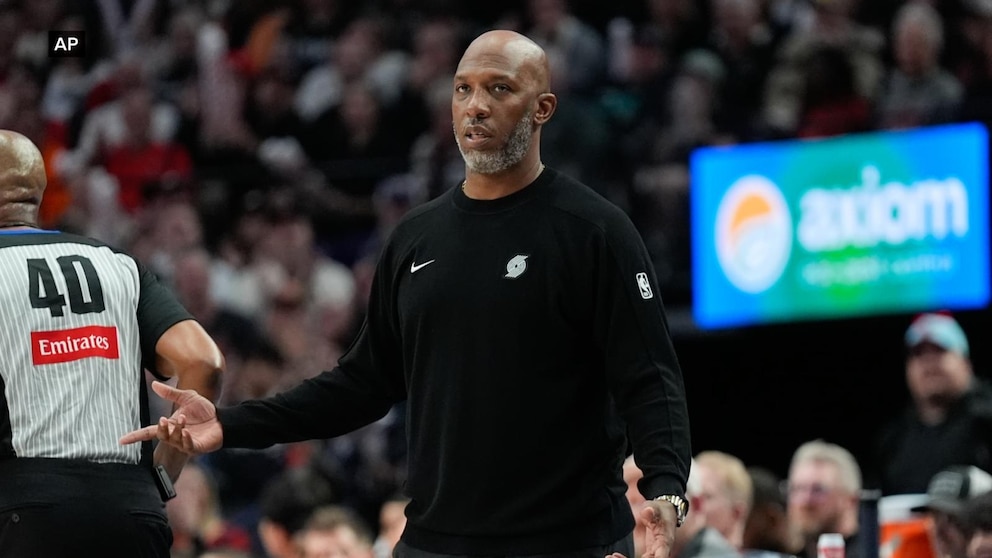
In a stunning development that has sent shockwaves through the basketball world, Portland Trail Blazers head coach Chauncey Billups finds himself at the center of a criminal investigation involving an illegal poker operation with alleged connections to organized crime. According to law enforcement sources who spoke with ABC News on October 23, 2025, the former NBA champion and beloved basketball figure has been formally charged in connection with this underground gambling ring. The revelation marks a dramatic fall from grace for a man who has been widely respected both during his playing career and in his transition to coaching. The allegations are particularly jarring given Billups’ reputation as a consummate professional and leader, someone who earned the nickname “Mr. Big Shot” for his clutch performances on the court and who seemed destined for a successful post-playing career in team management and coaching.
The news has left fans, players, and colleagues struggling to reconcile the image of the accomplished athlete and coach they thought they knew with the serious criminal allegations now facing him. For the Portland Trail Blazers organization, this represents a crisis of unprecedented proportions, raising questions about leadership, organizational oversight, and what they knew about their head coach’s activities away from the basketball court. The involvement of mafia connections elevates these charges far beyond a simple gambling infraction, potentially implicating Billups in a web of organized criminal activity that could have far-reaching consequences for both his personal freedom and professional future.
Understanding the Charges and Their Implications
While specific details about the charges remain limited as the investigation continues, the involvement of an illegal poker operation tied to the mafia suggests a sophisticated criminal enterprise rather than casual recreational gambling among friends. Illegal gambling operations of this nature typically involve substantial sums of money, organized networks of participants, and infrastructure designed to evade law enforcement detection. When organized crime families become involved in such operations, they often use them not just for the gambling proceeds themselves, but as vehicles for money laundering, loan sharking, and extending their influence into legitimate spheres of society. The fact that law enforcement has pursued charges against someone of Billups’ public profile indicates they likely have substantial evidence connecting him to these activities.
The legal jeopardy Billups now faces could range from misdemeanor gambling charges to more serious felony counts, depending on his level of involvement, whether money laundering was involved, and what connections investigators can prove between him and organized crime figures. Federal authorities often take particular interest in cases where illegal gambling operations cross state lines or involve organized crime, potentially bringing RICO (Racketeer Influenced and Corrupt Organizations Act) statutes into play. Such charges carry severe penalties, including substantial prison time and financial penalties. Beyond the immediate legal consequences, Billups also faces potential sanctions from the NBA, which maintains strict policies regarding gambling and associations with organized crime. The league’s constitution gives the commissioner broad authority to discipline or even ban individuals whose conduct is deemed detrimental to the game’s integrity.
Chauncey Billups: From Basketball Glory to Legal Troubles
To understand the magnitude of this scandal, it’s important to consider who Chauncey Billups is within the basketball community. During his 17-year playing career, Billups established himself as one of the most respected point guards in NBA history. He was a five-time All-Star, a three-time All-NBA selection, and most notably, the NBA Finals MVP in 2004 when he led the Detroit Pistons to a championship victory over the heavily favored Los Angeles Lakers. His playing style was characterized by composure under pressure, leadership qualities that earned teammates’ respect, and an intelligent approach to the game that made him seem like a natural candidate for coaching once his playing days ended.
After retiring as a player in 2014, Billups transitioned into broadcasting and eventually into NBA front office work before being named head coach of the Portland Trail Blazers. His hiring was seen as a promising move by the organization, bringing in someone with championship pedigree and the respect of players throughout the league. Now, these latest allegations threaten to completely unravel that narrative, replacing the story of a successful transition from player to coach with one of alleged criminal activity and poor judgment. The contrast between his professional accomplishments and these charges creates a jarring cognitive dissonance for those who have followed his career. How could someone who achieved so much success through discipline and hard work become involved in an illegal operation tied to organized crime?
The Portland Trail Blazers Face an Organizational Crisis
For the Portland Trail Blazers organization, this scandal presents challenges on multiple fronts. Most immediately, they must decide how to handle Billups’ status as head coach while the legal process unfolds. Do they suspend him immediately, place him on administrative leave, or wait for more information about the charges before taking action? The organization’s response will be scrutinized not just by fans and media, but by the NBA league office, which will want to ensure that member teams maintain the integrity of the game. The Trail Blazers’ front office will also face questions about what due diligence they performed before hiring Billups and whether there were any warning signs of problematic behavior that were overlooked or ignored.
Beyond the immediate personnel decisions, the organization must consider the impact on team morale, performance, and culture. Players who respected and played for Billups now find themselves in an awkward position, potentially having to answer questions about their coach’s alleged criminal activities rather than focusing on basketball. The scandal also affects the franchise’s reputation within the league and among fans, potentially impacting everything from ticket sales to free agent recruitment. No player wants to join an organization embroiled in controversy, and sponsors may reconsider their associations with a team whose head coach faces serious criminal charges. The Trail Blazers’ ownership and management will need to act decisively to contain the damage while also respecting the legal principle that Billups is innocent until proven guilty.
Broader Implications for the NBA and Professional Sports
This scandal arrives at a particularly sensitive time for the NBA regarding gambling issues. The league has increasingly embraced legalized sports betting as a revenue source, partnering with various betting companies and accepting advertising revenue from the gambling industry. However, this commercial embrace of legal gambling makes it even more critical that the league maintains strict boundaries regarding illegal gambling and that its coaches, players, and executives remain beyond reproach. The involvement of a prominent head coach in an illegal gambling operation—particularly one with alleged mafia connections—threatens to undermine public confidence in the integrity of NBA games and raises questions about whether the league has adequately protected itself against gambling-related corruption.
Professional sports leagues have long memories when it comes to gambling scandals. Baseball’s 1919 Black Sox scandal, when players conspired to throw the World Series, remains a cautionary tale more than a century later. Pete Rose, baseball’s all-time hits leader, remains banned from the sport for gambling on games. The NBA itself experienced a major scandal in 2007 when referee Tim Donaghy was found to have bet on games he officiated. These historical precedents suggest the league will take the Billups situation extremely seriously, potentially imposing severe penalties if the allegations are proven. The case also raises broader questions about the vetting processes professional sports organizations use for coaches and executives, and whether more stringent background checks and ongoing monitoring might be necessary in an era where legal and illegal gambling exist in close proximity.
What Comes Next: Legal Proceedings and Career Consequences
As this story continues to develop, several key questions remain unanswered. What specific charges has Billups been indicted on? What evidence do prosecutors have connecting him to the illegal poker operation and to organized crime figures? Was his involvement limited to participating in games, or did he have a more substantial role in organizing or financing the operation? How long had this been going on, and were any other NBA figures involved? The answers to these questions will determine both the legal jeopardy Billups faces and the broader implications for the basketball world.
The legal process will likely unfold over many months, possibly years, as prosecutors build their case and defense attorneys challenge the evidence and allegations. During this time, Billups’ coaching career hangs in the balance. Even if he is ultimately acquitted of criminal charges, the NBA may still impose its own penalties, and his reputation will almost certainly be permanently damaged. For someone who worked so hard to build a legacy as a champion player and promising young coach, these allegations represent a catastrophic turn of events. The coming weeks and months will reveal whether Chauncey Billups can mount a successful defense against these charges or whether his name will be added to the unfortunate list of sports figures who threw away their careers and reputations through involvement in illegal activities. Regardless of the outcome, this scandal serves as a sobering reminder that fame, success, and talent offer no immunity from the consequences of poor decisions and alleged criminal behavior.