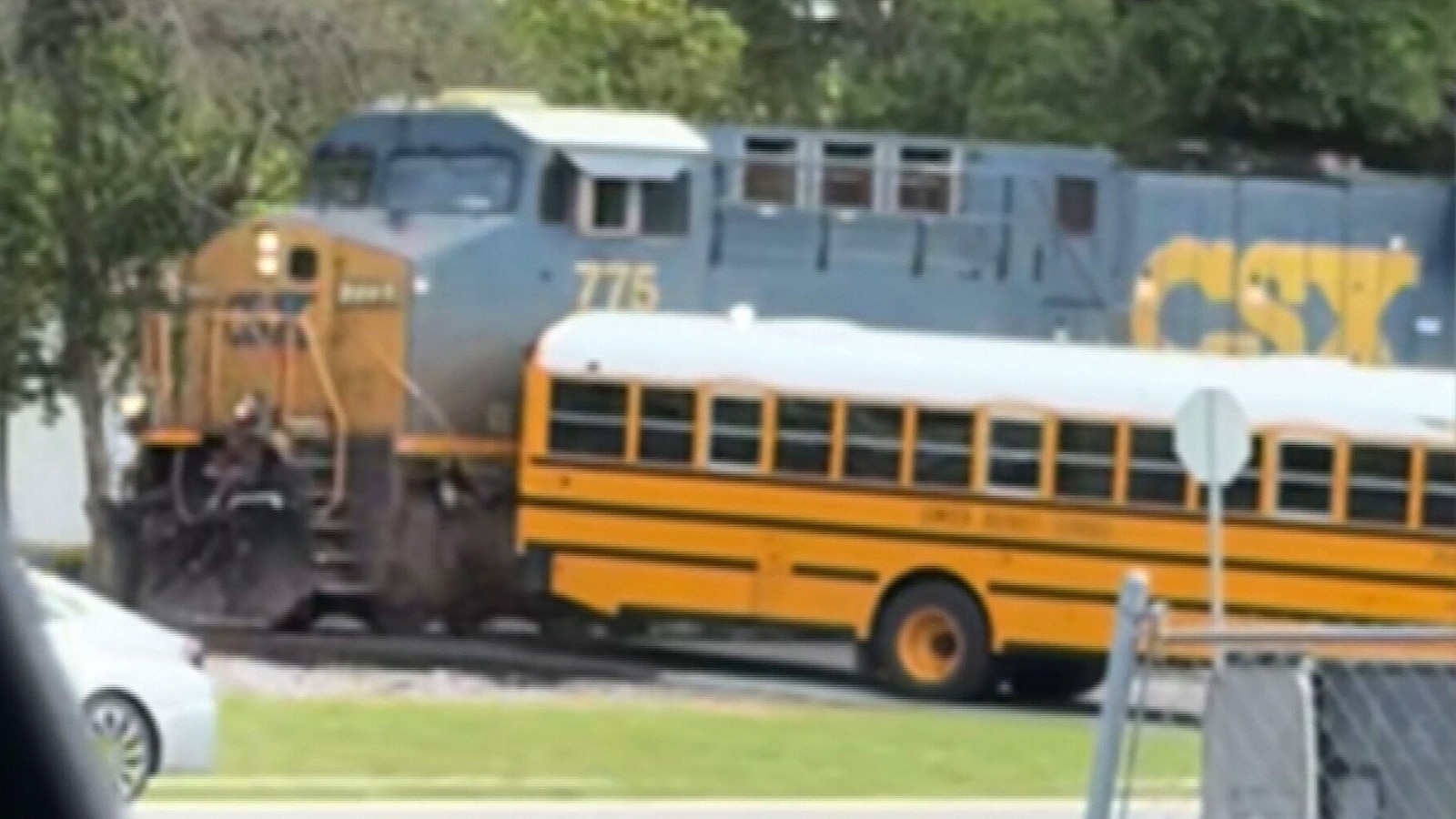

Florida Student Speaks Out After Terrifying Train-Bus Collision
A Frightening Experience That Will Leave Lasting Effects
Twelve-year-old Cheyenne Gant is still processing the traumatic experience she endured on what should have been an ordinary school day in Sumter County, Florida. The young student was one of 29 children aboard a school bus when it was struck by a speeding train at a railroad crossing on April 2nd. In an emotional interview that aired on ABC News’ “Good Morning America,” Cheyenne opened up about the harrowing incident that was captured on video by multiple witnesses. The seventh-grader candidly shared her concerns about the lasting psychological impact of the collision, admitting that she expects to feel heightened anxiety and stress whenever she boards a school bus in the future. Her honest vulnerability highlights how a single moment of poor judgment by an adult in a position of trust can leave lasting scars on young minds. The incident, which thankfully resulted in no serious physical injuries, has nonetheless left emotional wounds that will take time to heal for Cheyenne and her fellow passengers.
The Terrifying Moments Caught on Camera
The collision was documented from multiple angles, providing a comprehensive and chilling account of what transpired that day. Bystander Emma Steuer captured external footage showing the dramatic moment when a train barreled through the railroad crossing, striking the rear of the yellow school bus. The impact, while not resulting in catastrophic damage, was severe enough to send shockwaves through the vehicle and traumatize everyone aboard. Even more disturbing was the video filmed inside the bus by one of the students, which was later shared on TikTok and captured the raw terror of the moment. The audio from this internal footage is filled with the piercing screams of frightened children who suddenly found themselves in a life-threatening situation. Cheyenne’s own account of the incident paints a picture of mounting panic as students recognized the danger before the driver took action. According to the young student, the bus driver stopped the vehicle directly on the railroad tracks, and despite desperate warnings from the children yelling “Train!” the driver failed to move the bus to safety in time. For these young passengers, those few seconds must have felt like an eternity as they watched the massive locomotive approaching with nowhere to escape.
Criminal Charges and the Investigation
In the aftermath of this near-catastrophe, law enforcement officials took swift action against the school bus driver, 47-year-old Yvonne Hampton. Sumter County Sheriff Pat Breeden announced that Hampton had been arrested and charged with an extensive list of serious offenses, including 29 counts of felony child neglect without great bodily harm—one count for each child on the bus—along with one count of culpable negligence and one count of reckless driving. During a press conference held on April 6th, Sheriff Breeden made a pointed statement that underscored the preventable nature of the incident: “Trains don’t sneak up on people, folks. And that’s what led to this arrest. Poor judgment that placed children at risk.” This straightforward assessment emphasized that the collision was not an unavoidable accident but rather the result of questionable decision-making by someone entrusted with the safety of children. The Sheriff’s words resonated with parents throughout the community who send their children to school each day with the expectation that they will be protected by responsible adults.
Conflicting Accounts and Evidence
The investigation revealed significant discrepancies between Hampton’s initial explanation of events and what actually occurred, as documented by video and audio evidence. According to the arrest report, Hampton told police officers that she had stopped at the railroad crossing because there was a car ahead of her blocking the path. She claimed that when the car began moving, she started driving the bus across the tracks, but the car then stopped again, forcing her to halt the bus in its current position. Hampton insisted to investigators that she never intentionally stopped on the railroad tracks themselves and stated that the crossing’s warning system only activated after she had already begun moving across the tracks. However, when officers reviewed the onboard audio and video footage from the bus’s security system, they found evidence that directly contradicted Hampton’s version of events. The footage allegedly showed the bus approaching the crossing while a silver car was stopped at a stop sign on the opposite side of the tracks. Most damning was what happened next: as the railroad crossing warning lights began flashing and the protective crossing arms started to descend—clear signals that a train was approaching—Hampton could reportedly be heard saying, “Not gonna stop for no train,” before deliberately driving the bus forward onto the tracks. This alleged statement and the corresponding action suggest a conscious decision to ignore safety protocols and warning signals, putting every child on that bus in immediate danger.
The Aftermath and Accountability
Following her arrest, Hampton was transported to the Sumter County Detention Center and has since been released on bond as she awaits further legal proceedings. The arrest report confirmed that while the incident could have resulted in tragedy, no serious bodily injuries were reported among the students or the adult bus aide who was also on board. The community response was swift and decisive. Sumter County School District Superintendent Logan Brown released a public statement via Facebook on April 6th, announcing that Hampton was no longer employed by the school district. This immediate termination sent a clear message that such endangerment of students would not be tolerated under any circumstances. The school district’s quick action provided some measure of reassurance to parents who entrust their children’s safety to school personnel each day. However, for the families affected by this incident, the institutional response, while appropriate, cannot undo the trauma experienced by their children or erase the frightening “what if” scenarios that undoubtedly play through their minds.
A Mother’s Perspective and Moving Forward
Tiffany Gant, Cheyenne’s mother, shared her profound emotional response to the incident in her interview with ABC News. With the clarity that comes from nearly losing what matters most, she emphasized that Hampton’s alleged reckless actions could have resulted not only in her daughter’s death but in the loss of 28 other young lives—children with unlimited potential and futures ahead of them. “She’s my only daughter, so it’s somebody that she could have taken out of the world along with 28 other children that could do great things to the world,” Gant said, her words carrying the weight of every parent’s worst nightmare. This incident serves as a sobering reminder of the immense responsibility carried by school bus drivers and all adults tasked with children’s safety. For Cheyenne and her fellow passengers, the physical danger has passed, but the emotional journey toward healing has just begun. The young student’s honest acknowledgment that she will likely experience increased anxiety on future bus rides reflects a maturity beyond her years and highlights the lasting psychological impact of traumatic events on children. As this case moves through the legal system, it stands as a cautionary tale about the critical importance of following safety protocols, the devastating potential consequences of momentary poor judgment, and the resilience of young people who must now work to overcome an experience that should never have happened.