
Remembering Valerie Perrine: A Hollywood Star Who Faced Her Final Challenge with Grace
The Passing of a Hollywood Icon
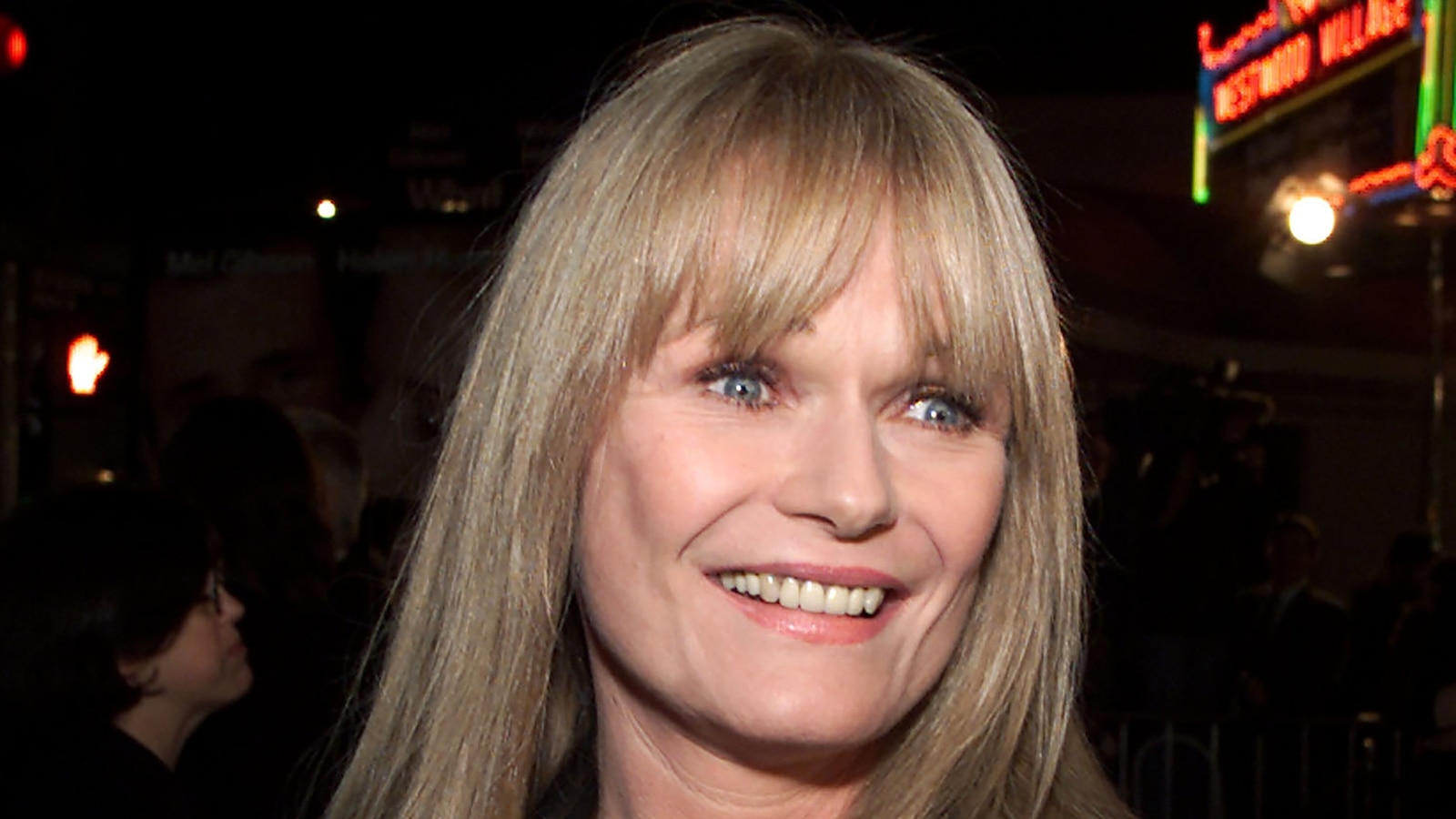
The entertainment world has lost one of its most vibrant and talented stars with the passing of Valerie Perrine at age 82. The actress, best known for her Oscar-nominated performance in “Lenny” and her memorable role in the “Superman” films, died after courageously battling Parkinson’s disease for more than 15 years. The news was shared by filmmaker Stacey Souther, who had directed a biographical documentary short titled “Valerie” about the actress’s remarkable life. Souther took to Instagram on Monday to announce the heartbreaking news, paying tribute to a woman who faced one of the most challenging neurological diseases with what she described as “incredible courage and compassion, never once complaining.” In her emotional post, Souther emphasized that Perrine was “a true inspiration who lived life to the fullest — and what a magnificent life it was,” adding that “the world feels less beautiful without her in it.” The director’s tribute captured not just the loss of a talented performer, but the departure of someone who maintained her dignity and grace even as she faced tremendous physical challenges in her final years.
A Journey from Texas Showgirl to Hollywood Stardom
Valerie Perrine’s path to Hollywood stardom was anything but conventional, beginning in the coastal city of Galveston, Texas, where she was born. Before she ever stepped in front of a movie camera, Perrine made her mark as a showgirl in Las Vegas, where the bright lights and glamorous performances provided the perfect training ground for someone with her natural charisma and striking presence. It was during this period of her life, in 1969 while still working the Vegas circuit, that Perrine found herself tangentially connected to one of the most notorious crimes in American history. She was romantically involved with Jay Sebring, the celebrity hairstylist who would tragically become one of the victims of the Manson Family murders at Sharon Tate’s home. Perrine had been invited to attend the dinner party that fateful night but chose not to go—a decision that may well have saved her life and allowed her to go on to create the body of work that would define her legacy. This brush with history, while horrifying, seemed to fuel her determination to make the most of every opportunity that came her way, a quality that would serve her well as she transitioned from the stages of Las Vegas to the sound stages of Hollywood.
Breaking Through with Critically Acclaimed Performances
Perrine’s entry into the film industry came in 1972 when she landed the role of Montana Wildhack, an adult film actress, in the adaptation of Kurt Vonnegut’s “Slaughterhouse-Five.” This early role showcased her willingness to take on complex and unconventional characters, setting the stage for what would become a career defined by bold choices and memorable performances. However, it was her next major role that would cement her place in Hollywood history and prove that her talent extended far beyond mere screen presence. In 1974, Perrine took on the challenging role of Honey Bruce, wife of controversial comedian Lenny Bruce, in the biographical drama “Lenny,” starring opposite Dustin Hoffman who played the titular character. Her performance was nothing short of revelatory, capturing both the vulnerability and strength of a woman standing by a man whose provocative comedy routines were constantly landing him in legal trouble. The role demanded emotional depth, nuance, and a willingness to explore the darker aspects of a complicated relationship, and Perrine delivered on every level. The film industry took notice in a major way—she earned an Academy Award nomination for Best Actress, won the Best Actress award at the prestigious 1975 Cannes Film Festival, received a Golden Globe nomination, and garnered two BAFTA nominations. This recognition placed her among the elite performers of her generation and proved that the former Vegas showgirl had the acting chops to stand alongside Hollywood’s finest.
Bringing Superhero Cinema to Life
Just as Perrine’s career was reaching new heights following her acclaimed dramatic work, she made a pivot that would introduce her to an entirely new generation of fans and secure her place in pop culture history. In 1978, she joined the cast of “Superman,” taking on the role of Eve Teschmacher, the conflicted girlfriend of the film’s villain, Lex Luthor. At a time when superhero films were still finding their footing as a legitimate genre, “Superman” broke new ground, and Perrine’s performance added a layer of humanity and humor to the film that helped balance its more fantastical elements. Her character, caught between her loyalty to Luthor and her basic human decency, provided some of the film’s most memorable and touching moments, particularly when she defies Luthor’s plans at a crucial moment. The role showcased Perrine’s versatility as an actress—her ability to handle comedy, drama, and everything in between within the same performance. The success of “Superman” was both critical and commercial, becoming one of the highest-grossing films of its time and essentially launching the modern superhero film genre. Perrine reprised her role in 1980’s “Superman II,” further cementing her association with the franchise and proving that her appeal extended beyond any single type of role or genre. These performances in the Superman films ensured that Perrine’s work would continue to be discovered by new audiences for decades to come, as the films became beloved classics that introduced countless viewers to the possibilities of superhero storytelling on the big screen.
A Long and Courageous Battle
The final chapter of Valerie Perrine’s life was marked by a battle that she fought with the same determination and grace that characterized her best performances. For more than 15 years, she lived with Parkinson’s disease, a progressive neurological disorder that affects movement and can cause tremors, stiffness, and difficulty with balance and coordination. According to those close to her, including documentarian Stacey Souther, Perrine faced this challenge with remarkable courage, never complaining despite the increasing difficulties the disease presented. Parkinson’s is a particularly cruel disease for performers, as it can rob them of the physical control and expressiveness that are so essential to their craft. Yet Souther’s tribute emphasized that Perrine maintained her positive spirit throughout, living life to the fullest even as her body betrayed her. The long duration of her illness—over a decade and a half—took not just a physical and emotional toll but a financial one as well. Souther revealed that after such an extended battle with the disease, Perrine’s finances were exhausted, leading to the creation of a GoFundMe page to help cover funeral expenses. This unfortunate reality highlights a broader issue facing many performers from earlier Hollywood eras, who may not have the financial safety nets that today’s stars often enjoy, and who can find themselves struggling after years of mounting medical expenses related to chronic conditions.
A Legacy That Endures
As the news of Valerie Perrine’s passing spreads throughout the entertainment community and among the countless fans whose lives were touched by her performances, what becomes clear is that her legacy extends far beyond the awards she won or the famous roles she played. She represented a particular type of Hollywood story—the unconventional path to stardom, the willingness to take risks on challenging roles, and the ability to move seamlessly between serious dramatic work and crowd-pleasing entertainment. From her early days as a showgirl in Las Vegas to her Oscar-nominated performance in “Lenny” to her iconic role in the Superman films, Perrine’s career was a testament to talent, versatility, and the courage to be different. Her documentary, “Valerie,” directed by Stacey Souther, will now serve as an important historical record of her life and career, ensuring that future generations can understand not just what she accomplished but who she was as a person. The outpouring of love and respect following the announcement of her death demonstrates that even though she may not have worked as actively in recent decades due to her illness, she had never been forgotten by those who appreciated her contributions to cinema. Valerie Perrine lived a life that was full, complex, and ultimately inspiring—a life that touched others through her art and through her example of grace under pressure. As Souther poignantly concluded in her tribute, “I love you, Valerie. I’ll see you on the other side.”