
Major Atlantic Drug Trafficking Ring Dismantled in International Law Enforcement Operation
Massive Cocaine Highway Shut Down Between Continents
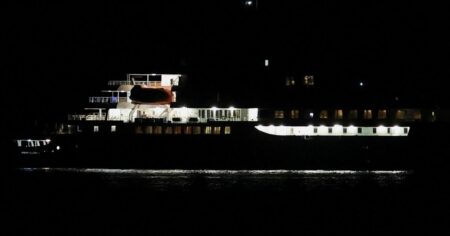
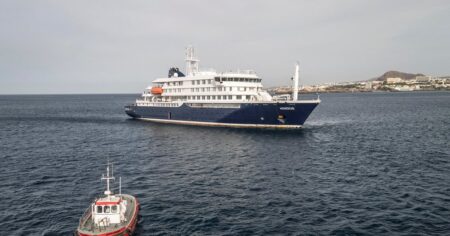
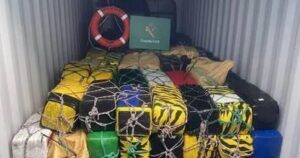
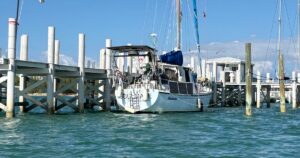
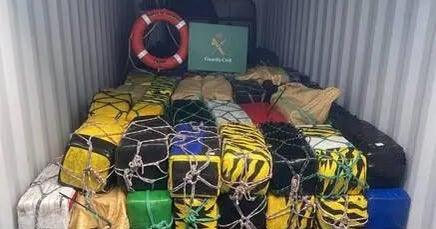
In a significant victory against international drug trafficking, European and international law enforcement agencies have successfully disrupted what they’re calling “a major cocaine highway” stretching across the Atlantic Ocean from Latin America to Europe. The coordinated operation, which ran for two intensive weeks from April 13 to April 26, resulted in the seizure of more than 12 tons of cocaine and approximately 9.5 metric tons of hashish. According to Europol, the European Union’s law enforcement agency that coordinated the mission, authorities intercepted eight vessels and arrested 54 individuals suspected of involvement in these sophisticated drug trafficking networks. The operation represents one of the most successful recent efforts to combat the increasingly complex methods that criminal organizations are using to transport illegal drugs across international waters, demonstrating the growing capabilities of law enforcement agencies to work together across borders to tackle this global challenge.
Evolving Criminal Tactics Force New Law Enforcement Strategies
The mission specifically targeted drug trafficking networks that have been transporting cocaine from various parts of Latin America to European markets through what authorities describe as “complex at-sea transfers.” These sophisticated operations are deliberately designed to evade detection by completely avoiding major ports, where law enforcement presence is traditionally stronger and security measures are more established. Europol had warned earlier this year that trafficking networks were fundamentally changing their methods for moving cocaine across the Atlantic, and the results of this latest operation have essentially confirmed what intelligence agencies already suspected was happening. Criminal organizations have become increasingly clever in their operations, recognizing that traditional routes through established ports have become too risky due to enhanced security measures and surveillance. By conducting transfers in the open ocean, these networks hoped to operate under the radar of law enforcement, creating what they believed would be invisible supply chains moving massive quantities of illegal drugs between continents.
The “Cocaine Highway” Stretched Across Strategic Atlantic Waters
To locate the vessels carrying out these covert transfers at sea, law enforcement agents from multiple countries were strategically deployed to various sites across the Atlantic Ocean. The operation focused particularly on a critical corridor of water between Spain’s Canary Islands and Portugal’s Azores archipelago—an area that has earned the grim nickname of the “cocaine highway” among law enforcement professionals due to the extraordinarily high frequency of drug trafficking activity that occurs there. During the two-week operation, these agents were specifically tasked with detecting, tracking, and ultimately intercepting vessels suspected of involvement in drug trafficking. The strategic positioning of this corridor makes it an ideal location for criminal networks attempting to move drugs from South American production areas toward European consumer markets, as it represents one of the shorter ocean crossings while still offering the anonymity of open water. The successful interception of eight vessels in this relatively concentrated area demonstrates just how heavily this route was being utilized by trafficking organizations.
Fragmented Routes Spread Risk Across Criminal Networks
Authorities have identified what they’re calling “fragmented maritime routes,” a new tactical approach that traffickers are employing more frequently to reduce their exposure to law enforcement. Rather than moving drugs in single, direct shipments from Latin American shores to European destinations, criminal networks are now breaking these journeys into multiple stages with various handoffs occurring in international waters. According to Europol, this fragmentation of the supply chain essentially spreads the risk among all those involved in the operation. If one vessel or one transfer point is compromised, the entire shipment isn’t necessarily lost, and the exposure of the overall network is minimized. This evolution in trafficking methodology demonstrates the sophisticated business thinking that has gone into modern drug trafficking operations. The criminals are essentially applying supply chain management principles—the same concepts that legitimate businesses use to move goods efficiently around the world—to their illegal operations. By moving shipments across the Atlantic “in multiple stages,” these networks create redundancy and resilience into their systems, making it more difficult for law enforcement to completely shut down their operations with any single interdiction.
Intelligence Gathering Reveals Network Operations and Connections
The intelligence gathered during this recent operation has provided authorities with valuable insights into how these evolving criminal networks actually function in practice. The information collected goes far beyond simply identifying the individuals arrested or the vessels seized; it provides a comprehensive picture of the organizational structures, communication methods, coordination tactics, and financial arrangements that make these international operations possible. Jean-Philippe Lecouffe, Europol’s deputy executive director of operations, emphasized the significance of the operation’s success in a statement: “Criminal networks are becoming increasingly flexible, and internationally connected. But our response is evolving fast too. Over a two-week operational period, law enforcement dealt a significant blow to what is known as the cocaine highway.” The intelligence represents perhaps the most valuable outcome of the operation, as it will enable law enforcement agencies to better understand the complete picture of how drugs move from production to consumption, who the key players are at various points in the supply chain, and where the vulnerabilities in these networks might be exploited in future operations.
Building on Success to Dismantle Future Operations
Looking forward, Europol has made clear that this operation represents not an endpoint but rather a foundation for future action against international drug trafficking networks. Lecouffe stated that Europol will use the new intelligence “to build on the intelligence gathered to help identify and dismantle the criminal networks behind these trans-Atlantic operations.” This approach reflects a more sophisticated understanding of how to combat organized crime in the 21st century—recognizing that while seizing drugs and arresting individuals provides immediate results, the ultimate goal must be to dismantle the organizational structures that make these operations possible in the first place. The international cooperation demonstrated during this operation, with law enforcement bureaus from multiple countries working together under Europol’s coordination, provides a model for how authorities can effectively respond to criminal networks that operate across borders and continents. As criminal organizations continue to adapt their methods and become more sophisticated in their operations, law enforcement agencies are demonstrating that they too can evolve, sharing intelligence, coordinating operations, and leveraging technology to stay ahead of those who would profit from the international drug trade. The success of this operation sends a clear message that even the most remote stretches of ocean are not safe havens for criminal activity, and that the international law enforcement community has both the capability and determination to pursue drug traffickers wherever they operate.