

Senator Mark Kelly Sounds Alarm on America’s Military Readiness and Constitutional Rights
America’s Weapons Stockpiles Dangerously Depleted After Iran Conflict
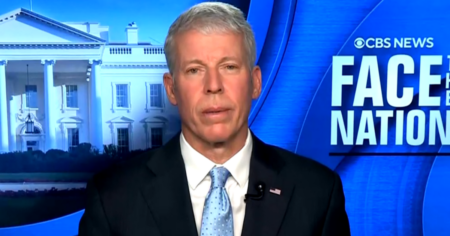
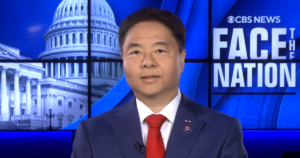
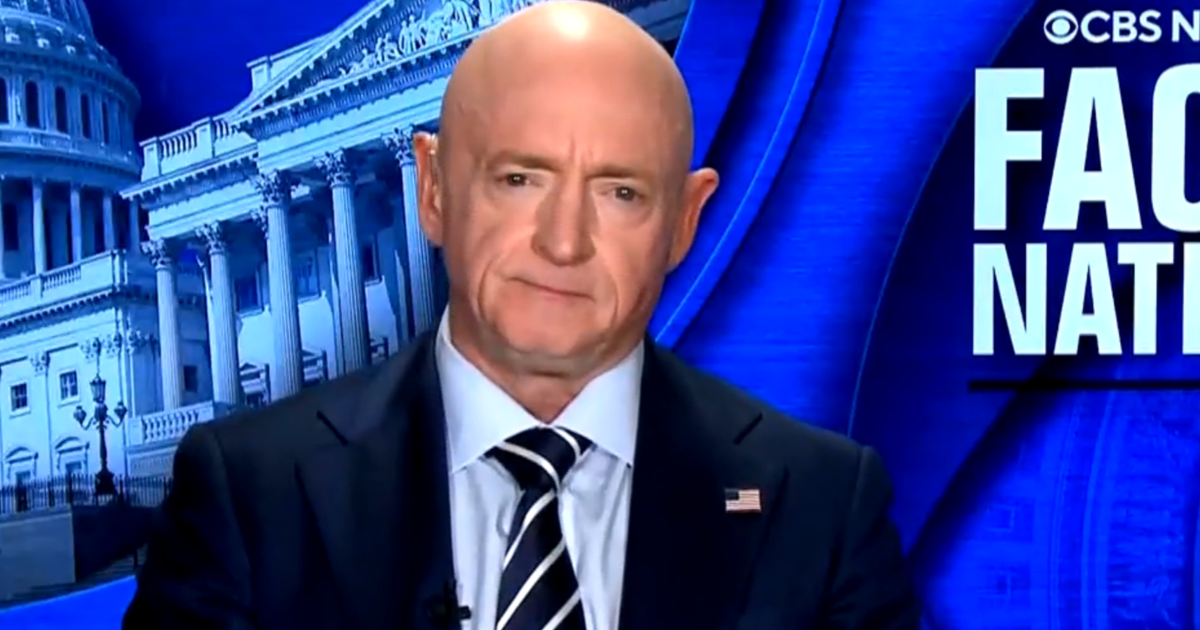
In a sobering interview on CBS’s “Face the Nation,” Arizona Senator Mark Kelly revealed shocking details about how America’s ongoing conflict with Iran has seriously compromised the nation’s military readiness. The Democratic senator, speaking from Austin, Texas, didn’t mince words when describing the state of U.S. munitions stockpiles. After receiving multiple detailed briefings from Pentagon officials, Kelly disclosed that America has burned through critical weapons systems at an alarming rate—including Tomahawk missiles, ATACMS rockets, SM-3 interceptors, THAAD rounds, and Patriot defense systems. What makes this situation particularly concerning isn’t just the quantity of weapons expended, but the timeline for replacement. According to Kelly, replenishing these depleted stockpiles will take years, not months. This leaves America in a precarious position should another major conflict arise, particularly with China in the Pacific region.
The senator’s concern stems from what he characterizes as a fundamental failure of leadership—entering a costly war without clear strategic goals, without a coherent plan, and without any defined timeline for success. The price tag for this conflict has already exceeded $50 billion, and the real cost may be measured not just in dollars but in America’s diminished ability to respond to threats elsewhere in the world. Kelly pointed out the bitter irony that President Trump campaigned on promises to avoid new wars and reduce costs for American families, yet has delivered exactly the opposite: a new war with Iran and rising costs across the board. For Senator Kelly, who serves on the Armed Services Committee and brings the perspective of a former Navy combat pilot and NASA astronaut, the question isn’t just about military hardware—it’s about whether the American people are getting anything of value from this costly engagement.
Can America Still Defend Taiwan? A Question of Timeline and Resources
When pressed by host Margaret Brennan about whether the United States could still defend Taiwan against a potential Chinese invasion, Senator Kelly’s answer was carefully calibrated and deeply concerning. He explained that America’s capability depends entirely on the length of any future conflict. In a short engagement lasting days or perhaps a few weeks, the United States would likely be well-positioned to respond effectively. However, if a conflict with China stretched into months or years—a realistic scenario given the stakes involved—America’s depleted munitions stockpiles would represent a serious strategic vulnerability. This assessment stands in contrast to statements from Admiral Paparo, head of U.S. Pacific Command, who recently testified before Congress that he saw no significant impact on America’s ability to deter China despite the diversion of resources to the Middle East.
The gap between Kelly’s assessment and the admiral’s public testimony highlights a tension that often exists between military officials who must maintain confidence in their readiness and elected officials who have a responsibility to speak candidly about strategic vulnerabilities. Kelly’s position on the Armed Services Committee gives him access to classified briefings that inform his more pessimistic view. His concern isn’t just theoretical—it reflects a practical understanding that modern warfare consumes precision-guided munitions at rates that far exceed peacetime production capacity. The industrial base that produces these weapons systems can’t simply flip a switch and double or triple output overnight. Complex weapons like Patriot interceptors and Tomahawk cruise missiles require sophisticated manufacturing processes, specialized components, and extensive quality control. When Kelly says replenishment will take years, he’s speaking to the reality of defense industrial capacity, not just political rhetoric.
Rejecting the Pentagon’s $1.5 Trillion Budget Request
Perhaps the most striking moment in the interview came when Senator Kelly flatly rejected the Trump administration’s request for $1.5 trillion in defense spending—a figure that would represent nearly double the defense budget from just five and a half years ago when Kelly first entered the Senate. To put this in perspective, when Kelly took office, the U.S. defense budget stood at just over $700 billion. The administration is now asking for an amount nearly equal to what the entire rest of the world spends on defense combined. For Kelly, this astronomical request represents not just fiscal irresponsibility but a fundamental misunderstanding of what America actually needs for its security. He specifically called out programs like the “Golden Dome” missile defense system, expressing skepticism that the physics of such systems would actually work despite the enormous expense involved.
Kelly’s position is particularly noteworthy because it comes from a Democrat who might otherwise be expected to support increased defense spending in the face of depleted stockpiles—stockpiles that he himself has been warning about. But his rejection of the administration’s request reveals a more nuanced position: America needs smart defense spending, not just more spending. He argues that the administration should submit a budget that “makes sense for the moment we’re in” rather than using the crisis as justification for every wish-list item the Pentagon has been hoping to fund. This stance puts Kelly in a difficult political position, simultaneously criticizing the administration for getting into an unnecessary war that depleted munitions while also refusing to simply write a blank check to rebuild those stockpiles. It’s a position that requires explaining, but one that Kelly seems comfortable defending as both fiscally responsible and strategically sound.
China and Russia’s Support for Iran: An Axis of Adversaries
When the conversation turned to Friday’s late announcement of new sanctions against entities providing satellite imagery to Iran—including three Chinese companies—Senator Kelly’s response was notably unsurprised. Of course China is supporting Iran, he explained, just as Russia is. These nations form an axis of adversaries aligned against American interests, and their cooperation shouldn’t come as a shock to anyone paying attention to global geopolitics. But Kelly went further, criticizing what he sees as the administration’s inconsistent use of sanctions as a foreign policy tool. While the administration moved to sanction Chinese entities supporting Iran, Kelly pointed out that it has actually been lifting sanctions on Russia even as that country continues its war against Ukraine, America’s ally.
This contradiction highlights what Kelly sees as a broader pattern of confused and inconsistent foreign policy decision-making. Sanctions are one of America’s most important tools for influencing adversary behavior without resorting to military force, but they only work when applied consistently and strategically. Kelly argued that the administration has failed to use sanctions effectively against Russia, despite repeated urgings from members of Congress. The senator noted his plans to travel to Ukraine in approximately three weeks to meet with government officials and hear directly from the Ukrainian people about the status of the conflict. His concern is that President Trump’s “odd relationship with Putin”—a phrase Kelly has used repeatedly—prevents the administration from applying the kind of sustained pressure that might actually bring the conflict to an end on terms favorable to Ukraine and the broader Western alliance.
The Ukraine Stalemate and Putin’s Latest Signals
Regarding the three-day ceasefire in Ukraine announced for prisoner exchanges and Russia’s annual military parade, Senator Kelly cautiously welcomed Vladimir Putin’s statement that the conflict “may be coming to an end.” Everyone wants the war to end, Kelly emphasized, but nobody wants it more than the Ukrainian people who have suffered through years of brutal conflict. Yet Kelly placed blame squarely on the Trump administration for the failure of diplomacy to date, arguing that President Trump has not provided Ukraine with the support it needs to negotiate from a position of strength. Instead, the administration has backed off sanctions, refused to press Putin with the tools available, and generally failed to apply the kind of sustained pressure that might actually move the Russian leader toward genuine compromise.
Kelly’s upcoming trip to Ukraine reflects his commitment to understanding the situation firsthand rather than relying solely on second-hand reports and official briefings. As someone who has personally experienced combat and understands the realities of warfare, Kelly brings a perspective that goes beyond typical congressional fact-finding missions. His criticism of Trump’s approach to Russia—that “odd relationship” he referenced—touches on one of the most persistent questions in American foreign policy over the past several years. Why does Trump consistently seem reluctant to take strong action against Putin even when American interests and allies are directly threatened? Kelly doesn’t claim to have the answer, but he’s clear about the consequences: a stalemated war that continues to kill Ukrainians and destabilize Europe while American diplomacy remains ineffective.
Fighting for Constitutional Rights: Kelly’s Legal Battle with the Pentagon
Beyond foreign policy concerns, Senator Kelly is engaged in a personal legal battle that carries implications for millions of retired service members. Kelly is suing Defense Secretary Pete Hegseth on grounds that his First Amendment rights were violated after he made a video statement that the Justice Department claims encouraged active duty service members to reject legal orders. Kelly insists he only encouraged resistance to illegal orders—a crucial distinction that goes to the heart of military law and constitutional rights. What makes this case particularly significant is the government’s argument in court that retired service members like Kelly who want to exercise their free speech rights can simply give up their military retirement benefits, pensions, and healthcare. For Kelly, this position is unconscionable—asking those who have given the most to their country to surrender their constitutional rights as the price of keeping their earned benefits.
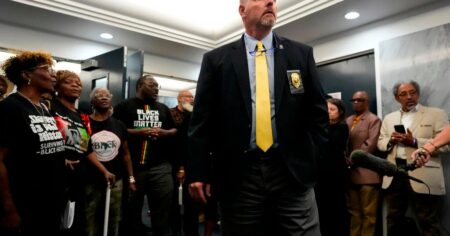
Kelly emphasized that this case isn’t really about him personally, though he’s become the focal point because of his position as a U.S. Senator and his public platform. One of the judges hearing the case suggested that Kelly is different from other veterans precisely because he has this “bully pulpit” as an elected official. But Kelly counters that his role as a senator on the Armed Services Committee specifically requires him to speak out about issues affecting the military—that’s what separation of powers means in practice. The Constitution designed Congress to serve as a check on executive authority, and Kelly argues he was doing exactly what his position requires when he made the statement that triggered this legal battle. The senator noted that he’s had retired service members join him in the courtroom because they understand what’s at stake: if the government prevails, it would effectively silence 2 million retired service members by forcing them to choose between their earned benefits and their constitutional rights. Kelly framed the progression of the administration’s actions in stark terms—first, officials said he should be hanged and executed, then they tried to prosecute him, and now they’re trying to strip away constitutional protections from millions of veterans. It’s a fight Kelly says he’s prepared to take to the Supreme Court if necessary, because the implications extend far beyond his personal situation to fundamental questions about free speech, civilian control of the military, and the rights of those who have served.