


The Death-Defying Quad: How Figure Skating’s Most Terrifying Jump Became Essential
The Physics and Pain of Perfection
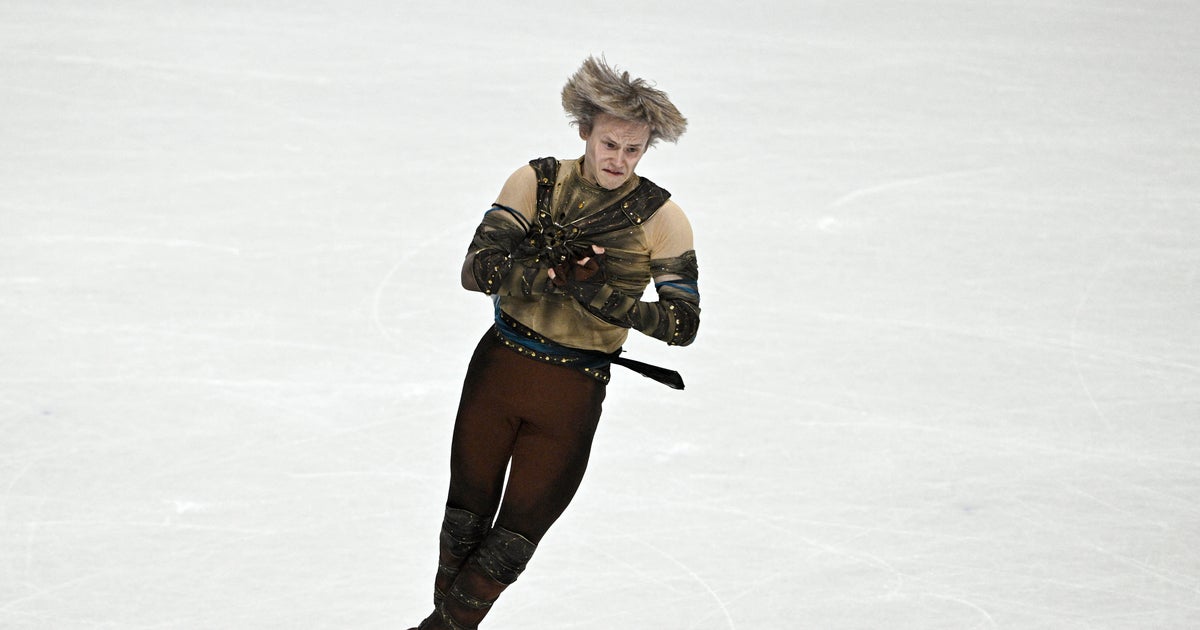
Figure skating’s quadruple jump represents one of the most physically demanding feats in all of sports, requiring a level of precision that most people can barely comprehend. When a skater attempts a quad, every element of their body must work in flawless harmony—shoulders, hips, knees, and feet all need to align perfectly in a single vertical axis. The entire body weight becomes concentrated into one powerful force, generating enough momentum to launch the skater into the air for at least four complete revolutions before landing backward on a single blade. This entire breathtaking sequence unfolds in less than a second, making it a true test of both physical mastery and split-second decision-making. Timothy Goebel, who made history as the first skater to land three quads in a single program and earned an Olympic bronze medal in 2002, describes the experience in visceral terms that capture just how punishing this jump can be on the human body. “Your legs are on fire,” he explains, painting a picture of the intense physical strain. “Your lungs are screaming at you, like your body is just wrecked.” But the challenge isn’t purely physical—it’s also a profound mental battle. The jump must be so deeply ingrained in muscle memory that the body can execute it even when exhausted, but skaters also need extraordinary mental fortitude to push through the pain and fear that accompanies launching yourself into the air with such force.
From Revolutionary to Required: The Quad’s Evolution
The quadruple jump, commonly shortened to “quad” in skating circles, has fundamentally transformed the landscape of competitive figure skating. While it’s still relatively new to women’s competition and continues to redefine what’s possible in that category, the quad has become absolutely essential in men’s programs—no longer a flashy bonus but a basic requirement for serious contenders. Beyond the standard quad exists an even more advanced variation: the quad axel. This jump demands a forward-facing takeoff and an astonishing four-and-a-half full rotations in the air, making it one of the most difficult maneuvers ever attempted in figure skating. Only one person has ever successfully landed this jump in competition: Ilia Malinin, who has become known in skating circles as the “Quad God.” Malinin, who helped lead the United States to gold in the team event at the 2026 Winter Olympics, first shocked the skating world when he landed the quad axel at the 2022 U.S. International Figure Skating Classic. The achievement was so extraordinary that even veterans like Goebel, who revolutionized the sport himself, could barely believe what they were witnessing. “I never thought I would see one in competition,” Goebel admitted, his astonishment clear even years later. What makes Malinin’s accomplishment even more remarkable is the consistency he’s developed—the fact that he can execute a quad axel “almost every day in practice with relative ease,” as Goebel notes, is simply “mind-blowing” to those who understand just how difficult this jump truly is.
The Brutal Path to Mastery
The journey to mastering quadruple jumps involves countless hours of grueling practice and an acceptance of repeated failure. Patrick Blackwell, a 2026 U.S. Junior Men’s National Champion who already performs multiple quads in competition, knows this reality intimately. Like most skaters working to expand their quad repertoire, Blackwell uses a pole harness during practice sessions to attempt quads he hasn’t yet mastered. This training aid helps skaters practice the rotation and landing without the full impact, though it still requires immense physical effort. Even with this assistance, the learning process involves falling over and over again, picking yourself up, and launching into the air once more in relentless pursuit of greatness. The physical toll is enormous—bruises, strained muscles, and the constant impact on joints are simply part of the price skaters pay for pushing the boundaries of what the human body can achieve on ice. What makes the training process particularly challenging is that there’s no way to gradually build up to a quad; unlike other skills that can be developed incrementally, you either complete the four rotations or you don’t. This all-or-nothing nature means that skaters must repeatedly attempt the full jump, absorbing the impact of failed attempts until their bodies and minds finally synchronize perfectly enough to stick the landing.
Technology Meets Tradition
Today’s quad-chasing skaters have one significant advantage that previous generations lacked: advanced analytics and data-driven training methods. Patrick Blackwell represents this new generation of skaters who combine traditional practice methods with cutting-edge technology to optimize their performance. Modern training systems can measure multiple aspects of a jump with incredible precision—tracking the skater’s height off the ice, calculating rotational speed, and identifying variations or patterns across multiple attempts. This data provides invaluable feedback that helps skaters understand exactly what they’re doing right and where improvements are needed. “What they do is measure your height, your rotational speed and variations in any patterns that they can see in the jumps,” Blackwell explained, describing how this technological assistance helps refine technique in ways that were impossible just a decade or two ago. When Timothy Goebel was pioneering multiple quads in a single program, he relied primarily on feel, coach feedback, and countless repetitions to perfect his technique. Today’s skaters still need those elements, but they can supplement their training with objective data that reveals subtle inefficiencies or inconsistencies that might not be visible to the naked eye. This fusion of traditional skating knowledge and modern sports science has accelerated the development of quad jumping, contributing to the remarkable progression we’ve seen in recent years.
The New Standard: No Quad, No Podium
The quad has evolved from a revolutionary innovation to an absolute necessity in men’s figure skating, and this shift has happened remarkably quickly. Timothy Goebel’s experience perfectly illustrates this transformation. When he won his Olympic bronze medal in 2002, he knew that attempting multiple quads was essential to his medal chances. “For me, in 2002, it was no quad, no medal, full stop,” he recalled, explaining that the jump was his ticket to the podium even though it was still relatively rare in competition. Fast forward to today’s competitive landscape, and the stakes have risen dramatically. When asked about the current requirements for men’s figure skating, Goebel laughed and said, “No quad, no top ten!” This isn’t hyperbole—it’s the reality of modern elite figure skating. What was once a medal-winning innovation is now merely the baseline for competitive relevance. Skaters attempting to reach the podium at major competitions typically need not just one quad, but multiple quads incorporated throughout their programs, executed with both technical precision and artistic integration. Despite this intense escalation in difficulty, Goebel views the progression as “overwhelmingly a positive,” seeing it as a natural evolution of the sport that pushes athletes to new heights and gives audiences increasingly spectacular performances to enjoy during events like the Milano Cortina Olympic Games, where these gravity-defying jumps are certain to be on full display.
Approaching Human Limits
As quad jumps become more common and skaters continue pushing boundaries with variations like the quad axel, an important question emerges: how much further can this progression go? Are we approaching the absolute limits of what the human body can achieve on ice, or will future generations of skaters find ways to exceed even today’s seemingly impossible standards? Timothy Goebel, who has both pioneered these jumps and watched the sport evolve over decades, offered a thoughtful perspective on this question. “I think that’s the exciting part about sport and about the whole Olympic movement,” he reflected, acknowledging that pushing boundaries is central to athletic competition and what makes the Olympics captivating for billions of viewers worldwide. However, he also sounded a note of caution based on his deep understanding of biomechanics and human physiology. “But I think we’re close to that bound of like, tapping out the human ability,” he admitted, suggesting that we may be approaching the practical limits of what’s physically possible. The quad axel may represent something close to the ceiling of rotational jumps in figure skating—after all, a quintuple jump would require five full rotations in an even shorter timeframe, a feat that may simply exceed the capabilities of human muscle and bone structure. Yet the history of sports is filled with moments when experts declared that certain barriers were unbreakable, only to watch athletes find ways to surpass them. Whether future skaters will prove Goebel’s assessment correct or discover new techniques that extend the boundaries even further remains one of the most intriguing questions in figure skating today.