
EU Approves Massive $106 Billion Loan Package for Ukraine After Hungary Drops Veto
A Major Breakthrough in European Security Cooperation
In a significant development for European security and Ukraine’s ongoing defense efforts, the European Union has given preliminary approval to a massive $106 billion loan package for Ukraine. This breakthrough came after Hungary withdrew its months-long veto that had blocked the funds since February. The decision marks a pivotal moment not only for Ukraine’s ability to defend itself but also for the broader European security landscape. With the majority of these funds earmarked for Ukraine’s defense industry, officials in Kyiv are emphasizing that this isn’t just about defending Ukrainian territory—it’s about protecting the entire European continent from Russian aggression. The approval comes at a critical juncture in Ukraine’s war with Russia, now in its fifth year, as the country faces increasing resource constraints while continuing to make gradual military advances. This loan package represents one of the largest financial commitments the EU has made to support Ukraine’s defense capabilities and signals a deepening recognition among European leaders that Ukraine’s security is intrinsically linked to Europe’s own safety and stability.
The Political Shift That Made It Possible
The path to this loan approval was blocked for months by an unexpected obstacle: a dispute over an oil pipeline. Hungarian Prime Minister Viktor Orbán had vetoed the funding package back in February, accusing Ukraine of shutting down the Druzhba Pipeline, a crucial energy artery that carries Russian oil through Ukrainian territory to both Hungary and Slovakia. This dispute highlighted the complex web of dependencies and relationships that still exist between certain EU member states and Russia, even as the bloc collectively works to support Ukraine against Russian aggression. However, the political landscape in Hungary underwent a dramatic transformation on April 12, when Orbán lost the country’s parliamentary elections to center-right challenger Peter Magyar. This electoral upset proved to be the turning point that Ukraine needed. Magyar had campaigned on a more supportive stance toward Ukraine, presenting a stark contrast to Orbán’s often obstructive approach to EU efforts to aid Kyiv. Following the election, Ukrainian President Volodymyr Zelenskyy announced that the Druzhba Pipeline had been repaired and that oil flows to Hungary and Slovakia had resumed, effectively removing the stated reason for Hungary’s opposition to the loan package.
From Preliminary to Final Approval: The Road Ahead
While EU ambassadors issued their preliminary approval during a Wednesday meeting, the loan still requires official ratification by the full European Union. However, with Hungary’s veto now lifted, Ukrainian and EU officials don’t anticipate any remaining serious obstacles to final approval. This represents a significant procedural milestone, as the loan package was originally introduced back in December, meaning it has taken more than four months to reach this point due to the Hungarian blockage. The bureaucratic journey from preliminary to final approval is typically straightforward once all member states are on board, and the confidence expressed by officials on both sides suggests that the funds could begin flowing to Ukraine in the relatively near future. For Ukraine, which has been operating under increasingly tight financial constraints as the war drags on, the certainty that this funding is finally moving forward provides crucial relief for military planning and industrial production. The timing couldn’t be more critical, as Ukraine continues to face relentless pressure along multiple front lines and needs to maintain its defense industrial capacity to sustain its military operations.
Investing in Ukraine’s Defense Industry and Europe’s Security
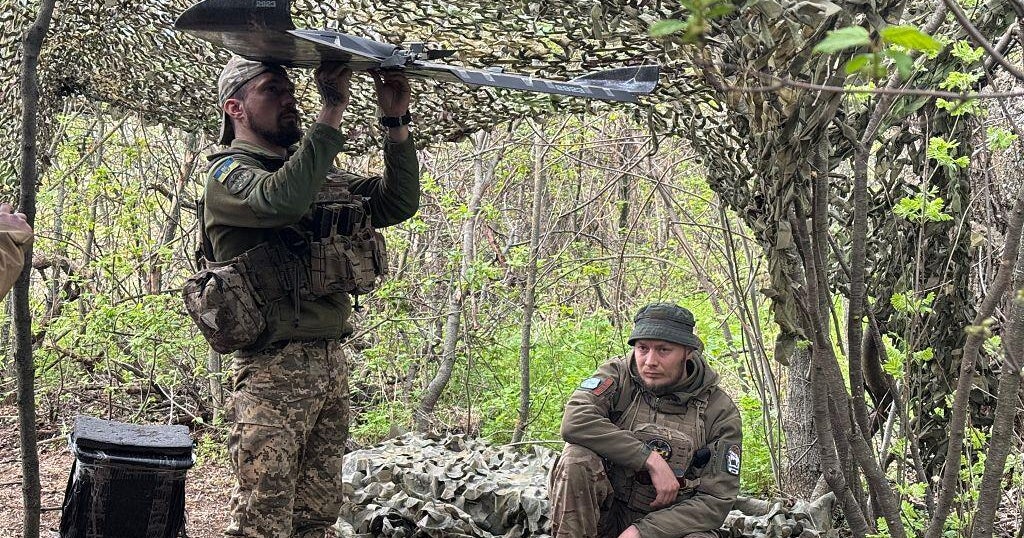
Ukrainian officials have outlined how they plan to utilize this substantial financial injection, with approximately two-thirds of the $106 billion loan dedicated to military production and defense capabilities. Yuriy Sak, an adviser to Ukraine’s Ministry of Strategic Industries, provided revealing insights into the gap between Ukraine’s defense production capacity and current government procurement levels. According to Sak, Ukraine’s defense industry has the capability to produce $50 billion worth of weapons and military equipment, but the government has only been able to purchase $15 billion worth due to funding constraints. This massive gap between production capacity and actual output illustrates just how significant the EU loan will be for Ukraine’s ability to equip and sustain its military forces. The emphasis on defense industrial production rather than simply purchasing weapons from foreign suppliers reflects a strategic approach that aims to build Ukraine’s long-term military self-sufficiency while also creating economic opportunities within the country. Heorhii Tykhyi, spokesperson for Ukraine’s Ministry of Foreign Affairs, emphasized the cost of the funding delay, noting that several defense projects had been underfunded or completely halted due to the lack of these specific funds. The restoration of this funding will allow those projects to resume and new initiatives to begin, potentially accelerating Ukraine’s military capabilities at a crucial moment in the conflict.
Reframing the Narrative: Ukraine’s Defense as Europe’s Defense
Both Ukrainian officials and European policymakers have been careful to frame this loan package not as charity or humanitarian assistance, but as an investment in European security. This messaging represents a significant evolution in how Ukraine’s struggle is understood within the broader European context. Yuriy Sak articulated this perspective clearly when he stated that while the money is for Ukraine’s defense, people are increasingly recognizing that it’s really for the European Union’s defense. Heorhii Tykhyi reinforced this point even more directly, declaring that “this loan is not an act of charity. It is not an act of solidarity with Ukraine. It is money intended to defend Europe from the Russian threat.” This reframing serves multiple purposes: it helps build and maintain European public support for substantial financial commitments to Ukraine, it acknowledges the reality that a Russian victory in Ukraine would pose direct security threats to other European nations, and it positions Ukraine as a security partner rather than a dependent client state. The approach has gained increasing traction among EU leaders as the war has continued and as Russia has demonstrated both its willingness to sustain a prolonged conflict and its hostility toward European security structures. For Ukraine, this shift in narrative strengthens its position as it seeks continued support and eventual EU membership.
Looking Forward: New Relationships and Lingering Challenges
Despite the positive developments, Ukrainian officials remain cautiously optimistic about the road ahead, particularly regarding their relationship with Hungary. While Peter Magyar’s election victory has removed the immediate obstacle to EU funding, Hungary’s continued heavy reliance on Russian energy creates ongoing potential complications. Ukrainian adviser Yuriy Sak candidly described Orbán as “a bone in our throat” and acknowledged that Magyar has sent mixed messages, noting that “we will have to see how it goes, but we know he is not going to be as disruptive as Orbán.” This measured optimism reflects the reality that even with new leadership, Hungary’s economic ties to Russia and its geographic position create natural tensions with Ukraine’s security needs and European sanctions regimes. President Zelenskyy, speaking to journalists in Kyiv on Wednesday, struck a diplomatic and hopeful tone about future relations with Hungary’s new government, expressing hope that Hungary’s position would become more constructive and pledging that Ukraine would also demonstrate willingness to meet Hungary halfway. His statement that “we, as neighbors, surely must live in peace” acknowledges the importance of regional stability and cooperation, even as Ukraine continues to face existential threats from Russia. As this massive loan package moves toward final approval and implementation, it represents not just financial support for Ukraine’s immediate defense needs, but also a deepening of European commitment to collective security and a recognition that the outcome of Ukraine’s struggle will shape Europe’s future for decades to come.