


Senate Republicans Push Forward with Border Security Bill Despite Controversy Over White House Ballroom Funding
A Massive Border Security Package Returns to Capitol Hill
The U.S. Senate reconvened Monday following their week-long break, and Republican lawmakers are gearing up to advance their ambitious immigration enforcement funding plan without Democratic support. The proposed legislation represents one of the most significant investments in border security and immigration enforcement in recent years, but it’s not just the immigration components that are drawing attention. Tucked within this massive spending package is a provision that’s causing considerable political friction: funding for security upgrades related to President Trump’s controversial East Wing renovation project, which includes construction of an enormous ballroom at the White House.
Last week, Republican members of both the Senate Judiciary and Homeland Security committees released the full text of their proposal to fund the Department of Homeland Security’s immigration operations through the end of fiscal year 2029. The package carries a hefty price tag of $72 billion and represents a comprehensive approach to immigration enforcement. Within this total, more than $38 billion would go to Immigration and Customs Enforcement (ICE), the agency responsible for interior immigration enforcement, while Customs and Border Protection (CBP), which manages the borders and ports of entry, would receive approximately $26 billion. These allocations reflect the Republican Party’s continued emphasis on strict immigration enforcement and border security as core policy priorities.
The Controversial Ballroom Takes Center Stage
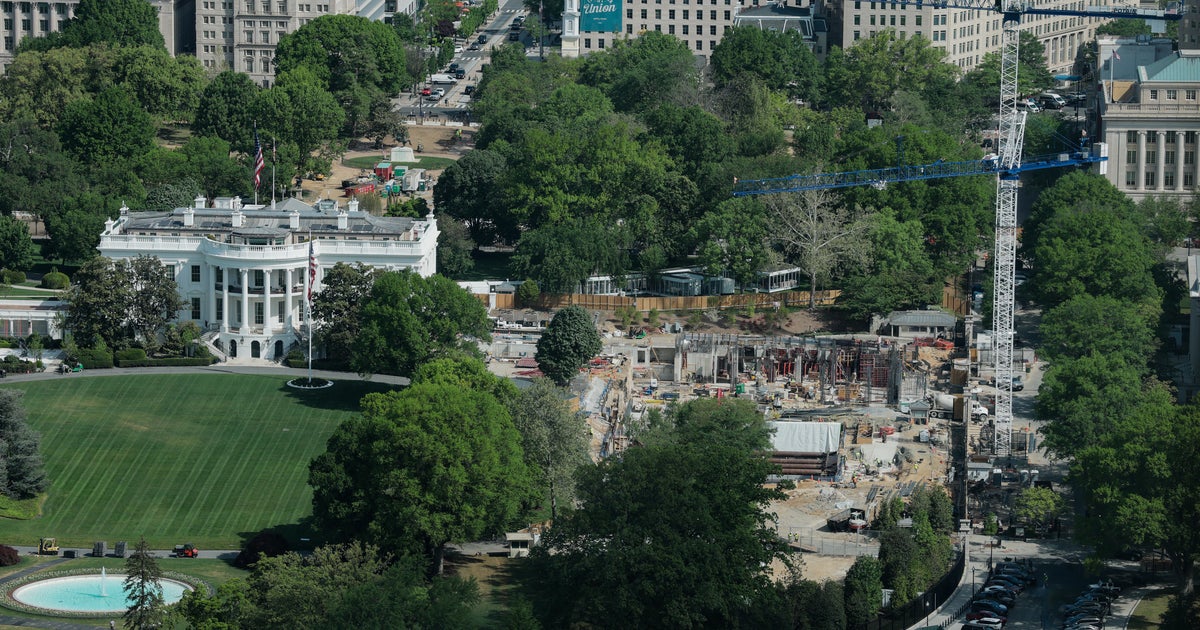
However, it’s an additional $1 billion earmarked for the Secret Service that’s generating the most heated debate. This funding is designated for “security adjustments and upgrades,” including enhancements connected to what’s being called the “East Wing Modernization Project.” This massive undertaking covers approximately 90,000 square feet and includes not only the construction of a large ballroom but also the renovation of underground facilities housing national security operations and healthcare capabilities. According to the bill’s language, the allocated funds could be used for both “above-ground and below-ground security features,” a specification that’s deliberately broad and has raised questions about how the money will actually be spent.
President Trump first unveiled his vision for the East Wing makeover last July, presenting it as both a security necessity and an improvement to the White House’s capacity to host significant events. The administration moved with remarkable speed—by October, the original structure had already been demolished. Trump and his team have consistently argued that the renovation is essential for both security reasons and to provide adequate space for the large-scale diplomatic and ceremonial functions that the White House regularly hosts. Following the tragic shooting at the White House Correspondents’ Dinner late last month, the president renewed his push for the project, framing it explicitly in terms of security needs. The construction hasn’t proceeded without legal challenges, though. Opponents successfully secured a temporary halt to the work in late March, but the U.S. Court of Appeals for the District of Columbia Circuit reversed that decision and allowed construction to resume. The legal battle continues, with the next hearing scheduled for June 5th.
The White House Defends the Project While Democrats Cry Foul
The White House was quick to praise the Senate’s inclusion of security funding in the package, issuing a statement that emphasized congressional recognition of legitimate security needs. White House spokesman Davis Ingle articulated the administration’s position clearly: “As President Trump has repeatedly said, the White House must be a safe and secure complex that generations of future presidents and visitors to the People’s house can enjoy.” This framing positions the renovation not as a vanity project but as infrastructure investment for the nation’s most important residence and workplace.
The legislative text does include some restrictions, specifically stating that none of the appropriated funds can be used for non-security elements of the project. President Trump has consistently maintained that the ballroom itself is being financed entirely through private donations rather than taxpayer money. This distinction, however, hasn’t satisfied Democratic critics who see the billion-dollar security allocation as inseparable from the overall project. Senate Minority Leader Chuck Schumer of New York has been particularly vocal in his opposition, framing the funding as a symbol of Republican priorities that he believes are wildly out of touch with ordinary Americans. In a letter sent to Senate Democrats on Monday, Schumer employed sharp rhetoric: “At a time when Americans can’t make ends meet, Republicans say ‘Let them eat cake’ — and then hand Trump a billion dollars to build a ballroom to serve it in.” The Marie Antoinette reference isn’t subtle—Schumer is explicitly comparing Republican lawmakers to the out-of-touch French aristocracy that preceded the French Revolution.
Democrats Promise a Fight They Likely Can’t Win
Schumer has pledged that Democrats will oppose the Republican plan “with every tool we have,” promising a vigorous fight against what they view as misplaced priorities during economically challenging times for many American families. However, the political reality is that Democrats have very limited ability to actually block this legislation unless they can persuade some Republican senators to break ranks and vote with them—an outcome that currently seems unlikely given the party-line nature of immigration policy debates.
Republicans currently hold 53 seats in the Senate, giving them a comfortable majority. Under normal circumstances, most significant legislation requires 60 votes to overcome procedural hurdles and move forward, which would necessitate bipartisan cooperation. However, Republicans are utilizing a special legislative process called budget reconciliation, which allows measures with direct budgetary impact to pass with only a simple majority vote. This procedural tool, which both parties have used when in power, essentially enables the majority party to bypass the minority’s ability to filibuster and block legislation. It’s a powerful mechanism that means Democrats, despite their unified opposition, cannot prevent this package from advancing as long as Republicans remain united.
Political Risks for Republicans Heading into Midterm Elections
The inclusion of funding connected to Trump’s ballroom project, however, does create potential political complications for Republican lawmakers, particularly those representing competitive districts or states where they’ll face challenging reelection campaigns in November. Public opinion polling has consistently shown that the East Wing renovation project is unpopular with voters, many of whom view it as an unnecessary expenditure or presidential extravagance. Republicans in swing states or districts may find themselves in the uncomfortable position of having to defend their vote for a package that Democrats will certainly characterize as funding a lavish ballroom for the president while everyday Americans struggle with high costs of living. This political vulnerability could prove significant as the midterm elections approach, potentially affecting control of Congress.
These dynamics will define the legislative week as senators return to Washington. Following the Senate Republicans’ adoption of a budget resolution last month, which set the overall framework for spending, the various committees are expected to begin marking up the legislation—the process of reviewing, amending, and preparing bills for floor consideration—in the coming days. Once that committee work is complete, the full legislation will come to the Senate floor for debate and voting. President Trump has set an ambitious deadline of June 1st for both the House and Senate to pass the legislation and send it to his desk for signature. Whether that timeline is realistic remains to be seen, but it underscores the administration’s desire to move quickly on immigration enforcement funding, even as the controversy over the ballroom funding threatens to overshadow the border security components that represent the package’s primary purpose. The coming weeks will reveal whether Republicans can maintain party unity despite the political risks, and whether Democrats’ promised resistance amounts to more than symbolic opposition given their limited procedural options.