


Legal Battle Erupts Over Trump’s Blue Makeover of the Lincoln Memorial Reflecting Pool
A Historic Landmark Under Scrutiny
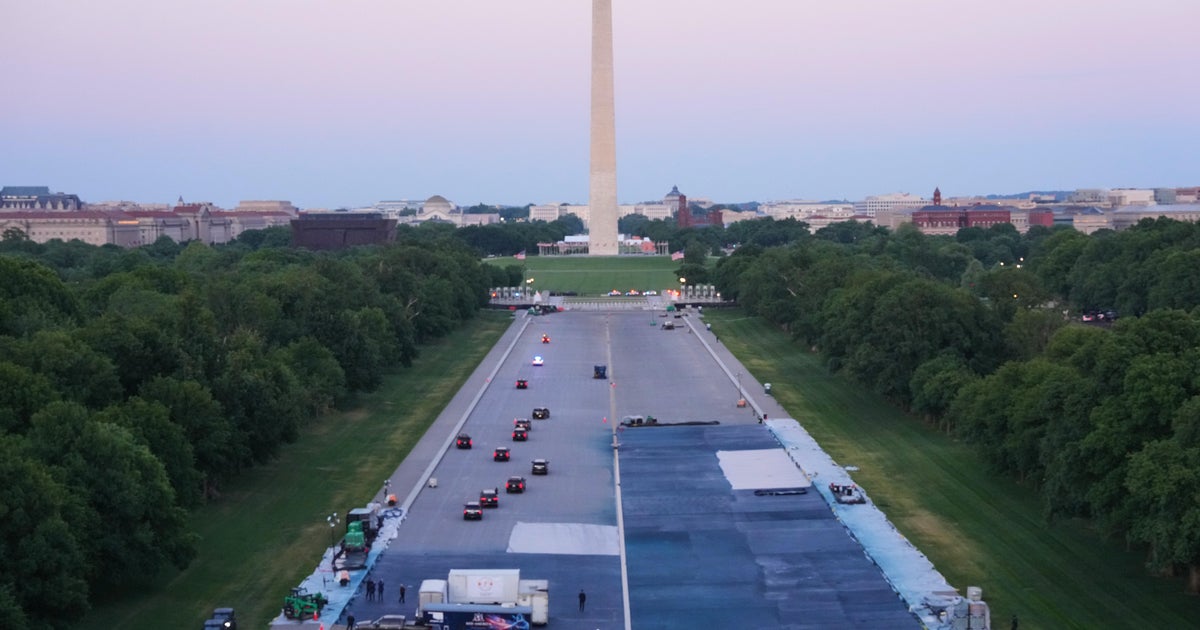
The iconic Reflecting Pool at the Lincoln Memorial has become the center of a heated legal dispute after the Trump administration began resurfacing it in what the president describes as “American flag blue.” The Cultural Landscape Foundation, a nonprofit organization dedicated to architectural education and advocacy, has filed a federal lawsuit to immediately halt the ongoing project. The organization argues that the administration bypassed crucial legal procedures required by Congress before making changes to this historic feature of the National Mall. The lawsuit, which names both the Department of the Interior and the National Park Service as defendants, represents the latest clash between preservation advocates and an administration eager to leave its mark on America’s most recognizable landmarks. What was meant to be an improvement has instead sparked a national conversation about historical preservation, proper governmental procedures, and the appropriate way to maintain our country’s treasured monuments.
Breaking Protocol: The Legal Arguments
At the heart of this legal challenge lies a fundamental question about following established rules and regulations. The Cultural Landscape Foundation’s 26-page complaint, filed by attorneys from the Washington Litigation Group, alleges that the Trump administration completely sidestepped the National Historic Preservation Act and other federal laws designed to protect historic sites. According to the lawsuit, no consulting parties were notified or given any opportunity to participate in discussions about such a significant alteration to this historic landmark. The complaint draws a parallel to what it calls “the rush to destroy the East Wing of the White House,” describing these actions as part of a disturbing pattern where the administration “willfully disregards legal limits established by Congress.” The lawsuit emphasizes that with each passing day, the historic character of the Reflecting Pool is being “further and fundamentally altered,” making the need for immediate action urgent. These procedures weren’t created arbitrarily—they exist to ensure that changes to our nation’s historic sites are carefully considered, properly vetted, and executed with appropriate oversight and expertise.
The Project Details and Presidential Vision
In late April, President Trump unveiled his vision for the Reflecting Pool with characteristic enthusiasm, telling reporters about plans to resurface the stone bottom with what he described as the “latest and greatest filament” in an “American flag blue” color. Since then, crews have been actively working on the drained pool, applying the new material while the nation watches and debates. The president expressed his frustration with what he called the “terrible” condition of the pool, despite the fact that it underwent a comprehensive renovation in 2012 and has received periodic maintenance since then, including regular draining to remove algae, garbage, bird droppings, and accumulated dirt. In Trump’s view, the project would result in “a beautiful, beautiful reflecting pool, the way it’s supposed to be—much better than it ever was, actually,” comparing it to “essentially a pool surface.” Last week, in a dramatic display of presidential involvement, Trump and his motorcade actually drove into the drained pool to personally inspect the ongoing work, underscoring his hands-on approach to the project and his determination to see it through to completion.
The Money Trail and Transparency Concerns
What began as a reported $2 million taxpayer-funded project has raised eyebrows as new information has come to light. The New York Times revealed that the contracting firm hired for the work would actually be paid more than $13 million—a staggering increase from the originally stated cost. Even more concerning to critics is the revelation that this contract was awarded without a competitive bidding process, a standard practice designed to ensure taxpayer money is spent wisely and that projects are awarded fairly. The lawsuit specifically references this reporting, adding another layer of concern about how the project has been handled from start to finish. This massive discrepancy between the initial price tag and the actual cost, combined with the lack of a competitive bidding process, raises serious questions about transparency and fiscal responsibility. For taxpayers and preservation advocates alike, these revelations add fuel to the argument that the entire project has been mishandled and rushed through without proper oversight or consideration of best practices for government contracting.
Expert Opposition and Design Philosophy
Charles Birnbaum, president and CEO of The Cultural Landscape Foundation and the driving force behind this lawsuit, brings impressive credentials to his criticism of the project. From 1992 to 2007, he served as the coordinator for the National Park Service’s Historic Landscape Initiative and actually wrote the Department of Interior’s standards and guidelines guide—the very framework that governs how historic landscapes like the Reflecting Pool should be preserved and treated. His expertise isn’t just theoretical; it’s the foundation upon which federal preservation policy is built. Birnbaum has been blunt in his assessment, stating that the “blue-tinted basin is more appropriate to a resort or theme park” than to one of America’s most solemn national monuments. He emphasizes that the Reflecting Pool shouldn’t be viewed in isolation but as part of the larger ensemble of designed landscapes comprising the National Mall. According to Birnbaum, the original design intent was to create a reflective surface that remains subordinate to and enhances the “solemn and hallowed visual and spatial connection between the Washington Monument and the Lincoln Memorial.” In other words, the pool was never meant to be a flashy attraction in its own right but rather a thoughtful element that allows visitors to contemplate the majesty of the monuments it connects.
The Broader Context and Government Response
This lawsuit doesn’t exist in a vacuum—it’s part of a larger pattern of legal challenges facing the Trump administration’s ambitious plans to reshape Washington’s historic landscape. Multiple lawsuits are currently seeking to block various aspects of the president’s vision, including efforts to add his name to and renovate the Kennedy Center for the Performing Arts, construct a giant arch across the Potomac River from the Lincoln Memorial, and demolish the White House East Wing to create space for a privately funded ballroom. Each of these projects has generated its own controversy and legal opposition from those who believe historic preservation should take precedence over personal legacy projects. For its part, the Department of the Interior has defended the Reflecting Pool project, with a spokesperson stating that the National Park Service “chose the best company to expedite the repair of the iconic Reflecting Pool ahead of our 250 celebrations,” referring to America’s upcoming semiquincentennial. The department argues that the blue surface “will enhance the visitor experience by making the pool reflect the grand Lincoln Memorial and Washington Monument.” This fundamental disagreement—between those who believe they’re improving America’s monuments and those who argue they’re damaging irreplaceable historic features—will ultimately be decided in the courts, where judges will determine whether proper procedures were followed and whether the changes can continue. The outcome of this case could set important precedents for how future administrations approach modifications to our nation’s historic landmarks and whether the laws designed to protect them will be enforced or merely treated as suggestions to be bypassed in the name of expediency.