


Face the Nation: Navigating Global Crises and Domestic Challenges
The Iran Conflict and Energy Market Disruptions
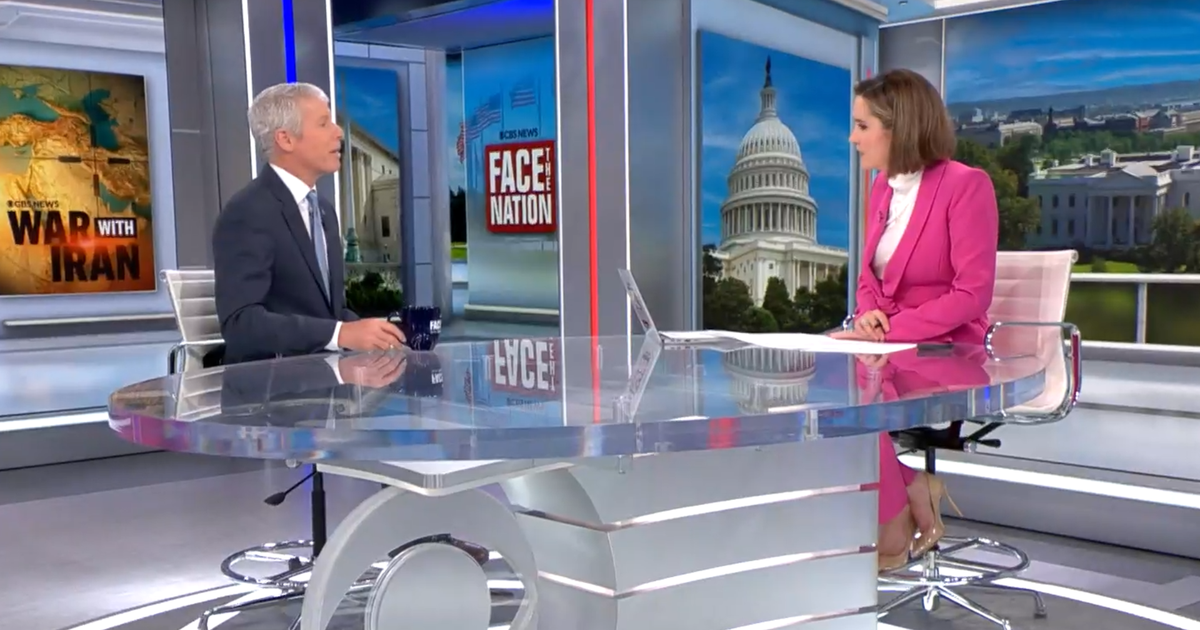
This week’s Face the Nation broadcast painted a sobering picture of America’s involvement in an escalating confrontation with Iran that has thrown global energy markets into chaos. While President Trump attempted to downplay the situation by calling it merely a “skirmish,” the reality on the ground tells a far more complicated story. The critical Strait of Hormuz—a narrow waterway through which roughly one-fifth of the world’s oil passes—remains largely paralyzed, with ships unable to safely transit as Iranian forces continue harassment operations against commercial vessels.
Energy Secretary Chris Wright acknowledged the precarious situation during his interview, explaining that while the U.S. has achieved its initial military objectives of degrading Iran’s missile production, drone capabilities, and naval forces, the ultimate goal of eliminating Iran’s nuclear program remains unfulfilled. Wright emphasized that Iran possesses nearly 1,000 pounds of uranium enriched to 60 percent—dangerously close to weapons-grade material—and that removing this material is non-negotiable. The administration is hoping for a negotiated settlement that would allow international inspectors or U.S. Department of Energy personnel to enter Iran and extract the enriched uranium, but Wright made clear that if negotiations fail within days, military options remain on the table. Meanwhile, American consumers are feeling the impact at the pump, with gas prices climbing steadily as the Strait of Hormuz standoff continues, despite earlier predictions from Wright that prices had peaked.
Military Readiness and the Cost of Conflict
Arizona Senator Mark Kelly delivered what he called “shocking” testimony about the depletion of American military stockpiles due to the Iran conflict. As a member of the Senate Armed Services Committee, Kelly revealed that the Pentagon has provided detailed briefings showing dramatic reductions in critical munitions including Tomahawks, ATACMS missiles, SM-3 interceptors, THAAD rounds, and Patriot missiles. These weapons systems form the backbone of America’s defensive capabilities, and their depletion raises serious questions about U.S. readiness to respond to other potential conflicts, particularly with China in the Pacific.
Kelly argued forcefully that President Trump launched this military action “without a strategic goal, without a plan, without a timeline,” leaving America in a weaker position globally. While Admiral Paparo of U.S. Pacific Command testified that he doesn’t see an immediate impact on deterring China, Kelly countered that in any prolonged conflict—one lasting months rather than days or weeks—America would find itself dangerously short of the munitions needed to defend Taiwan or other allies. The senator noted that some of these sophisticated weapons systems take years to manufacture and replenish, meaning the consequences of the current depletion will be felt for a long time. This concern was echoed by Congressman Ted Lieu, who pointed out that even against what he termed Iran’s “second-rate military,” the U.S. began running low on defensive munitions in less than 60 days of conflict, raising alarming questions about America’s ability to sustain operations against peer competitors like Russia or China.
Constitutional Battles and Civil-Military Relations
Senator Kelly found himself at the center of a constitutional controversy after Defense Secretary Pete Hegseth moved to prosecute him for comments he made urging military members to disobey illegal orders. The case, which Kelly believes will eventually reach the Supreme Court, raises fundamental questions about the First Amendment rights of retired military personnel. During his court appearance, Justice Department lawyers argued that Kelly and the roughly two million other retired service members in America could retain their freedom of speech—but only if they’re willing to forfeit their military pensions, healthcare benefits, and retired status.
Kelly expressed outrage at this position, noting the bitter irony that those who have sacrificed the most for their country are being told they must give up their constitutional rights. He emphasized that his role as a U.S. Senator on the Armed Services Committee specifically requires him to provide oversight of the executive branch, a fundamental principle of separation of powers enshrined in the Constitution. The case has attracted support from other retired service members who understand the precedent at stake. Kelly noted that the administration’s response has escalated from initial suggestions that he should be executed for treason, to attempts at prosecution, to now arguing in federal court that millions of veterans should choose between their benefits and their constitutional rights. The outcome of this legal battle could have profound implications for civil-military relations and the ability of veterans to participate fully in democratic discourse.
Public Health Challenges and Agency Turmoil
Former FDA Commissioner Dr. Scott Gottlieb provided important context on two major public health situations currently unfolding. Regarding the hantavirus outbreak on a cruise ship that has resulted in three deaths, Gottlieb cautiously agreed with CDC and WHO assessments that the public health risk remains low, but he emphasized there’s still much unknown about this virus. The disease is particularly menacing because it progresses rapidly from symptom onset to severe disease or death within just days, and currently there are no effective treatments available. Gottlieb specifically warned against social media suggestions that people stockpile ivermectin, explaining that the drug’s mechanism of action simply doesn’t work against hantavirus—it prevents viral replication in the nucleus, while hantavirus replicates in a different part of the cell.
On the leadership front at FDA, Gottlieb expressed deep concern about the continued turmoil plaguing the agency, which regulates approximately 20 percent of the U.S. economy. He revealed stunning numbers about the exodus of medical reviewers from the agency: the oncology division has lost half its workforce, dropping from 100 reviewers to just 50; the hematology group reviewing drugs for lymphoma and leukemia has been reduced from 21 reviewers to only six; and an entire breast cancer review team has departed. These losses, combined with speculation about FDA Commissioner Dr. Marty Makary’s job security and the installation of political appointees in traditionally career positions, have taken a significant toll on the agency’s functioning. Gottlieb also addressed comments by HHS Secretary Robert F. Kennedy Jr. comparing antidepressant withdrawal to heroin withdrawal, warning that such rhetoric could discourage legitimate use of medications that are, for many Americans, important and even lifesaving.
Political Battles Over Congressional Maps and Electoral Strategy
The fight for control of Congress took a dramatic turn with a series of redistricting decisions that have shifted the electoral landscape in Republicans’ favor. Virginia Democrats suffered a particularly devastating blow when the state supreme court struck down a congressional map that voters had recently approved in a referendum—a map that would have created four Democratic-leaning districts. Democrats had invested over $60 million in the redistricting effort, and the court’s decision essentially declared that the entire election process had been invalid due to constitutional timing issues. Democratic Congressman Ted Lieu called the decision “disgraceful,” arguing that the court could have stopped the process before taxpayers spent money on an election that ultimately “didn’t count.”
Meanwhile, protests erupted at state capitols in Louisiana, Alabama, and Tennessee as Republican-controlled legislatures moved to redraw district maps in ways favorable to their party. CBS estimates suggest Republicans have gained approximately nine additional favorable seats through these redistricting battles across multiple states. Despite these setbacks, Lieu insisted that Democrats will retake the House in November’s midterm elections, arguing that the “Trump correlation has completely collapsed” due to skyrocketing gas prices and surging inflation. He contends that President Trump “lied” to voters who elected him on promises of lower costs, and that Democrats’ message of reducing healthcare costs and energy prices will resonate with an electorate “drowning in debt and bills.” The party plans to campaign on reversing cuts to Medicaid, Medicare, and the Affordable Care Act if they regain control.
Humanitarian Crises in Forgotten Corners of the World
On this Mother’s Day weekend, Janti Soeripto, President and CEO of Save the Children U.S., brought attention to humanitarian disasters that receive far less media coverage than geopolitical conflicts. Her recent visit to Sudan revealed what she described as “truly the world’s worst humanitarian crisis,” with 34 million people requiring urgent assistance, yet receiving the least attention relative to the scale of need. It took Soeripto four days of travel just to reach the first school her organization supports there, crossing multiple lines controlled by various militant groups. The operational and logistical challenges of delivering aid are staggering, with roads often being little more than rocky desert tracks.
The situation for women and girls is particularly horrific. According to U.N. data, 13 million people—mostly women and girls—require support related to sexual violence, which is being systematically used as a weapon of war. This represents a four-fold increase since before the conflict began. Soeripto spoke with aid workers who themselves are displaced, including one colleague who fought off attackers to protect her 16-year-old daughter, bearing scars on her face from the struggle. Most households in displaced persons camps are now headed by women, as men have been killed, disappeared, or joined fighting groups. In Gaza, Soeripto’s organization published an assessment of President Trump’s 20-point peace plan, concluding that six months into implementation, the plan is failing on most metrics—a stark contrast to White House claims of “tremendous progress.” Aid organizations continue to face severe restrictions on access for both supplies and staff, making it extraordinarily difficult to reach the 200 Save the Children workers providing heroic service in impossible conditions. The conflict in Iran has compounded these challenges, with approximately half a million dollars worth of medicine and supplies stuck in Dubai, unable to transit the Strait of Hormuz, while transportation costs have increased by 12-15 percent, making life-saving treatments for malnourished children more expensive and harder to deliver.