


Trump Threatens to Block Gordie Howe International Bridge Opening
Presidential Demands Spark Cross-Border Controversy
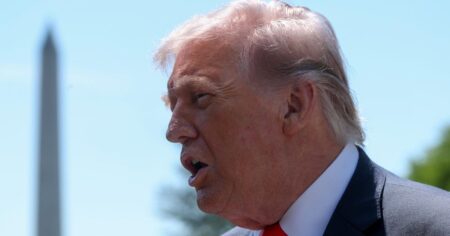
President Donald Trump has issued a stark warning regarding the highly anticipated Gordie Howe International Bridge connecting Detroit and Windsor, Ontario, stating he may prevent its opening unless the United States receives what he considers fair compensation for its contributions to the Canadian-American relationship. In a characteristic social media post on Truth Social, the president expressed his frustration with what he perceives as decades of unfair treatment by America’s northern neighbor. Trump’s demands center on ensuring that Canada demonstrates what he calls the “Fairness and Respect” that the United States deserves, while suggesting that America should potentially own at least half of this major infrastructure asset. The president’s position reflects his broader concerns about trade imbalances and economic relationships with Canada, particularly emphasizing that the revenues generated from the bridge due to access to the U.S. market will be substantial, potentially reaching what he described as “astronomical” levels.
Specific Grievances and Trade Concerns
The president’s objections extend beyond the bridge itself to encompass several longstanding trade disputes between the two nations. Trump specifically called out Ontario’s liquor control policies, complaining that U.S. alcoholic beverages aren’t being adequately stocked on Canadian shelves, which he views as discriminatory against American products. Additionally, he raised concerns about Canadian tariffs imposed on U.S. dairy products, a recurring point of contention in trade negotiations that he labeled as “unacceptable.” The president also took aim at Canadian Prime Minister Mark Carney, alleging that the Canadian leader is attempting to negotiate deals with China, presumably as an alternative to maintaining strong trade ties with the United States. Perhaps most pointedly regarding the bridge project itself, Trump criticized the construction for allegedly lacking American content, specifically mentioning that U.S. steel wasn’t being used in the project, which he sees as another example of Canada not supporting American industry despite the benefits they receive from access to U.S. markets. These complaints paint a picture of what the president views as a pattern of unfair treatment that has persisted for decades.
The Bridge Project: Background and Significance
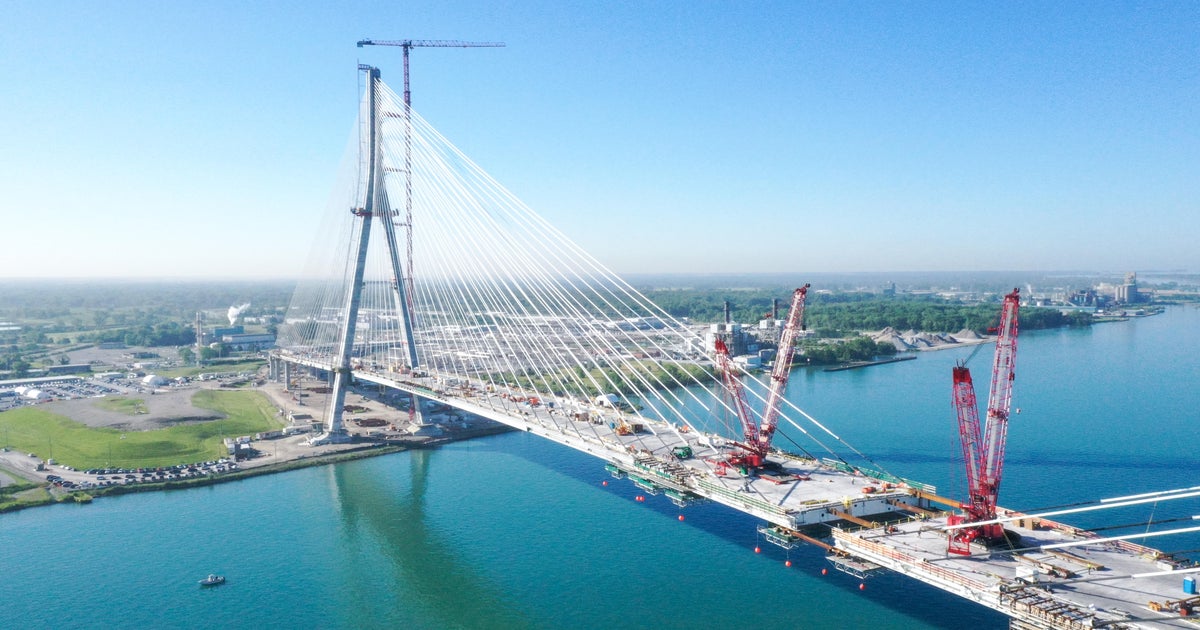
The Gordie Howe International Bridge represents a massive infrastructure undertaking that has been in development since construction began in 2018, with an expected opening now scheduled for early 2026. This $5.7 billion project is jointly owned by Canada and the state of Michigan, though the financial burden has been entirely shouldered by the Canadian government, which planned to recoup its investment through future toll revenue collection. The bridge’s design is impressive in scope, featuring an 853-meter span crossing the Detroit River, complemented by two approach bridges on either side, comprehensive port of entry complexes in both the United States and Canada, and strategic connection points to existing highway infrastructure in both nations. The project serves a critical purpose: providing an additional crossing point in one of the busiest international border regions in North America, particularly for commercial truck traffic that forms the backbone of cross-border trade. Currently, traffic between Detroit and Windsor relies on just two crossing points—the privately-owned Ambassador Bridge and the Detroit-Windsor Tunnel—making the addition of the Gordie Howe Bridge a significant enhancement to regional transportation infrastructure and trade capacity.
Canadian Business Community Responds
The Canadian Chamber of Commerce, through its president and CEO Candace Laing, issued a measured but firm response to President Trump’s threats. In her statement, Laing characterized the blocking or barricading of bridges as “a self-defeating move,” regardless of whether Trump’s threat proves to be genuine or merely another tactic to maintain uncertainty and pressure in negotiations. She emphasized the decades-long collaborative relationship between Canada and the United States, highlighting how the two nations have historically worked together to build infrastructure, create employment opportunities on both sides of the border, and compete more effectively in global markets. Laing pointed out an important irony in Trump’s current position: his own administration, back in 2017, had issued a joint statement endorsing the Gordie Howe Bridge as a priority project, describing it then as a “vital economic link between our two countries.” The Chamber of Commerce position stressed that modern border infrastructure doesn’t just facilitate trade—it strengthens shared economic security for both nations. Laing concluded her statement with a pointed observation that the path forward for both countries shouldn’t involve deconstructing established trade corridors and relationships, but rather should focus on building bridges, both literally and figuratively, to enhance mutual prosperity.
Michigan Political Leaders Push Back
Democratic Senator Elissa Slotkin issued a strong statement condemning the president’s threat, calling it “awful for our state’s economy” and emphasizing the critical importance of the Gordie Howe Bridge for Michigan’s economic future. Slotkin outlined the serious repercussions that would follow if the project were canceled or delayed: higher costs for Michigan businesses trying to move goods across the border, less secure and reliable supply chains, and ultimately fewer jobs for Michigan workers. She characterized the president’s threat as punishing Michiganders for a trade war that Trump himself initiated, and noted the irony that Canada is only exploring a potential trade deal with China because, in her words, “President Trump has kicked them in the teeth for a year.” Slotkin’s statement reflected her frustration that what she sees as the president’s “agenda for personal retribution” is taking precedence over what’s actually best for Michigan residents and businesses. She emphasized that Canada should be viewed as a friend rather than an enemy, and pledged to do everything in her power to keep the critical infrastructure project on track. Michigan’s other Democratic senator, Gary Peters, echoed these concerns in his own statement, calling the president’s position “completely backwards” and highlighting the deep economic integration between Michigan and Canada, particularly noting that the Detroit-Windsor corridor represents one of the busiest border crossings for trade in the entire country. Peters emphasized that Michigan has wanted this additional bridge crossing for years precisely because it will boost the state’s economy, characterizing Trump’s threat as yet another instance of the president undermining Michigan businesses and workers.
Broader Implications and Uncertain Path Forward
As of the latest reports, CBS News Detroit has reached out to the White House, Prime Minister Carney’s office, and the Windsor-Detroit Bridge Authority for additional comment but has not yet received responses that might clarify the situation or indicate how serious the president’s threat actually is. The controversy highlights the complex interplay between international relations, trade policy, and critical infrastructure development in border regions. The threat to block the bridge opening comes at a time when supply chain reliability has become increasingly important to businesses on both sides of the border, and when the economic relationship between the United States and Canada remains vital to both nations’ prosperity. The Gordie Howe Bridge was specifically designed to alleviate congestion and provide redundancy in a critical trade corridor, and its completion has been anticipated by business communities, transportation planners, and economic development officials for years. Whether President Trump’s statement represents a serious policy position or negotiating tactic remains unclear, but the response from Canadian business leaders and Michigan’s political representatives indicates the high stakes involved. The situation underscores the challenges of managing international partnerships and infrastructure projects that span borders during a period of heightened trade tensions and nationalist economic policies. As the bridge nears completion after years of construction, the coming weeks and months will reveal whether these presidential threats will translate into actual obstacles to the project’s opening or whether diplomatic and economic pressures will ultimately prevail in allowing this important piece of infrastructure to serve its intended purpose of strengthening economic ties between two longtime allies and trading partners.