


Trump Issues 48-Hour Ultimatum to Iran Over Strait of Hormuz Closure
A Critical Moment in U.S.-Iran Relations
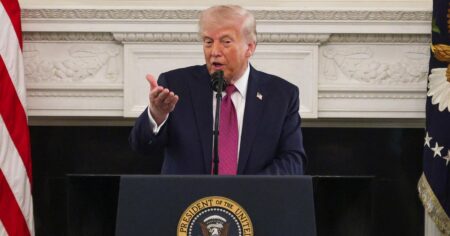
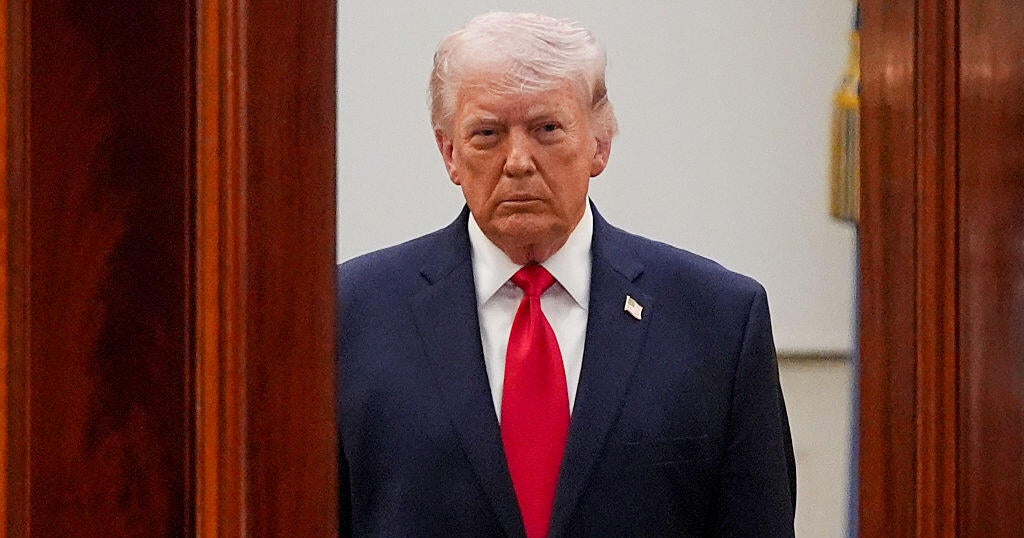
In a dramatic escalation of tensions between the United States and Iran, President Trump has delivered a stark ultimatum to the Islamic Republic, giving the nation just 48 hours to reopen the strategically vital Strait of Hormuz or face what he describes as devastating military consequences. Taking to his Truth Social platform on Saturday, the President declared, “Remember when I gave Iran ten days to MAKE A DEAL or OPEN UP THE HORMUZ STRAIT. Time is running out – 48 hours before all Hell will reign down on them. Glory be to GOD!” This aggressive posturing represents the latest chapter in an intensifying conflict that has already claimed thousands of lives, disrupted global commerce, and sent shockwaves through international oil markets. The situation has reached a critical juncture, with the world watching nervously to see whether diplomacy can prevail or if the region will descend further into chaos. The President’s language, while characteristically bold, reflects the high stakes involved in this standoff over one of the world’s most important waterways, through which roughly one-fifth of global oil supplies typically pass.
The Human Cost and Military Reality of an Expanding Conflict
The conflict between the United States and Iran, which officially began with coordinated U.S.-Israeli strikes on February 28, has already exacted a terrible human toll and fundamentally altered the geopolitical landscape of the Middle East. In a prime-time address to the American people earlier in the week, President Trump claimed total victory, stating “we’ve beat and completely decimated Iran” and adding that “they are decimated both militarily and economically and in every other way.” He boasted that Iran’s radar systems were “100% annihilated” and declared the United States “unstoppable as a military force.” However, the reality on the ground tells a more complex and sobering story. According to newly released Pentagon figures, 365 American service members have been injured during operations against Iran—a reminder that even in wars where one side possesses overwhelming technological superiority, real people pay the price in blood and sacrifice. Beyond the American casualties, thousands have been killed in the fighting, though exact figures remain difficult to verify. The war has also created economic havoc, shaking global markets, cutting off crucial shipping routes through the Persian Gulf, and causing fuel prices to spike dramatically—impacts felt by ordinary people from Los Angeles to London, from Mumbai to Mexico City.
Shifting Deadlines and the Dance of Diplomacy
The current 48-hour ultimatum represents the latest in a series of shifting deadlines that reveal both the complexity of the situation and the challenges of achieving a resolution. President Trump initially issued a similar threat on March 21, warning he would “obliterate” Iran’s power plants, starting with the country’s largest facility, if Iran didn’t “FULLY OPEN, WITHOUT THREAT, the Strait of Hormuz, within 48 HOURS.” However, just two days later, the President reported that “very good and productive conversations” were taking place with Iranian authorities, and he postponed any strikes on power infrastructure for five days. The deadline was subsequently pushed back again to April 6, and now, with this latest ultimatum, the clock has been reset once more. These repeated extensions could be interpreted in multiple ways—either as a president genuinely seeking a peaceful resolution and giving diplomacy every possible chance, or as evidence of the enormous complexity and potential consequences of further escalation. Behind the scenes, mediators from Pakistan, Turkey, and Egypt have been working tirelessly to bring both sides back to the negotiating table, with talks reportedly set to take place in Pakistan. Regional officials speaking to the Associated Press indicated that these intermediaries are attempting to craft a compromise that would bridge the gap between American and Iranian demands, potentially ending the war and reopening the strait.
Iran’s Response and the Possibility of Negotiation
Despite the aggressive rhetoric and military pressure from Washington, there are tentative signs that Iran may be willing to explore a diplomatic exit from the current crisis. On Saturday, Iran’s Foreign Minister Abbas Araghchi signaled that his country is open to joining the talks being organized by regional mediators. This represents a potentially significant development, as it suggests that despite the devastating military setbacks Iran has suffered, its leadership recognizes that continued confrontation serves neither the Iranian people nor their government’s long-term interests. The Iranian regime finds itself in an extraordinarily difficult position—caught between the need to demonstrate strength and resolve to its domestic population and the harsh reality that continued military engagement with the United States is an unwinnable proposition. The American military campaign, which Trump has dubbed “Operation Epic Fury,” has indeed severely degraded Iran’s military capabilities, particularly its air defense systems and radar networks. Yet Iran has demonstrated that even from a position of weakness, it retains the ability to strike back, launching attacks across the region and successfully downing American aircraft. This dynamic creates a dangerous situation where neither complete victory nor total defeat seems immediately achievable for either side, potentially opening a window for meaningful negotiations.
Domestic Political Support and International Implications
Within the United States, President Trump’s hardline approach toward Iran has garnered significant support from hawkish members of Congress, particularly Republicans who have long advocated for aggressive action against the Islamic Republic. Senator Lindsey Graham of South Carolina, a prominent voice on foreign policy matters, praised the President’s ultimatum on Saturday, warning that a “massive military operation awaits Iran if they choose poorly.” Graham characterized Operation Epic Fury as having “severely crippled” the Iranian regime and called for an end to what he described as Iran’s “reign of terror against the region and the world,” preferably through a peace deal. He added ominously, “If it’s not clear to Iran and others by now that President Trump means what he says then I don’t know when it will ever be. Choose wisely.” This kind of rhetoric reflects a broader political constituency in America that views maximum pressure on Iran as long overdue and justified. However, the international community has expressed considerably more mixed reactions to the escalating conflict. America’s European allies, while sharing concerns about Iranian behavior, have expressed anxiety about the war’s potential to spiral out of control and create regional instability that could have global consequences. The closure of the Strait of Hormuz has already disrupted international shipping and contributed to rising energy prices worldwide, affecting economies from developed nations to developing countries that can least afford such shocks.
The Immediate Crisis and What Comes Next
As the 48-hour deadline approaches, the world holds its breath, waiting to see whether Iran will yield to American pressure, whether negotiations will produce a last-minute breakthrough, or whether the conflict will escalate to even more devastating levels. The immediate crisis has been further complicated by the shooting down of an American F-15F fighter jet by Iranian forces on Friday—the first time the U.S. has lost an aircraft over Iranian territory during this conflict. While one crew member was successfully rescued by American forces, another remains missing, and U.S. military personnel are racing against time to locate and recover their comrade. Iranian state media has also claimed that a U.S. A-10 attack aircraft was downed by their defensive forces, though this has not been independently confirmed. These incidents mark a significant moment in military history; the last time an American fighter jet was shot down in combat was during the 2003 invasion of Iraq. The loss of aircraft and the ongoing search and rescue operations add emotional urgency to an already tense situation, as American military families and the broader public are reminded that behind the strategic calculations and political rhetoric are real servicemembers risking their lives. As the hours tick down toward President Trump’s deadline, the fundamental question remains: will Iran agree to reopen the Strait of Hormuz, will diplomats broker a face-saving compromise that allows both sides to step back from the brink, or will the world witness further escalation of a conflict that has already proven devastating and whose ultimate consequences remain terrifyingly uncertain?