


TSA Crisis: Government Shutdown Threatens to Cripple Airport Security Nationwide
The Growing Crisis at America’s Airports
The ongoing partial government shutdown has created a critical situation at airports across the United States, with the Transportation Security Administration (TSA) facing unprecedented challenges that could reshape how Americans travel. During a recent House Homeland Security Committee hearing, acting TSA administrator Ha Nguyen McNeill delivered a sobering warning to lawmakers and the American public: if funding isn’t restored soon, the situation will deteriorate further. The agency is already being forced to consolidate security lanes at major airports, and there’s a real possibility that smaller regional airports may have to close their doors entirely if adequate staffing levels cannot be maintained. This isn’t just an inconvenience for travelers—it represents a fundamental threat to the nation’s transportation infrastructure and security apparatus. The problem stems from TSA officers working without pay for an extended period, leading to mass callouts and resignations that have created a domino effect throughout the system. What began as a political standoff in Washington has now manifested as hours-long wait times, frustrated travelers, and exhausted security personnel struggling to maintain operations under impossible circumstances.
Political Deadlock Leaves TSA in Limbo
The political machinery in Washington appears stuck in gridlock, with Republicans and Democrats unable to reach an agreement to reopen the Department of Homeland Security, the parent agency that oversees TSA operations. While both parties have exchanged proposals in recent days, none have gained sufficient traction to end the stalemate. The Democrats’ most recent counteroffer included provisions that would require federal immigration agents to wear body cameras and proper identification while in the field—a proposal that was ultimately rejected, according to sources who spoke with CBS News. Senator Dick Durbin acknowledged the fundamental divide, stating simply, “We have differences of opinion when it comes to ICE,” referring to Immigration and Customs Enforcement. This admission underscores how immigration policy disputes have become entangled with basic government operations, leaving agencies like TSA caught in the crossfire. Meanwhile, the real-world consequences of this political theater are being felt not in the halls of Congress, but in airport terminals across the country where both passengers and security officers are paying the price for Washington’s dysfunction. The situation has reached a point where the operational integrity of the nation’s aviation security system hangs in the balance, yet political considerations continue to prevent a resolution.
Houston Airport Becomes Ground Zero for TSA Troubles
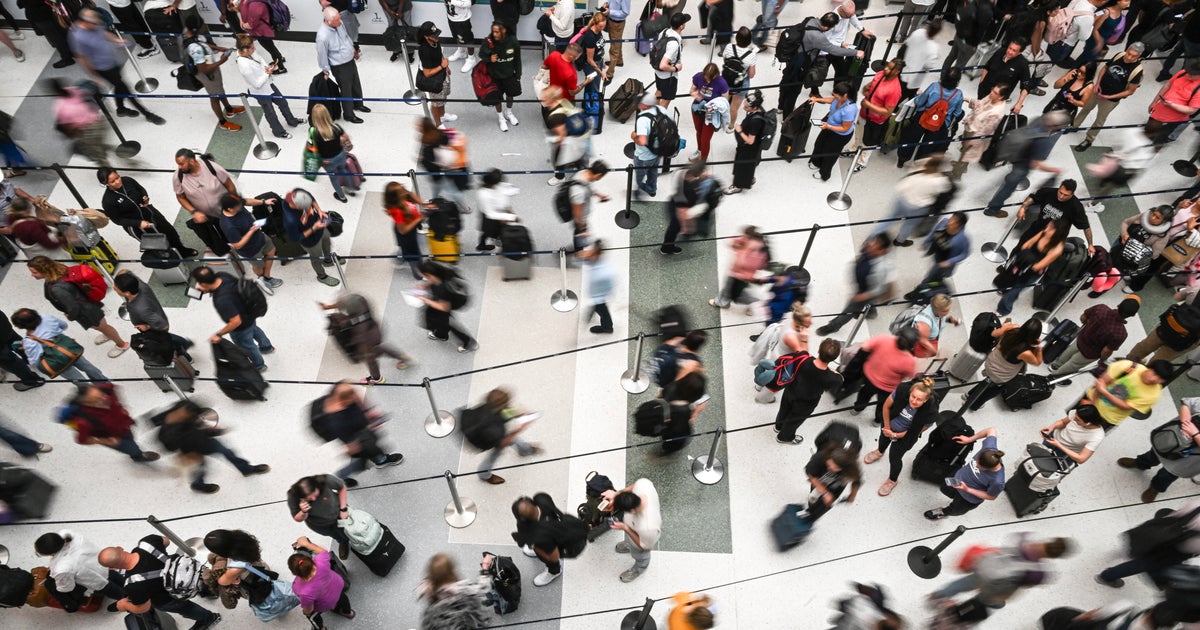
George Bush Intercontinental Airport in Houston has emerged as the poster child for the TSA crisis, experiencing some of the most severe disruptions in the country. At this major aviation hub, only about a third of the security lanes are operational at any given time—a dramatic reduction that has created bottlenecks and massive delays. Travelers at the Houston airport have regularly faced wait times exceeding four hours just to clear security, transforming what should be a routine part of air travel into an exhausting ordeal. The root cause is straightforward: approximately 40% of the TSA staff at this location have called out of work as they wait for a funding deal that would restart their paychecks. It’s difficult to blame workers who are being asked to show up day after day without compensation, especially when many have bills to pay and families to feed. The Houston situation illustrates how quickly the system can break down when a significant portion of the workforce simply cannot afford to work without pay. The airport has become a microcosm of the broader national crisis, demonstrating that even at major international hubs with substantial passenger traffic, the TSA infrastructure is far more fragile than most Americans realized.
The Human Cost: Officers Quit and Morale Plummets
The statistics paint a troubling picture of an agency in crisis. Over the past six months, TSA has operated without funding for 86 days and counting—nearly three full months of asking employees to work without the assurance of a paycheck. The impact on workforce retention has been predictable and devastating: more than 480 TSA officers have resigned altogether since the partial government shutdown began. These aren’t just numbers on a spreadsheet; each resignation represents a trained security professional leaving the system, taking their experience and expertise with them and creating gaps that cannot be easily filled. Training new TSA officers is a time-consuming and expensive process, meaning that even when funding is eventually restored, the agency will face a long road to recovery. The officers who remain are working under extraordinary stress, dealing with frustrated passengers, longer shifts due to understaffing, and the financial anxiety that comes with missed paychecks. Many are struggling to pay rent, afford groceries, and meet basic financial obligations while continuing to show up for work out of a sense of duty or simply because they cannot afford to lose their jobs entirely. This human dimension of the crisis often gets lost in political debates, but it represents the real suffering caused by the funding impasse.
Travelers Caught in the Crossfire
American travelers find themselves in an increasingly difficult position, facing massive delays and uncertainty while planning trips. The ripple effects of reduced TSA staffing extend far beyond just longer wait times at security checkpoints. Passengers are now being advised to arrive at airports three to four hours before domestic flights and even earlier for international travel—recommendations that fundamentally change the calculus of air travel and make it significantly more burdensome. Business travelers are missing meetings, families are missing connections, and vacation plans are being disrupted by circumstances entirely beyond travelers’ control. Interestingly, many passengers have shown remarkable empathy for the TSA officers caught in this situation. One traveler interviewed by CBS News at the Houston airport expressed understanding, saying he isn’t angry with TSA workers for not showing up and sympathizes “with the fact they’ve got to feed their families and take care of business.” This perspective reflects a growing awareness among the public that the TSA officers themselves are victims of the government shutdown, not the cause of the delays. However, this understanding doesn’t eliminate the frustration and real costs—both financial and personal—that travelers are incurring due to the situation. The crisis has highlighted the interconnected nature of government services and how quickly dysfunction in Washington can cascade into problems affecting millions of ordinary Americans.
Emergency Measures and the Path Forward
In response to the crisis, TSA has begun deploying emergency measures to keep the most critical airports operational. In Houston, at least two dozen members of TSA’s rapid response team were expected to arrive to assist with passenger screenings and help reduce the crushing wait times. These specialized teams are essentially traveling firefighters, moving from crisis to crisis to temporarily shore up operations at airports on the brink of collapse. While this approach can provide short-term relief, it’s not a sustainable solution to a problem that shows no signs of resolution. The rapid response teams themselves are drawn from other airports, meaning their deployment simply shifts resources around rather than addressing the fundamental shortage of personnel willing to work without pay. Acting Administrator McNeill’s warning about potentially closing smaller airports isn’t an idle threat—it represents a realistic assessment of where the situation is headed if funding isn’t restored. Smaller regional airports typically operate with minimal staffing even under normal circumstances, meaning they have no buffer to absorb the kind of absenteeism rates currently plaguing the system. The closure of regional airports would have devastating economic consequences for smaller communities that depend on air connectivity for business and tourism. As the shutdown continues, the question is no longer whether there will be severe consequences, but rather how severe those consequences will become before political leaders find the will to compromise and restore funding to this critical security agency.