


California Governor’s Race Heats Up: Candidates Debate Rising Costs and the Fading “California Dream”
Restoring Affordability: Republican Candidates Promise Change
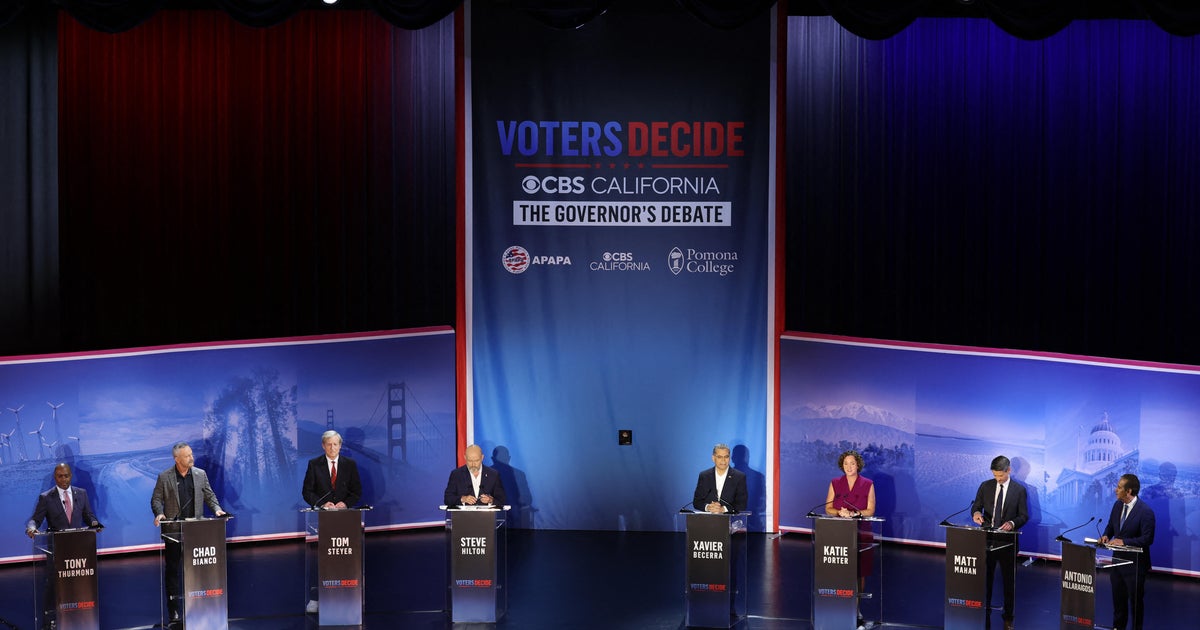
The California gubernatorial race took center stage during Tuesday’s highly anticipated debate, where candidates from both major parties addressed the state’s most pressing issue: the skyrocketing cost of living that has left many residents feeling the “California Dream” has become nothing more than a distant memory. CBS LA anchor Pat Harvey opened the debate with a direct question that resonates with millions of Californians—what would candidates actually do to make the state affordable again as prices continue to climb and everyday residents struggle to make ends meet?
Republican candidate Steve Hilton, a political commentator and former Fox News host, made his pitch by introducing a campaign slogan promising to make the state “Califordable.” Hilton committed to cutting utility costs and making homeownership accessible to younger generations who have been increasingly priced out of the housing market. However, his opening statement notably lacked specific policy details about how he would accomplish these ambitious goals. His message clearly targeted the frustrations of Californians who have watched their paychecks shrink in real terms as housing, electricity, and gas prices have surged to some of the highest levels in the nation.
Chad Bianco, the current Riverside County Sheriff and fellow Republican candidate, took a more confrontational approach in his response. Bianco didn’t mince words when he blamed the state legislature’s progressive agenda for what he called the “destroying” of California. He pointed to the Democratic supermajority in the statehouse as a fundamental obstacle to implementing the changes he believes voters want. In a particularly bold statement, Bianco turned the tables on the question of political cooperation, asserting that if elected, Democrats in the legislature would need to work with him to carry out the mandate given by voters. “It’s not how I’m going to respond to them, it’s how they’re going to respond to me,” Bianco declared, signaling his intention to take a hardline negotiating stance with the legislature rather than seeking compromise from a position of accommodation.
The Race Remains Wide Open: Latest Polling Shows Tight Contest
According to a comprehensive CBS News poll released just one day before the debate, the California governor’s race remains remarkably fluid with no clear frontrunner emerging as the June 2 primary election approaches. The polling of likely voters reveals a competitive field where small shifts in support could dramatically alter the outcome. Republican Steve Hilton currently leads the pack with 16% support among likely voters, but his advantage is razor-thin. He’s followed closely by two prominent Democrats: billionaire environmental activist Tom Steyer at 15% and Xavier Becerra, who previously served as California’s Attorney General and as U.S. Secretary of Health and Human Services, at 13%. Republican Chad Bianco rounds out the top tier with 10% support from likely voters.
The Democratic field includes several other notable candidates making their case to voters during Tuesday’s debate. Congresswoman Katie Porter, known for her viral questioning of corporate executives using her signature whiteboard, polls at 9% among likely voters. San Jose Mayor Matt Mahan, former Los Angeles Mayor Antonio Villaraigosa, and State Superintendent of Public Instruction Tony Thurmond register at 4%, 4%, and 1% respectively. Perhaps most significantly for the candidates participating in the debate, a substantial 26% of likely voters polled indicated they remain undecided—a massive pool of persuadable voters that could swing the election in any direction.
The CBS News poll also provides valuable insights into what different segments of the electorate are prioritizing as they make their decision. The cost of living dominates concerns across party lines, with many voters expressing that basic affordability in California has reached crisis levels. The legendary “California Dream”—the promise that hard work could lead to homeownership, economic security, and a high quality of life—now feels impossibly out of reach for many residents. Democratic voters polled indicated they’re largely seeking candidates who align with current state policies while standing in opposition to the policies of President Trump at the federal level. Republican voters, by contrast, are overwhelmingly hungry for change and hold deeply negative views about the state’s current trajectory, with a striking 76% saying they believe California’s economy is in bad condition.
Interactive Tools Help Voters Compare Candidates Side-by-Side
Recognizing the complexity of the issues facing California and the challenge voters face in distinguishing between candidates in such a crowded field, CBS News California launched an innovative interactive tool designed to help citizens make more informed decisions. The California Governor’s Race Candidate Guide represents a significant investment in voter education, compiling more than 20 hours of interviews with the top-polling candidates into a user-friendly format that allows voters to compare responses side-by-side on the issues that matter most to them personally.
This comprehensive digital guide features detailed responses from the eight remaining candidates with active campaigns on more than a dozen critical issues affecting Californians daily. The topics covered include the homelessness crisis that has left tens of thousands living on the streets of major cities; housing affordability and the policies that might make homeownership achievable again for middle-class families; gas prices and environmental policy in a state that has led the nation on climate action; immigration policy in a border state with the largest immigrant population in the country; the contentious question of healthcare access for undocumented immigrants; crime rates and public safety funding as some cities have experimented with reducing police budgets; and California’s ongoing insurance crisis that has left some homeowners unable to obtain coverage as major insurers have pulled out of the market.
Throughout the debate broadcast, moderators strategically directed viewers to consult the guide, allowing them to explore issues in greater depth at their own pace rather than relying solely on the time-limited responses candidates could provide during the live debate format. This approach represents an evolution in political journalism, acknowledging that complex policy questions rarely have simple answers that can be adequately addressed in a 60-second debate response.
Democratic Field Narrows as Two Major Candidates Exit Race
The competitive landscape for Democratic candidates shifted significantly in the weeks leading up to Tuesday’s debate, as two prominent contenders ended their campaigns under very different circumstances. The exits of former state Controller Betty Yee and former Congressman Eric Swalwell narrowed what had been an exceptionally crowded Democratic field, potentially allowing the remaining candidates more opportunity to break through with voters.
Eric Swalwell’s departure came amid serious controversy, as he ended his gubernatorial campaign following sexual assault allegations made against him. Swalwell has categorically denied these allegations, but the political damage proved insurmountable for his gubernatorial ambitions. The fallout extended beyond just his run for governor—Swalwell also resigned from his congressional seat representing parts of the Bay Area, bringing an abrupt end to a political career that had once seemed destined for higher office. His exit serves as a reminder of how quickly political fortunes can change and how personal controversies can derail even well-funded, high-profile campaigns.
Betty Yee’s exit from the race came under entirely different circumstances and reflected the harsh mathematics of modern political campaigns. After serving as California’s Controller and bringing name recognition and government experience to the race, Yee ultimately suspended her campaign after acknowledging she couldn’t see a viable path forward. She cited insufficient campaign funding and disappointing polling numbers as the primary factors in her decision. In the expensive media markets of California, where reaching voters through advertising and organizing requires enormous financial resources, even experienced politicians with strong credentials can find themselves unable to compete if they can’t attract major donors or catch fire with grassroots supporters. Yee’s candid acknowledgment of these realities demonstrated political pragmatism, allowing her supporters to coalesce around other candidates rather than continuing a campaign that couldn’t succeed. For the remaining Democratic candidates, Tuesday’s debate represented a pivotal opportunity to distinguish themselves in a field that, while smaller than before, still offers voters numerous options with varying approaches to California’s challenges.