

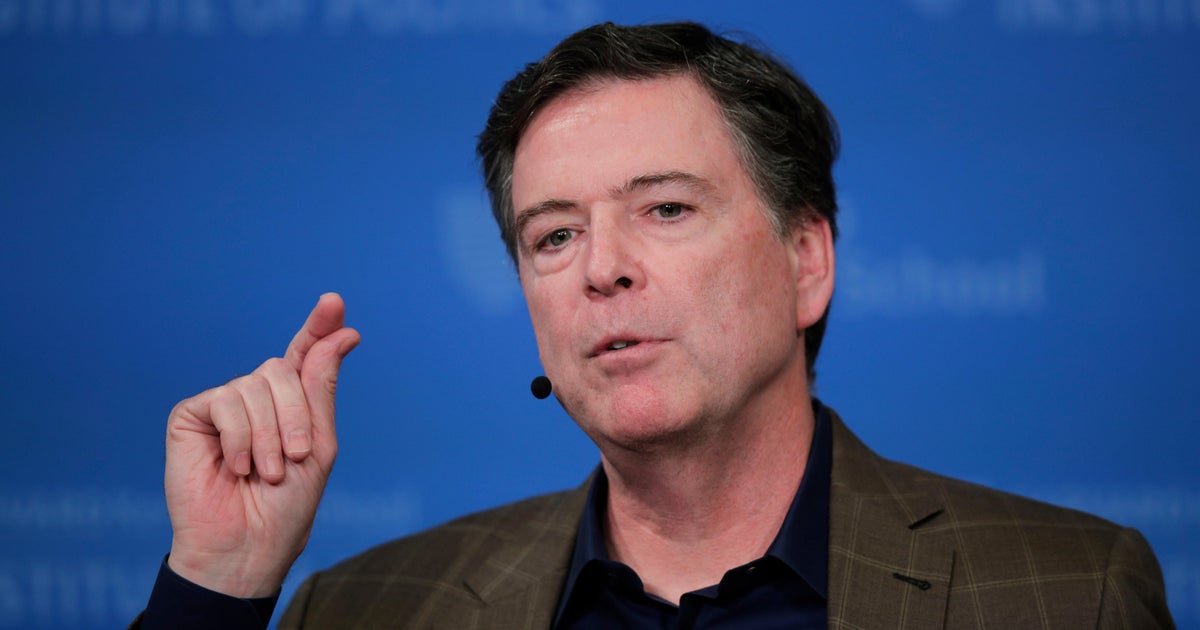

Former FBI Director James Comey Faces Federal Charges Over Social Media Post
The Indictment and Its Origins
In a stunning development that has sent shockwaves through the political and legal communities, former FBI Director James Comey was indicted by a federal grand jury on Tuesday on charges of allegedly threatening President Donald Trump. This marks the second time the Trump administration’s Justice Department has brought criminal charges against Comey, who has been one of the president’s most vocal critics since his dismissal from the FBI in 2017. The charges center around a seemingly innocuous Instagram post from last year that featured seashells arranged in the sand to spell out “86 47.” According to the indictment filed in the Eastern District of North Carolina, prosecutors argue that any reasonable person familiar with the circumstances would interpret this image as a serious threat against the president’s life. The numbers, prosecutors contend, carry a sinister meaning: “47” refers to Trump’s status as the 47th president of the United States, while “86” is slang meaning to remove, eject, or eliminate someone. The case has been assigned to Judge Louise Wood Flanagan, with Assistant U.S. Attorney Matthew Petracca signing the indictment, and a warrant has been issued for Comey’s arrest.
The Legal Charges and Government’s Response
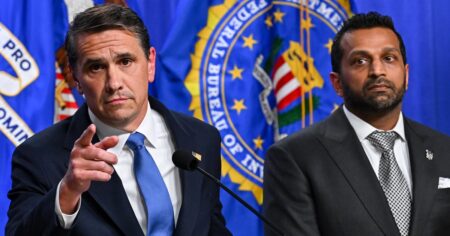
The indictment brings two serious federal charges against the former FBI director. The first count alleges that Comey knowingly and willfully made a threat to take the life of the president and to inflict bodily harm upon him. The second count charges him with knowingly and willfully transmitting a threat to kill the president across state lines, which falls under interstate commerce laws. These are not minor allegations—threatening the life of a sitting president is one of the most serious federal crimes a person can commit. Acting Attorney General Todd Blanche addressed the media during a press conference on Tuesday, emphasizing the gravity of the situation while attempting to downplay any suggestion that this was a politically motivated prosecution. “Threatening the life of anybody is dangerous and potentially a crime,” Blanche stated. “Threatening the life of the president of the United States will never be tolerated by the Department of Justice.” He went on to explain that while the case naturally stands out because it involves such a high-profile figure as Comey, the alleged conduct is the same kind of behavior that the department routinely investigates and prosecutes throughout the year. Blanche revealed that the investigation into Comey’s social media post has been ongoing for approximately a year and continues to develop.
Comey’s Defense and Pushback
James Comey wasted no time responding to the charges, posting a video to his Substack account shortly after the indictment became public. In his characteristically measured but defiant tone, Comey pushed back forcefully against what he clearly views as a politically motivated prosecution designed to silence one of President Trump’s most prominent critics. “This is not who we are as a country,” Comey said in the video, his voice conveying both disappointment and determination. “This is not what the Department of Justice is supposed to be.” He went on to assert his innocence and express his continued faith in the American judicial system, stating: “I’m still innocent, I’m still not afraid and I still believe in the independent federal judiciary. So, let’s go.” Comey’s response reflects his legal background and his understanding that this case will ultimately be decided not in the court of public opinion but in a federal courtroom. His attorneys have previously argued in related cases that Comey is being prosecuted out of “personal spite” by a president who has never forgiven him for his role in investigating Russian interference in the 2016 election and for publicly discussing the investigation into Hillary Clinton’s emails. The tension between Trump and Comey goes back years, creating a backdrop of animosity that makes this prosecution particularly controversial.
The Context and Investigation
The photograph that sparked this federal prosecution was posted to Comey’s Instagram account last year and remained visible only briefly before being deleted. According to sources who spoke with CBS News prior to the indictment being issued, the image showed seashells casually arranged on a beach to form the numbers “86 47.” To many viewers, it might have appeared to be nothing more than a creative beach photograph, the kind of image people share on social media every day. However, Trump supporters immediately interpreted it as something far more sinister—a coded call for the president’s removal or even assassination. Then-Homeland Security Secretary Kristi Noem was among those who reacted strongly to the post, publicly stating that Comey had “just called for the assassination” of the president. She announced that the Secret Service would investigate and “respond appropriately.” Indeed, Secret Service agents interviewed Comey in May of last year about the post. After the controversy erupted, Comey deleted the photograph and posted an explanation, stating that he believed the shell formation was communicating a “political message” and that he hadn’t realized some people would associate those numbers with violence. “It never occurred to me but I oppose violence of any kind so I took the post down,” Comey wrote. Current FBI Director Kash Patel confirmed that the grand jury was informed that Comey had deleted the post and issued a statement clarifying his intentions, adding simply, “Mr. Comey will have his day in court.”
Political Context and Previous Charges
The current indictment cannot be understood without considering the long and bitter history between Donald Trump and James Comey. Trump fired Comey from his position as FBI Director in 2017 during his first term in office, a decision that sparked immediate controversy and led to the appointment of Special Counsel Robert Mueller to investigate Russian interference in the 2016 election. Since then, Trump has consistently and publicly expressed his anger toward Comey, viewing him as disloyal and part of what the president has called a “deep state” conspiracy against him. In a September post on Truth Social, Trump urged then-Attorney General Pam Bondi to take action against several of his perceived enemies, including Comey, stating “we can’t delay any longer.” Bondi was subsequently removed from her position as attorney general earlier this year, and her deputy, Todd Blanche, was installed as acting attorney general—the same official who announced Comey’s indictment. This is actually the second time Comey has been indicted by the Trump Justice Department. In late September, he was first charged with lying to Congress during testimony given in September 2020 and with obstructing a congressional proceeding. Comey pleaded not guilty to those charges. However, that case, along with criminal charges against New York Attorney General Letitia James, was dismissed in November when a federal judge ruled that Lindsey Halligan, the prosecutor who secured the indictments, had been unlawfully appointed to her position. The Justice Department has appealed that dismissal, and Halligan left her position in January.
Due Process, Fairness, and What Comes Next
Despite the politically charged atmosphere surrounding this case, government officials have been careful to emphasize that Comey will receive the same legal protections and due process afforded to any American citizen. U.S. Attorney W. Ellis Boyle stated firmly that in the Eastern District of North Carolina, “it doesn’t matter who you are. We take all threats cases seriously and prosecute anyone who violates federal law, regardless of title or status.” Acting Attorney General Blanche echoed this sentiment, noting that threatening the president is prohibited by a statute passed by Congress, not created by the current administration, and that such threats are prosecuted “multiple times a year” regardless of who makes them. However, critics of the prosecution argue that context matters enormously. In Comey’s previous case, his lawyers argued that his prosecution was both vindictive and selective, asserting that President Trump had essentially ordered prosecutors to charge him out of personal animosity rather than legitimate law enforcement concerns. The judge in that first case never ruled on those motions before the case was dismissed on other grounds. Now, with a new indictment brought by a different prosecutor but under the same administration, those same questions about motivation and fairness will almost certainly be raised again. The case raises profound questions about the appropriate use of federal prosecutorial power, the line between political speech and genuine threats, and whether a president should be able to use the Justice Department to pursue his critics. As Comey himself said, this will ultimately be decided by the independent federal judiciary—but the political implications will reverberate regardless of the legal outcome. The nation now watches to see whether the courts will view a beach photograph of seashells as a serious threat worthy of criminal prosecution, or as constitutionally protected expression being weaponized for political purposes.