


Houston Airport Chaos: How the Government Shutdown Turned Travel Into a Nightmare
A Security Crisis Unfolds at One of America’s Busiest Airports
George Bush Intercontinental Airport in Houston has become ground zero for the devastating impact of the federal government shutdown on American travelers. With the shutdown stretching into its sixth grueling week, nearly 40% of Transportation Security Administration (TSA) employees at the airport have been calling out sick, creating a cascading crisis that has transformed routine air travel into an endurance test. What should be a straightforward security checkpoint has morphed into a multi-floor ordeal that snakes through underground tunnels, past baggage claim areas, and back up into ticketing halls. On Monday, the security line in Terminal A became so overwhelmingly backed up that it extended three floors down into the airport’s underground train system, creating what travelers described as a confusing and inefficient maze that seemed to have no end in sight. The situation became so dire that only two of the airport’s five terminals had any TSA staffing at all, with wait times climbing to an almost unbelievable four hours or more. Even passengers who had paid for expedited screening through PreCheck or CLEAR found their lanes shuttered, forcing everyone—from business travelers to families with young children—into the same painfully slow-moving bottleneck.
When Fast Track Becomes No Track: The Collapse of Premium Services
The closure of PreCheck and CLEAR lanes represents more than just an inconvenience—it symbolizes the complete breakdown of the airport security system under the weight of the shutdown. These premium services, which travelers pay extra for specifically to avoid long waits, became useless as staffing shortages forced everyone through the same overwhelmed checkpoints. In Terminal E, conditions were slightly better on Monday, but “slightly better” still meant passengers were reporting wait times exceeding three hours just to reach the security screening area. The psychological impact of watching a line stretch endlessly ahead, knowing you’ve paid for faster service that isn’t available, added insult to injury for many travelers. CBS News spoke with frustrated passengers in both terminals who confirmed they had been standing in line for over three hours with no end in sight. The airport’s public address system played a continuous loop warning arriving passengers that TSA wait times were “currently exceeding four hours” and advising them that if their flight was departing soon, they might not clear security in time. The announcement urged travelers to contact their airlines immediately for rebooking options—a surreal message that transformed what should be a routine travel day into a crisis management situation before passengers even entered the building.
An Unconventional Solution: ICE Agents Step In
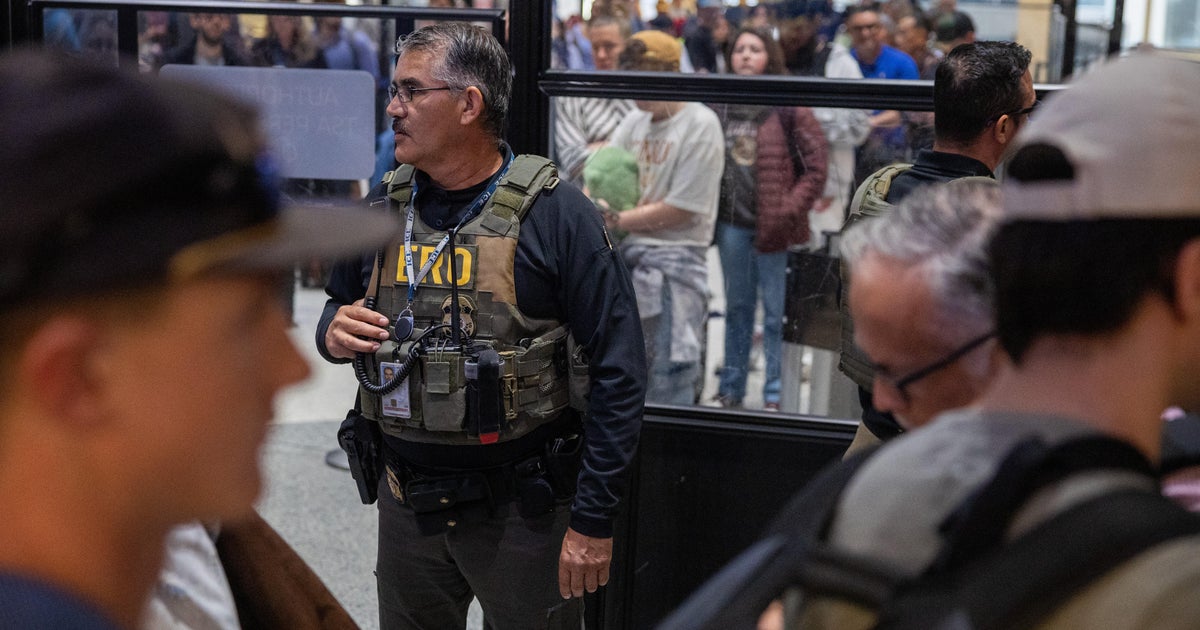
Faced with an untenable situation at some of the nation’s hardest-hit airports, the Trump administration deployed an unconventional workforce to help: Immigration and Customs Enforcement (ICE) agents. White House border czar Tom Homan confirmed that ICE agents were currently stationed at 14 U.S. airports, though the Department of Homeland Security declined to specify exact locations, citing “operational security reasons.” At George Bush Intercontinental Airport, CBS News reporters counted approximately two dozen immigration officers on Monday, most of them armed and wearing badges identifying them as ICE Enforcement and Removal Operations personnel. These agents were positioned at security lines alongside Houston police officers, emergency management personnel, and airport staff, creating an unusual mix of federal, local, and civilian workers trying to manage the crisis. While ICE agents could be seen directing passengers and attempting to keep lines moving at the worst congestion points, they weren’t actually performing TSA functions—the actual ID checks and operation of screening equipment remained in the hands of the depleted TSA workforce. This created a somewhat awkward division of labor, with immigration enforcement officers essentially serving as crowd control while the skeleton crew of TSA employees struggled to process an overwhelming volume of passengers through security checkpoints designed to operate with much larger staffing levels.
Real Stories of Real People Caught in the Chaos
Behind the statistics and wait times are countless personal stories of travelers whose plans have been upended by the shutdown. Some passengers told CBS News they took one look at the security line upon arriving at the airport and immediately turned around to rebook their flights for another day—or another airport entirely. One particularly heartbreaking account came from a woman who had attempted to fly to Philadelphia on Sunday. She broke down in tears while still stuck in the security line as she heard the final boarding call for her flight echoing through the terminal, knowing she had no chance of reaching the gate in time. When she finally made it through security, a gate agent delivered more bad news: she was one of 40 passengers who had missed that particular flight due to the security delays. Undeterred but exhausted, she returned to the airport on Monday to try again, facing another marathon wait. Another passenger shared with CBS News that he planned to spend the entire night at the airport ahead of his Tuesday morning flight out of Terminal A—not because of an early departure time, but simply to ensure he would have enough time to get through security. His decision to essentially camp out at the airport overnight speaks to the extreme measures travelers felt compelled to take just to catch their flights.
The Human Toll: Babies, Wheelchairs, and Basic Needs
The extended wait times created challenges that went far beyond simple inconvenience, particularly for vulnerable travelers. Families with babies and small children struggled to keep their little ones calm and comfortable during waits that stretched to four hours or longer, with no access to food or adequate facilities while trapped in the security line. Parents found themselves trying to entertain restless toddlers in cramped underground corridors and stairwells, lacking the space, amenities, or resources to properly care for their children during the ordeal. The situation was even more challenging for passengers with disabilities. The route the security line followed through the underground train system and up multiple floors did not comply with Americans with Disabilities Act requirements, forcing wheelchair users and others with mobility limitations to be directed to a separate area—creating additional confusion and potential delays for those who already face extra challenges when traveling. Airport staff did what they could to help, distributing water to passengers waiting in line, but they could offer little else in terms of comfort or sustenance. The image of armed federal agents, frustrated travelers, crying children, and wheelchair users all caught in an endless queue painted a picture of a system pushed well beyond its breaking point.
Beyond Politics: Travelers Just Want Solutions
Perhaps most telling about the situation at Houston’s airport was the attitude of the stranded travelers themselves. While the government shutdown has become intensely political in Washington, with both parties blaming each other for the impasse, passengers waiting in those interminable security lines told CBS News they weren’t interested in the political blame game. They didn’t want to hear about which party was at fault or what policy disputes were preventing a resolution—they simply wanted someone in Washington to solve the problem so they could get on with their lives. This pragmatic, non-partisan frustration represents a broader truth about government shutdowns: while politicians in the nation’s capital engage in high-stakes political theater, real Americans in airports, national parks, and government offices face real consequences that have nothing to do with policy and everything to do with their ability to work, travel, and live their daily lives. The shutdown has effectively held these travelers hostage to a political dispute they had no part in creating and over which they have no control. As the shutdown dragged into its sixth week with no resolution in sight, the scene at George Bush Intercontinental Airport served as a stark reminder that governing isn’t just about political victories and policy positions—it’s about maintaining the basic functions that allow American society to operate, including something as fundamental as the ability to safely and efficiently board an airplane.