

U.S. Revokes Green Cards of Iranian General’s Relatives Over Alleged Propaganda Activities
Arrest and Detention of Soleimani Family Members
In a dramatic enforcement action that highlights the ongoing tensions between the United States and Iran, federal authorities arrested two relatives of the late Iranian Revolutionary Guard Major General Qasem Soleimani on Friday night. Hamideh Soleimani Afshar, identified as the niece of the slain military commander, and her daughter were taken into custody by U.S. Immigration and Customs Enforcement after their legal permanent resident status was abruptly terminated. The arrests mark a significant escalation in the Trump administration’s efforts to remove individuals it considers sympathetic to adversarial foreign regimes, even when those individuals hold legal status in the United States. According to the State Department’s statement released Saturday, the women are now in ICE custody awaiting deportation proceedings. The case has drawn immediate attention not only because of the high-profile family connection but also because it demonstrates the administration’s willingness to use rarely invoked executive powers to revoke previously granted immigration benefits based on perceived threats to national security.
Allegations of Pro-Regime Activities and Fraudulent Asylum Claims
The State Department’s justification for the dramatic action centered on allegations that Hamideh Soleimani Afshar actively promoted Iranian government propaganda while living a comfortable life in Los Angeles. Officials accused her of celebrating attacks against American military forces in the Middle East and publicly denouncing the United States as the “Great Satan”—a phrase commonly used by Iranian regime hardliners to describe America. The government’s statement painted a picture of someone who was living a contradictory existence: enjoying the freedoms and lifestyle advantages of residing in one of America’s most desirable cities while simultaneously supporting a regime that openly declares hostility toward the United States. Furthermore, the Department of Homeland Security revealed what it characterized as fundamental dishonesty in Afshar’s original asylum application from 2019. DHS officials stated that her asylum claim was “fraudulent,” pointing to evidence that she made at least four trips back to Iran after receiving her green card. This pattern of travel directly contradicted the basis of an asylum claim, which typically requires demonstrating a well-founded fear of persecution in one’s home country—a fear that would presumably prevent someone from voluntarily returning. Her husband has also been barred from entering the United States as part of this enforcement action, and the government is now proceeding with formal proceedings to permanently strip the family of their green cards and complete their deportation.
The Legacy of Qasem Soleimani and U.S.-Iran Relations
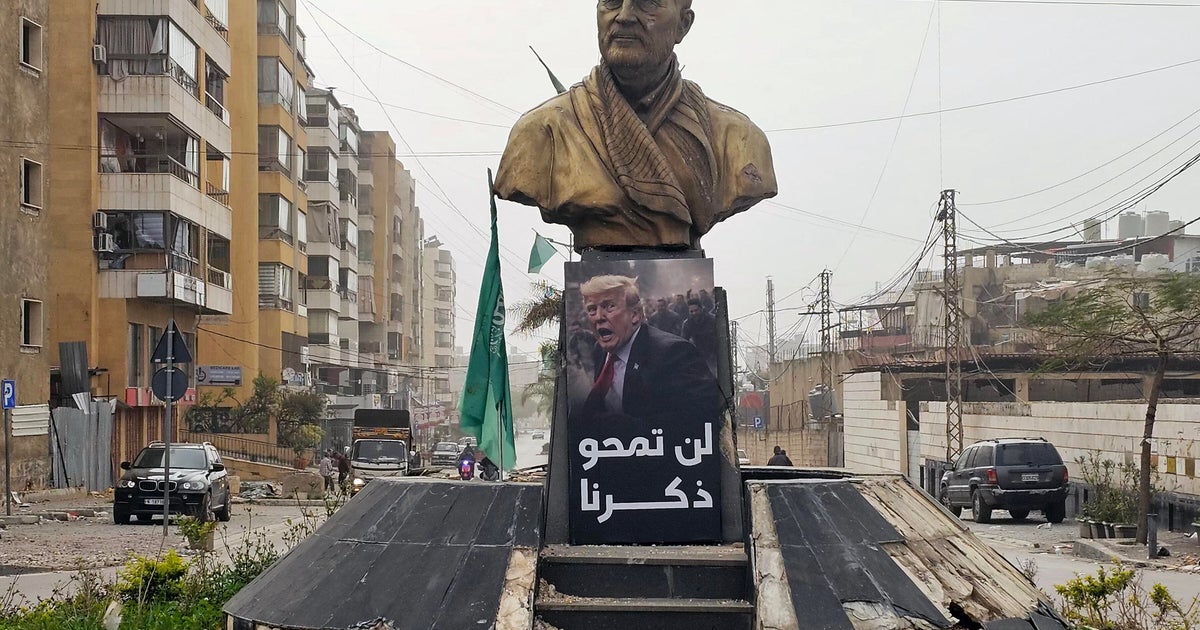
To understand the significance of these arrests, it’s essential to know who Qasem Soleimani was and why his family connections matter to U.S. authorities. Soleimani served as commander of the Quds Force, the foreign operations arm of Iran’s Islamic Revolutionary Guard Corps, and was widely regarded as the architect of Iran’s regional military strategy across the Middle East. His influence extended to militia groups in Iraq, Syria, Lebanon, and Yemen, making him one of the most powerful figures in shaping Iran’s foreign policy through military means. Soleimani’s path to prominence began after the 2003 U.S. invasion of Iraq, when he was relatively unknown within Iran itself. His reputation grew substantially when American military officials publicly identified him as responsible for arming Iraqi militants with sophisticated roadside bombs known as explosively formed penetrators, which caused devastating casualties among U.S. troops. These weapons could penetrate armored vehicles and were responsible for killing and seriously injuring hundreds of American service members during the Iraq War. Over the following decade and a half, Soleimani transformed from an obscure military officer into Iran’s most recognizable battlefield commander and a figure of immense domestic popularity among supporters of Iran’s theocratic government. Despite his military role, he consistently refused calls to enter politics, yet he wielded power that rivaled or exceeded that of many civilian leaders in Iran. His killing in a U.S. drone strike in Baghdad in January 2020, ordered by then-President Trump, represented one of the most significant direct confrontations between the United States and Iran and brought the two nations to the brink of open warfare.
Additional Revocations Targeting Iranian Officials’ Family Members
The action against Soleimani’s relatives was not an isolated incident but part of a broader pattern of enforcement by the Trump administration. Secretary of State Marco Rubio announced that he had also terminated the legal status of Fatemeh Ardeshir-Larijani, daughter of Ali Larijani, who previously served as Secretary of Iran’s Supreme National Security Council. Her husband, Seyed Kalantar Motamedi, also had his legal status revoked in the same action. Ali Larijani himself was killed in an Israeli airstrike last month, adding another layer of geopolitical complexity to the situation. Unlike the Soleimani relatives, Larijani’s daughter and her husband are no longer in the United States, though the revocation of their legal status effectively prevents them from returning. Secretary Rubio framed these actions in stark terms, stating on social media platform X that “The Trump Administration will not allow our country to become a home for foreign nationals who support anti-American terrorist regimes.” This statement reflects the administration’s broader policy approach of taking aggressive action against individuals perceived as sympathetic to governments designated as state sponsors of terrorism or otherwise hostile to American interests, even when those individuals have not been charged with any criminal activity.
Legal and Constitutional Questions Surrounding Free Speech
The administration’s use of rarely invoked executive powers to revoke legal immigration status has raised significant legal and constitutional concerns, particularly regarding First Amendment protections for free speech. Rubio previously used similar authority last year to justify the detention and deportation of several pro-Palestinian activists who held legal status in the United States, including Mahmoud Khalil, a student at Columbia University. These earlier cases have become mired in federal court litigation, with civil liberties advocates arguing that the government’s actions unconstitutionally penalized individuals for exercising their right to free speech. The lawsuits contend that expressing political opinions—even those critical of U.S. government policies or supportive of controversial causes—is protected activity under the First Amendment and cannot legally serve as the basis for immigration enforcement actions. The government, however, maintains that holding a green card is a privilege rather than an absolute right, and that national security considerations can justify revocation when officials determine that an individual poses a threat. A DHS spokesperson emphasized this perspective in a statement, saying: “It is a privilege to be granted a green card to live in the United States of America. If we have reason to believe a green card holder poses a threat to the U.S., the green card will be revoked.” This position sets up a fundamental tension between immigration enforcement authority and constitutional protections, a conflict that will likely require resolution through the courts.
Implications for Immigration Policy and National Security
These cases represent a significant development in how the United States balances immigration policy with national security concerns, particularly when dealing with relatives of foreign officials from adversarial nations. The arrests and revocations send a clear message that family connections to designated enemies of the United States, combined with public support for those regimes, can result in the loss of legal residency—even for those who have lived in America for years with proper documentation. Critics of this approach argue that it creates a dangerous precedent where political speech and family relationships, rather than actual criminal conduct or concrete security threats, become grounds for deportation. They worry about a chilling effect on free expression within immigrant communities and the potential for these powers to be applied selectively based on political considerations. Supporters, however, contend that the government must have tools to remove individuals who actively advocate for hostile foreign powers while residing on American soil, particularly when there is evidence of fraud in their original immigration applications. The outcome of the ongoing legal challenges will likely shape immigration enforcement policy for years to come, determining how much weight can be given to an individual’s political expressions and associations when evaluating their eligibility to remain in the United States. As these cases move through the courts, they will test the boundaries of executive authority over immigration matters and the extent to which constitutional protections apply to non-citizens with legal status. For now, the message from the administration is unmistakable: expressing support for regimes considered hostile to American interests, particularly while enjoying the benefits of U.S. residency, carries significant risks.