


Ukraine Surpasses Russia in Cross-Border Drone Attacks for First Time Since War Began
Historic Shift in Aerial Warfare Capabilities
In a significant turning point in the ongoing conflict between Ukraine and Russia, March 2025 marked the first time since the war’s outbreak in 2022 that Ukraine launched more cross-border attack drones than Russia within a single month. According to data analyzed by ABC News from both the Ukrainian Air Force and Russia’s Ministry of Defense, this shift represents a dramatic change in the aerial dynamics of the conflict. Russia’s defense ministry reported intercepting an unprecedented 7,347 Ukrainian drones throughout March—the highest monthly total Moscow has ever documented, averaging approximately 237 drones shot down each day. Meanwhile, Ukraine’s air force recorded facing 6,462 Russian drones and 138 missiles during the same period, successfully intercepting or suppressing around 90% of the drones and nearly 74% of the missiles. This translates to Ukraine confronting an average of just over 208 drones and four missiles daily. While ABC News cannot independently verify these figures from either side, and experts acknowledge that both nations may have incentives to exaggerate their defensive successes or amplify enemy attacks for strategic messaging purposes, the data nonetheless suggests a remarkable evolution in Ukraine’s offensive capabilities and a potential rebalancing of the conflict’s aerial warfare dimension.
Record-Breaking Attacks and Strategic Implications
The combined total of 6,600 Russian drones and missiles reported by Ukraine’s air force throughout March represents an all-time high for Russian long-range attacks in any single month since the war began. The most intense single day of Russian strikes occurred on March 24, when Moscow launched a massive barrage of 948 drones and 34 missiles into Ukrainian territory—the largest concentrated attack by either side during the entire month. These long-range drone and missile strikes have become fundamental elements of the conflict’s strategy, as both Kyiv and Moscow pursue campaigns aimed at degrading each other’s economic infrastructure and undermining their opponent’s capacity to sustain military operations and fund the ongoing war effort. Remarkably, these intensive aerial campaigns have continued unabated even as U.S.-brokered peace negotiations have resumed, suggesting that both sides view maintaining military pressure as essential to their negotiating positions. Historically, Russia has maintained superiority in launching drones and missiles into Ukraine, with Ukrainian leadership frequently citing Moscow’s relentless nightly barrages as posing severe threats to the country’s strategic position and civilian infrastructure. However, March’s data indicates a potentially transformative shift in this balance, demonstrating that Ukraine’s long-term investments in expanding its domestic drone and missile production capabilities are finally yielding substantial results on the battlefield.
Ukraine’s Ambitious Defense Production Goals
Ukrainian President Volodymyr Zelenskyy has been consistently transparent and emphatic about Kyiv’s strategic plans to dramatically expand Ukraine’s long-range strike capabilities as a cornerstone of its defense strategy. Speaking in October, Zelenskyy outlined ambitious production targets that underscore Ukraine’s commitment to achieving self-sufficiency in military technology: “Our production potential for drones and missiles alone will reach $35 billion next year. Despite all the difficulties, Ukrainians are creating their national defense product that, in certain parameters, already surpasses many others in the world.” Zelenskyy’s remarks reflect not just aspirational goals but also pride in Ukraine’s technological achievements under extraordinarily challenging wartime conditions. He emphasized the historical significance of Ukraine’s expanded strike capabilities, stating: “Never before in history has Ukrainian defense been so long-range and so felt by Russia. We must make the cost of war absolutely unacceptable for the aggressor—and we will.” This declaration encapsulates Ukraine’s strategic doctrine of imposing such significant costs on Russian military operations and economic infrastructure that continuing the conflict becomes untenable for Moscow. The majority of Ukrainian strikes are believed to be conducted using relatively inexpensive, domestically manufactured drones, which provides Ukraine with a cost-effective means of sustaining high-volume attacks. Additionally, Ukraine has developed innovative interceptor drones, designed and built by Ukrainian companies specifically to counter incoming Russian strike drones, representing a defensive innovation born of necessity that addresses the constant threat of Russian aerial attacks.
Targeting Russia’s Economic Lifelines
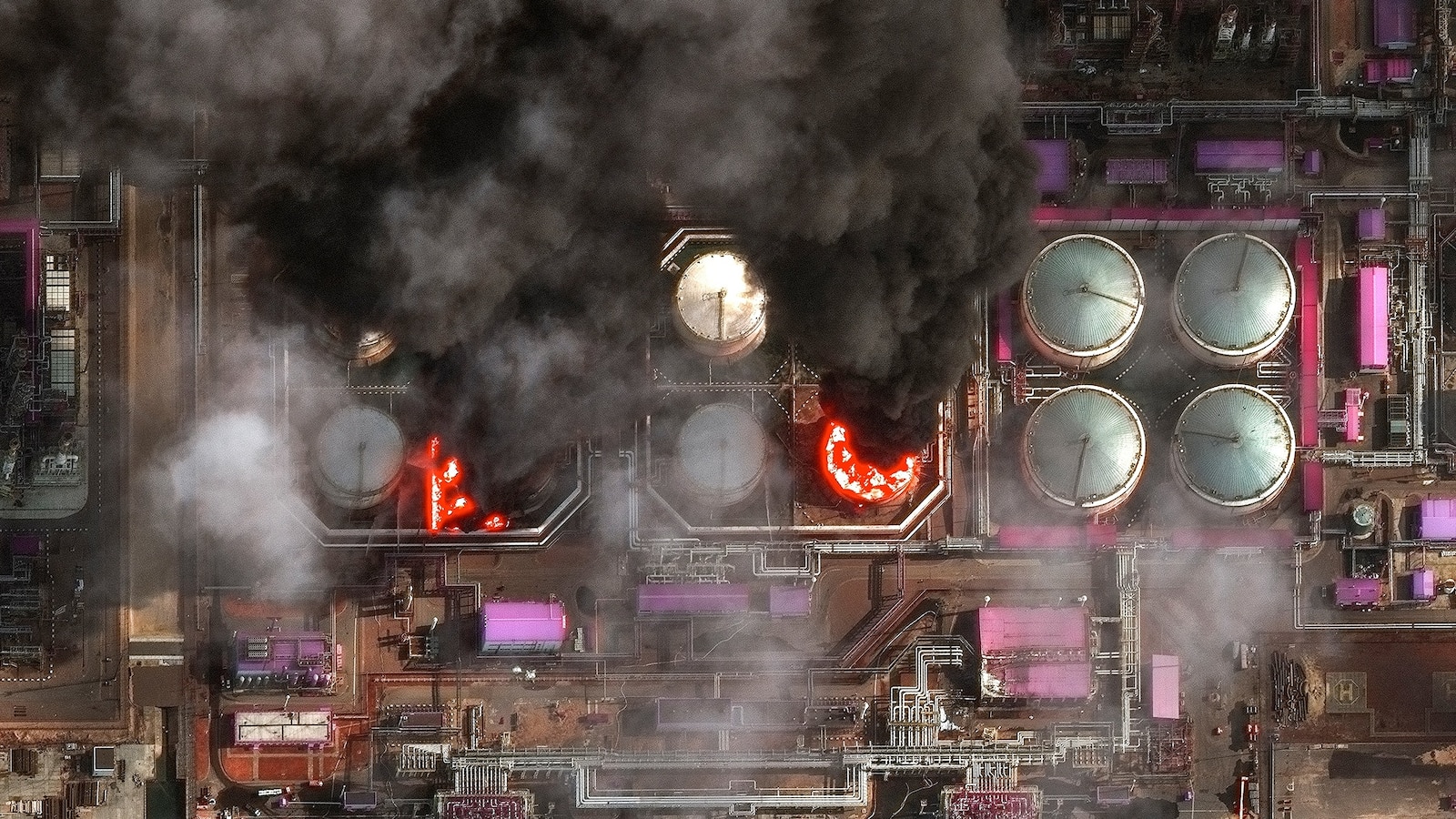
Ukraine has increasingly focused its strategic strikes on Russian oil refining and transportation facilities over the past year, implementing a deliberate campaign designed to undermine a critical funding stream for Moscow’s military operations. Ukrainian leaders have been explicit about this strategy’s rationale: by attacking Russia’s energy infrastructure, they aim to reduce the revenue that Moscow uses to purchase weapons and sustain its war effort. March’s most prominent and high-profile Ukrainian attacks targeted Russia’s Baltic Sea ports of Ust-Luga and Primorsk—both crucial oil export hubs that represent vital nodes in Russia’s energy distribution network. These strikes drew sharp condemnation from Kremlin spokesman Dmitry Peskov, who characterized them as “terrorist attacks,” employing language clearly intended to delegitimize Ukraine’s military operations in international opinion. President Zelenskyy, however, has firmly defended the legitimacy of these targets, stating in February that Russia’s energy sector represents “a legitimate target” for Ukrainian attacks precisely because Russia converts oil revenue into weapons used against Ukraine. Speaking to students at the National Aviation University in Kyiv, Zelenskyy explained the strategic logic: “We do not have to choose whether we strike a military target or energy. He sells oil, takes the money, invests it in weapons. And with those weapons, he kills Ukrainians,” referring directly to Russian President Vladimir Putin. Russian officials have generally attempted to minimize the impact of Ukrainian attacks, typically attributing any damage or casualties to falling debris from successfully intercepted drones rather than acknowledging direct hits from Ukrainian munitions. However, substantial publicly available evidence—including video footage and photographs documenting the aftermath of attacks—clearly demonstrates that a significant number of Ukrainian drones successfully penetrate Russian air defenses and strike sensitive military installations and industrial facilities, contradicting Moscow’s official narrative of comprehensive defensive effectiveness.
NATO Concerns and Regional Spillover Effects
The intensification of drone warfare between Ukraine and Russia has increasingly raised concerns about the conflict potentially spreading beyond the combatant nations into neighboring countries, including NATO member states. Drone incursions into allied territories have become regular occurrences, prompting NATO aircraft to scramble frequently in response to Russian drone attacks along Ukraine’s western borders, particularly affecting Poland and Romania. Allied officials have documented Russian drone violations in multiple NATO member states, including Romania, Poland, Lithuania, and Latvia, while Russian drones have also been observed overflying Moldova, which, though not a NATO member, shares borders with both Ukraine and Romania. Russian officials have consistently denied responsibility for these airspace violations, despite documented evidence of their occurrence. The situation is further complicated by reports of stray Ukrainian drones falling in several countries, including Finland, Estonia, Latvia, and Lithuania, demonstrating that the aerial warfare campaign creates risks for all nations in the region regardless of the drones’ country of origin. These incidents have generated significant diplomatic tensions and raised fundamental questions about how NATO should respond to repeated airspace violations by drones from a non-member state, particularly when those violations occur in the context of an active conflict. The situation presents challenging policy dilemmas for alliance members, who must balance their support for Ukraine’s defensive efforts against the need to protect their own airspace sovereignty and avoid inadvertent escalation that could draw NATO directly into the conflict.
The Evolving Character of Modern Warfare
The dramatic increase in Ukraine’s drone strike capabilities during March 2025 represents more than just a tactical shift in one particular conflict—it illustrates the rapidly evolving character of modern warfare and the democratization of advanced military technology. Ukraine’s success in developing a robust domestic drone industry under wartime conditions, producing both offensive strike drones and defensive interceptor drones at scale, demonstrates how smaller nations with limited resources can leverage innovation and necessity to compete against larger adversaries with traditionally superior military-industrial complexes. The relatively low cost of drone technology compared to conventional missiles and aircraft makes sustained high-volume campaigns economically feasible even for countries facing severe wartime resource constraints. This development has profound implications for future conflicts, suggesting that asymmetric warfare capabilities are becoming increasingly accessible to nations that invest in domestic technological development and manufacturing capacity. The data from March showing Ukraine surpassing Russia in drone launches, even as both sides maintain intensive campaigns averaging hundreds of strikes daily, underscores how drone warfare has fundamentally transformed the conflict’s operational rhythm. As peace negotiations continue alongside these intense military operations, the drone campaigns serve multiple purposes: degrading enemy infrastructure, imposing economic costs, demonstrating resolve, and strengthening negotiating positions. The outcome of Ukraine’s strategy to make the war economically and politically unsustainable for Russia through sustained attacks on critical infrastructure remains to be determined, but March 2025 may well be remembered as a pivotal moment when Ukraine demonstrated its capacity to match and exceed Russia’s offensive aerial capabilities—a development few observers would have predicted when the conflict began in 2022.