


Tragic Loss of a Promising Life: The Sheridan Gorman Case
A Senseless Act of Violence Shatters a Community
The Loyola University Chicago community is mourning the devastating loss of 18-year-old freshman Sheridan Gorman, whose life was tragically cut short in the early morning hours of March 19. Sheridan was simply doing what countless college students do—enjoying time with friends near campus. She and her companions were walking near Tobey Prinz Beach Park, located less than a mile from the university’s Lake Shore campus, when an unimaginable tragedy unfolded. According to Chicago police reports, a man approached the group without warning and shot Sheridan, leaving her family, friends, and the entire university community grappling with an incomprehensible loss. The randomness and brutality of this act have sent shockwaves through the campus and beyond, raising urgent questions about safety, policy failures, and the value of a young life taken far too soon.
Sheridan’s family released a heart-wrenching statement that captured the magnitude of what was stolen from them and the world. “She had her entire life ahead of her—her education, her future, her family, the countless lives she would have touched,” they said. “All of that was taken in a moment.” These words paint a picture of a young woman brimming with potential, standing at the threshold of adulthood with dreams yet to be realized and contributions yet to be made. At just 18 years old, Sheridan represented hope, promise, and possibility. She had barely begun her journey at Loyola University, a journey that should have been filled with learning, growth, friendship, and discovery. Instead, her story has become a painful reminder of how fragile life can be and how quickly everything can change.
The Arrest and the Suspect’s Troubling History
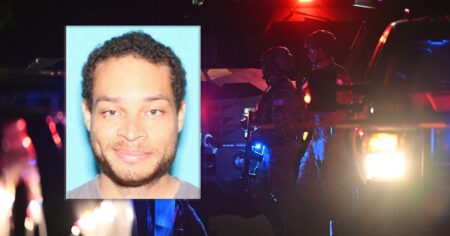
On Friday, Chicago police arrested Jose Medina in connection with Sheridan’s murder, charging him with first-degree murder among other offenses. However, the circumstances surrounding Medina’s presence in the United States have ignited a fierce debate about immigration enforcement, border security, and local policies regarding cooperation with federal authorities. According to the Department of Homeland Security, Medina is an undocumented immigrant from Venezuela with a history of encounters with law enforcement that raises serious questions about systemic failures. The agency revealed that Medina had been apprehended and released not once, but twice before this tragic incident occurred.
The timeline of Medina’s interactions with authorities is particularly troubling. DHS records indicate that he was first apprehended by U.S. Border Patrol in May 2023 and subsequently released. Just one month later, in June 2023, Medina was arrested in Chicago for shoplifting but was once again released. The Chicago Police Department has stated that it does not provide criminal histories, which has complicated efforts to understand the full scope of Medina’s activities between his release and the alleged murder. Following his arrest for Gorman’s killing, DHS lodged an immigration detainer—a formal request that local authorities hold an individual beyond their release date so that federal immigration officials can take custody. The agency has emphasized its determination to ensure that Medina remains behind bars this time.
Medina was scheduled to appear at a detention hearing on Monday, but according to the Cook County Sheriff’s Office, as reported by ABC Chicago station WLS, he is currently hospitalized, and his hearing has been postponed. The circumstances of his hospitalization have not been disclosed, but the delay has only added to the frustration felt by those seeking swift justice for Sheridan and answers about how this tragedy could have been prevented.
The Political Firestorm and Calls for Accountability
The case has quickly become a flashpoint in the national debate over immigration policy, sanctuary city designations, and the responsibility of local versus federal authorities in matters of public safety. Lauren Bis, Acting Assistant Secretary at the Department of Homeland Security, issued a strongly worded statement asserting that Gorman “was failed by open border policies and sanctuary politicians.” The statement directly called on Illinois Governor J.B. Pritzker and Chicago’s political leadership to “commit to not releasing this criminal illegal alien from jail back into American neighborhoods.” This pointed accusation has placed Chicago’s sanctuary city policies—which limit cooperation between local law enforcement and federal immigration authorities—under intense scrutiny.
Governor Pritzker responded on Monday with a statement that acknowledged the tragedy while pushing back against what he characterized as the politicization of grief. “Our thoughts are with the family, friends, and Loyola University community grieving the senseless murder of Sheridan Gorman,” the governor said. He went on to accuse the Trump administration of “politicizing heinous tragedies” and called on federal authorities to reinstate funding for violence prevention programs that support public safety efforts in Illinois. The governor’s response highlights the deep divide in perspectives on how to address immigration enforcement and public safety, with each side claiming that their approach would better protect American communities.
This exchange represents more than just political posturing—it reflects fundamentally different philosophies about governance, justice, and community safety. Supporters of sanctuary policies argue that these measures encourage immigrant communities to cooperate with police without fear of deportation, thereby making everyone safer. They contend that mixing immigration enforcement with local policing creates distrust and drives vulnerable populations underground. Critics, however, point to cases like Sheridan’s as evidence that these policies can have deadly consequences, arguing that public safety must take precedence and that individuals who enter the country illegally and then commit crimes should face swift removal.
A Family’s Grief and Their Call for Change
Perhaps the most powerful voice in this tragedy belongs to Sheridan Gorman’s family, who are navigating unimaginable grief while also demanding accountability and change. In their public statement, they addressed not only their personal loss but also the systemic failures they believe contributed to their daughter’s death. “We are gravely disappointed by the policies and failures that allowed this individual to remain in a position to commit this crime,” the family stated. Their words carry the weight of lived experience—this is not an abstract policy debate for them, but a reality that has permanently altered their lives.
The family continued with a statement that should resonate across political divides: “When systems fail—whether through release decisions, lack of coordination, or unwillingness to act—the consequences are not abstract. They are real. And in our case, they are permanent.” This observation cuts to the heart of the matter. Regardless of one’s position on immigration policy, border security, or sanctuary city designations, the Gorman family’s point is undeniable: when systems designed to protect the public fail, real people suffer real consequences. Their daughter is gone, and no policy change, no arrest, and no amount of political debate will bring her back.
“Accountability must be complete,” the family declared, making clear that they expect answers and action at every level where failures may have occurred. Their grief has been compounded by the knowledge that Medina had previous encounters with law enforcement and immigration authorities, encounters that should have—in their view and in the view of many others—prevented him from being in a position to harm their daughter. The family’s statement reflects not only their personal anguish but also their determination that Sheridan’s death should not be in vain, that it should serve as a catalyst for examining and reforming the systems that are meant to keep communities safe.
The Broader Context and National Implications
Sheridan Gorman’s murder has resonated far beyond Chicago because it touches on issues that are at the forefront of American political discourse. Immigration policy has become one of the most divisive topics in the country, with passionate advocates on all sides. Sanctuary city policies exist in numerous jurisdictions across the United States, based on the principle that local resources should focus on local crime rather than federal immigration enforcement. Proponents argue that these policies are consistent with constitutional principles, resource allocation realities, and community trust-building.
However, critics contend that such policies can create dangerous gaps in enforcement, particularly when individuals with criminal histories are released back into communities rather than being turned over to federal immigration authorities. The Medina case appears to exemplify their concerns: an undocumented individual with a prior arrest history who was released and allegedly went on to commit a far more serious crime. The Department of Homeland Security’s emphasis on Medina’s previous apprehensions is clearly intended to support the argument that existing policies are insufficient to protect public safety.
The case also raises questions about coordination between different levels of law enforcement and government. When Medina was arrested for shoplifting in 2023, was there adequate communication between Chicago police and federal immigration authorities? Were protocols followed, or were there breakdowns in the system? The Chicago Police Department’s policy of not providing criminal histories adds another layer of complexity, as it limits transparency and makes it difficult to track how repeat offenders move through the system. These are not simple issues with easy answers, but they demand serious examination, particularly when the stakes—as the Gorman family knows all too painfully—can be a matter of life and death.
Moving Forward: Justice, Reform, and Remembrance
As the legal process moves forward, the focus will rightly be on securing justice for Sheridan Gorman. The first-degree murder charge against Jose Medina represents the beginning of what will likely be a lengthy legal proceeding. The prosecution will need to prove its case beyond a reasonable doubt, and Medina will be afforded the constitutional protections guaranteed to all defendants. This process, though necessary, will be agonizing for Sheridan’s family as they relive the circumstances of her death through testimony and evidence.
Beyond the courtroom, however, Sheridan’s case demands a broader reckoning. Regardless of where one stands on immigration policy, the fact remains that an 18-year-old woman with her whole life ahead of her is dead, killed in a random act of violence while simply walking with friends near her college campus. The systems that are supposed to protect people—border security, immigration enforcement, local policing, judicial decision-making—must be examined to determine where breakdowns occurred and how they can be prevented in the future. This examination should be conducted in good faith, with the goal of genuinely improving public safety rather than simply scoring political points.
Sheridan Gorman should be remembered not as a political talking point but as a real person—a daughter, a friend, a student with dreams and potential. The Loyola University community has lost one of its own, and that loss will be felt for years to come. As debates rage about policy and politics, it’s essential not to lose sight of the human being at the center of this tragedy. Her family’s call for complete accountability is a reasonable demand from people who have suffered an irreplaceable loss. Whatever reforms or changes emerge from this case, they should be measured by one simple standard: would they have saved Sheridan Gorman’s life? If the answer is yes, then they deserve serious consideration. Sheridan’s memory demands nothing less than our commitment to ensuring that no other family has to endure what hers is enduring now.