

Venezuela’s Historic Victory: A David vs. Goliath Moment in Baseball
An Unforgettable Upset That Shook the Baseball World
In what will be remembered as one of the greatest upsets in international baseball history, Venezuela defeated the United States 3-2 in the 2026 World Baseball Classic final, capturing their first-ever WBC championship. The thrilling victory at LoanDepot Park in Miami left Venezuelan players and fans celebrating wildly on the field while American stars could only watch in stunned silence from their dugout. Despite fielding a powerhouse roster featuring some of baseball’s biggest names including Aaron Judge, Bryce Harper, and Paul Skenes, the United States fell short once again, marking their second consecutive final loss and extending their championship drought since 2017. The game was a masterclass in clutch hitting and stellar pitching from Venezuela, proving that heart and determination can overcome even the most formidable opponents. For Venezuela, this victory represented more than just a baseball championship—it was a moment of national pride and joy that transcended the sport itself, uniting a country through the magic of baseball.
Building the Lead: Venezuela’s Early Offensive Strikes
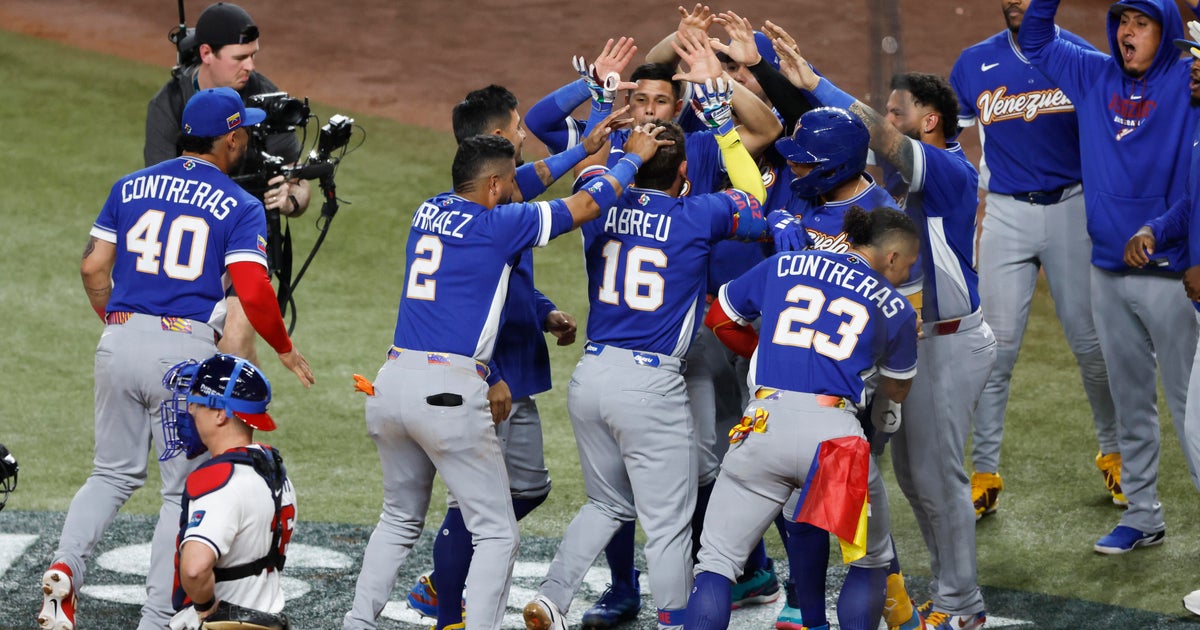
Venezuela wasted no time establishing their presence in the championship game, putting runs on the board before the American offense could find its rhythm. The scoring began in the top of the third inning when Maikel Garcia delivered a crucial sacrifice fly that brought home the legendary Salvador Perez, giving Venezuela a 1-0 lead. The Venezuelan dugout erupted with energy, sensing that something special might be unfolding. The advantage doubled in the fifth inning when Wilyer Abreu launched a massive solo home run that traveled an impressive 414 feet to center field. The moment was pure joy—Abreu’s helmet flew off as he rounded second base, and he hopped in excitement approaching home plate where his teammates lined up to greet him. These early runs came against American starter McLean, who got the nod because Detroit Tigers’ ace Tarik Skubal, a two-time Cy Young Award winner, had been limited to first-round appearances by his team. Meanwhile, Venezuelan starter Rodriguez was masterful, allowing just one hit over 4 1/3 innings, keeping the potent American lineup completely off-balance and building confidence for his team’s bullpen to finish the job.
The American Response: Harper’s Dramatic Moment
For seven innings, the United States lineup—stacked with All-Stars and MVP candidates—struggled to solve Venezuelan pitching, their bats mysteriously silent on the game’s biggest stage. The tension built with each passing inning as American fans wondered if their team would ever break through. Then, in the bottom of the eighth inning, Philadelphia Phillies superstar Bryce Harper delivered the clutch performance expected of a player of his caliber. With the game seemingly slipping away, Harper crushed a game-tying two-run home run that sent shockwaves through the stadium and breathed new life into American hopes. The blast showcased why Harper is considered one of baseball’s most dangerous hitters in pressure situations, and suddenly the momentum seemed to shift entirely. The sellout crowd, which had been heavily pro-Venezuela throughout the game—even booing American players during pregame introductions—fell momentarily silent as Harper rounded the bases. For the Americans and their fans, it appeared the inevitable comeback was beginning, that their superior roster would ultimately prevail. However, baseball has a way of humbling even the greatest teams, and Venezuela was far from finished writing their championship story.
The Decisive Ninth: Venezuela’s Winning Moment
The top of the ninth inning began innocuously enough with a leadoff walk, but that free pass would prove catastrophic for American hopes and golden for Venezuela’s championship dreams. Eugenio Suárez stepped to the plate with opportunity beckoning and delivered the biggest hit of the tournament—a double ripped to left-center field that scored pinch runner Javier Sonoja with what would become the winning run. The Venezuelan dugout exploded in celebration, players jumping and embracing while their fans in the stands created a deafening roar of joy. Now holding a 3-2 lead, Venezuela turned to closer Daniel Palencia to secure the final three outs and the championship. Palencia was absolutely dominant, striking out two batters in a perfect bottom of the ninth inning, completing a three-hitter for the game and earning his third save of the tournament. The final out came on a strikeout of Roman Anthony, and as the umpire’s arm went up signaling strike three, Venezuelans rushed onto the field in unbridled celebration. Players piled on top of each other near the pitcher’s mound while their fans chanted and waved flags. Meanwhile, American players could only lean against their dugout railing, watching the celebration unfold, processing the bitter disappointment of falling short once again on their home soil.
Beyond Baseball: The Political and Cultural Context
This championship game carried significance that extended far beyond the baseball diamond, played against a backdrop of serious political tensions between the two nations. The geopolitical overtones were impossible to ignore, especially given that the U.S. military had captured Venezuelan President Nicolás Maduro just months earlier in January. Despite the heightened tensions between governments, players and coaches from both teams wisely avoided discussing the political turmoil, choosing to focus on the sport that brought them together. However, the political situation was evident in the atmosphere at LoanDepot Park, where the crowd composition and reactions told their own story. The sellout audience was overwhelmingly pro-Venezuela, creating what felt like a road game for the Americans in their own country. Some fans even booed American players during the pregame introductions, a striking moment that highlighted the complex emotions surrounding the game. Yet this cultural and political dimension also elevated the victory’s meaning for Venezuelans everywhere, transforming it from a sporting achievement into a symbol of national pride during challenging times for their country.
Historic Achievement and Baseball’s International Growth
Venezuela’s championship victory represents a significant milestone in international baseball, making them only the second Latin American nation to win the World Baseball Classic after the Dominican Republic’s triumph in 2013. This achievement wasn’t entirely surprising to those who closely follow international baseball talent distribution. Sixty-three players born in Venezuela appeared on Major League Baseball opening-day rosters in 2025, the second-highest total from outside the United States, trailing only the Dominican Republic’s 100 players. This deep talent pool demonstrates that Venezuela has become a baseball powerhouse, consistently producing elite players who compete at the highest level. The United States, despite winning the inaugural tournament they entered in 2017, has now lost consecutive finals—falling to Japan in 2023 on this same Miami field and now to Venezuela. Japan remains the tournament’s most successful nation with three championships. The loss was particularly disappointing for American stars like Aaron Judge, who went 0-for-4 with three strikeouts in the championship game, unable to deliver when his country needed him most. The Americans arrived at the ballpark wearing game-worn U.S. Olympic hockey jerseys—coordinated by outfielder Pete Crow-Armstrong and featuring Jack Hughes, who scored the gold medal-winning goal against Canada—hoping that Olympic gold would inspire baseball gold. Instead, Venezuela proved that in baseball’s premier international event, reputation and roster rankings matter less than execution, pitching, timely hitting, and the intangible magic that happens when a team plays with heart and purpose for something greater than themselves.