
Life Aboard NASA’s Orion: What Awaits the Artemis II Astronauts on Their Historic Moon Mission
The Journey Ahead: A Modern Space Odyssey
We’ve all experienced the discomfort of long car rides—the cramped legs, the stiff neck, the seemingly endless hours confined to a small space as the road stretches on. Now multiply that challenge exponentially and imagine yourself embarking on a 10-day journey covering 685,000 miles at speeds exceeding 20,000 miles per hour. This is the reality facing the four astronauts selected for NASA’s Artemis II mission aboard the Orion spacecraft. Commander Reid Wiseman, pilot Victor Glover, mission specialists Christina Koch and Jeremy Hansen will make history as they venture into the depths of space that humans haven’t explored in nearly half a century. Scheduled to launch as early as Wednesday, April 1st, this mission represents a pivotal moment in humanity’s return to lunar exploration and our eventual journey to Mars.
The Artemis II mission is more than just a sightseeing tour around the moon—it’s a critical test of technology, human endurance, and operational procedures that will pave the way for future missions. While the crew won’t actually land on the lunar surface (that milestone is reserved for Artemis III), they’ll conduct a crewed lunar flyby designed to demonstrate that both the Space Launch System (SLS) rocket and the Orion crew capsule can safely transport astronauts to deep space and back. NASA will use this mission to test essential systems including life support, communications, navigation, and various operating procedures that will be crucial for later missions. According to the space agency, the technology being validated on Orion represents a crucial step toward eventually sending human crews to Mars, making this mission not just about returning to the moon, but about preparing for humanity’s next giant leap into the cosmos.
Living in a Space Minivan: The Reality of Orion’s Cabin
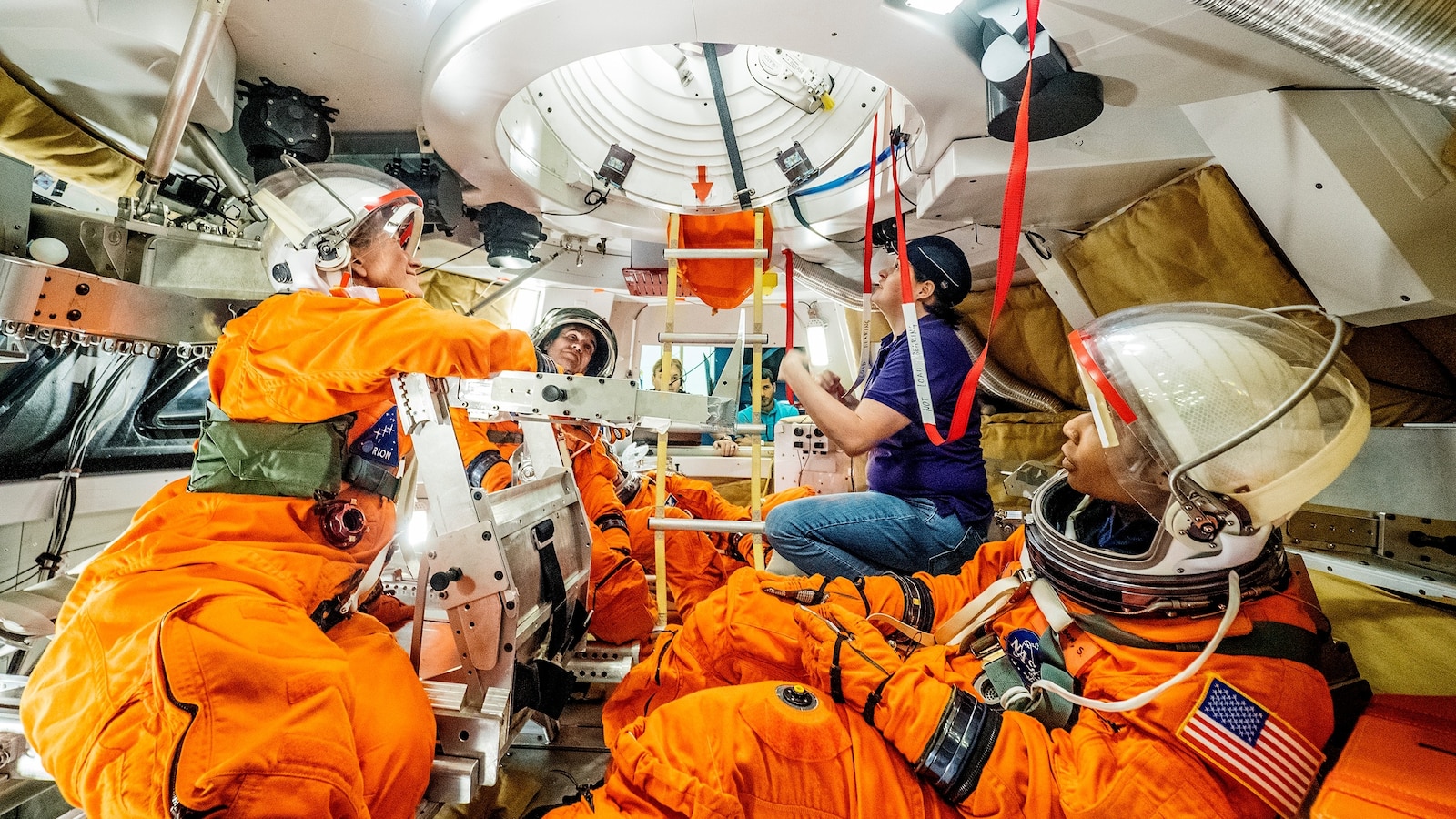
When it comes to accommodations, the Orion spacecraft won’t be winning any awards for spaciousness. The cabin offers approximately 330 habitable cubic feet—roughly equivalent to the interior space of two minivans parked side by side. For four adults to live, work, eat, sleep, and exercise in this space for ten consecutive days presents significant challenges. However, NASA points out that this represents substantial progress from the Apollo era, with Orion providing nearly 60% more space than the Apollo command module’s 210 cubic feet. Still, context matters: we’re talking about four people sharing a space slightly larger than a walk-in closet for over a week while traveling through the harsh environment of deep space.
Despite these cramped conditions, NASA engineers have worked tirelessly to equip the spacecraft with everything the crew needs to maintain both physical health and mental well-being during their journey. The cabin includes essential amenities such as an exercise machine designed specifically for the microgravity environment, a private toilet facility, food preparation areas, and storage for personal hygiene items. Every square inch has been carefully planned and optimized to serve multiple functions, ensuring that the astronauts can maintain daily routines that provide some sense of normalcy amid the extraordinary circumstances. The challenge of designing this living space required engineers to balance competing demands: maximizing usable space for the crew while incorporating all the necessary equipment, supplies, and safety features required for deep space exploration.
Daily Life in Deep Space: Eating, Sleeping, and Staying Healthy
Maintaining human routines in the alien environment of space is both a psychological necessity and a physical imperative. NASA has worked closely with food scientists to develop customized meal plans for each astronaut based on their personal preferences and specific nutritional needs. The crew will have the capability to hydrate freeze-dried foods and reheat meals, allowing them to take regular meal breaks that provide structure to their days and opportunities to gather as a crew. An Instagram video from NASA’s Johnson Space Center even shows the Artemis II crew sampling various “space food” options during their training in Houston, helping them select items that will make their journey more palatable—literally.
Exercise is another non-negotiable aspect of daily life aboard Orion. The astronauts are required to work out for at least 30 minutes every day to combat the detrimental effects that microgravity has on the human body. Extended time in space causes muscles to atrophy and bones to lose density, making exercise essential for maintaining crew health and ensuring astronauts remain capable of performing their duties. The spacecraft is equipped with a specially designed dual-purpose flywheel machine that allows for aerobic exercise in the confined space, providing resistance training that helps maintain muscle mass and cardiovascular fitness despite the lack of gravity.
Personal hygiene presents unique challenges in space, but Orion has been designed with these needs in mind. The spacecraft includes a toilet facility with privacy doors—a small but significant comfort for crew members who will be living in extremely close quarters for an extended period. While the astronauts cannot shower in the traditional sense (water doesn’t behave the same way in microgravity), they have access to liquid soap, water, and rinseless shampoo that allow them to maintain cleanliness throughout the mission. Each crew member will have a personal hygiene kit containing the items they need for daily grooming and care. When it comes to sleep, the astronauts will attach sleeping bags to the walls of the spacecraft—in microgravity, there’s no “up” or “down,” so sleeping vertically is just as comfortable as sleeping horizontally. NASA has allotted eight hours for sleep each night, recognizing that adequate rest is crucial for maintaining alertness, decision-making capabilities, and overall crew performance during this demanding mission.
Staying Connected: Communication Technology Aboard Orion
One of the most critical aspects of the Artemis II mission is maintaining reliable communication between the crew and mission control on Earth. The astronauts will use various communication technologies, including microphones and headsets that allow them to speak with flight controllers, medical advisors, and even their families back home. This connection to Earth serves multiple purposes: it enables mission control to monitor crew health and spacecraft systems in real-time, allows for immediate troubleshooting if problems arise, and provides the emotional support that comes from maintaining contact with loved ones during an extraordinary and potentially stressful experience.
The crew will also have access to tablets and laptops that serve multiple functions throughout the mission. These devices allow astronauts to review procedures, reference technical documentation, access mission data, and yes—even enjoy entertainment. Before launch, crew members can load movies, music, books, and other content onto these devices, providing welcome mental breaks during the long journey. Romeo Garza, deputy assistant manager for the Orion Communication and Tracking System, explained in a mission video that the team will test two distinct communication systems during the early phase of the mission before committing to the full lunar trajectory. The primary system relies on NASA’s Deep Space Network, a sophisticated ground-based network of antennas that provides robust communication capabilities even as the spacecraft travels hundreds of thousands of miles from Earth. This network has been expanded and upgraded specifically to support the Artemis missions, ensuring that mission control can maintain contact throughout the entire journey.
Recognizing that system failures can occur even with the most carefully engineered technology, NASA has also equipped Orion with a backup emergency communication system. This redundancy is critical—if the primary communication system were to fail while the crew is in deep space, this emergency backup would allow mission control to continue talking with the astronauts and to navigate successfully back to Earth. This belt-and-suspenders approach to communication reflects NASA’s commitment to crew safety and the lessons learned from decades of spaceflight experience. The Artemis II mission will validate both of these communication systems under real deep-space conditions, ensuring they perform as designed when future missions venture even farther from home.
The Bigger Picture: Why Artemis II Matters
The Artemis II mission represents far more than a repeat of Apollo-era achievements. While it’s true that astronauts last ventured this far from Earth nearly five decades ago, the technology, objectives, and ultimate goals are vastly different. The Apollo missions were about demonstrating American technological superiority during the Cold War and planting flags on the lunar surface. Artemis is about establishing sustainable human presence beyond Earth, developing the capabilities needed for long-duration missions to Mars, and inspiring a new generation to push the boundaries of human exploration. The Orion spacecraft is specifically designed as a building block for these future ambitions—every system tested during Artemis II provides data and operational experience that will inform the design of spacecraft capable of supporting crews for months or even years in deep space.
The lessons learned from how astronauts live, work, and maintain their health during the 10-day Artemis II mission will directly influence planning for Artemis III’s lunar landing and subsequent missions that aim to establish a permanent lunar base. Questions about optimal crew size, cabin layout, exercise requirements, food systems, psychological support, and hundreds of other factors will be answered through the real-world experience of Wiseman, Glover, Koch, and Hansen. Their journey will test not just hardware, but the human element—how people adapt to the unique stresses of deep space, how crews work together in confined conditions, and what support systems are most effective for maintaining performance and morale. As NASA looks ahead to eventual human missions to Mars—journeys that could last two years or more—every insight gained from Artemis II becomes invaluable. The brave astronauts who will spend those ten days cramped in a space no larger than two minivans are pioneers in the truest sense, venturing into the unknown to make the path safer and clearer for all who will follow.