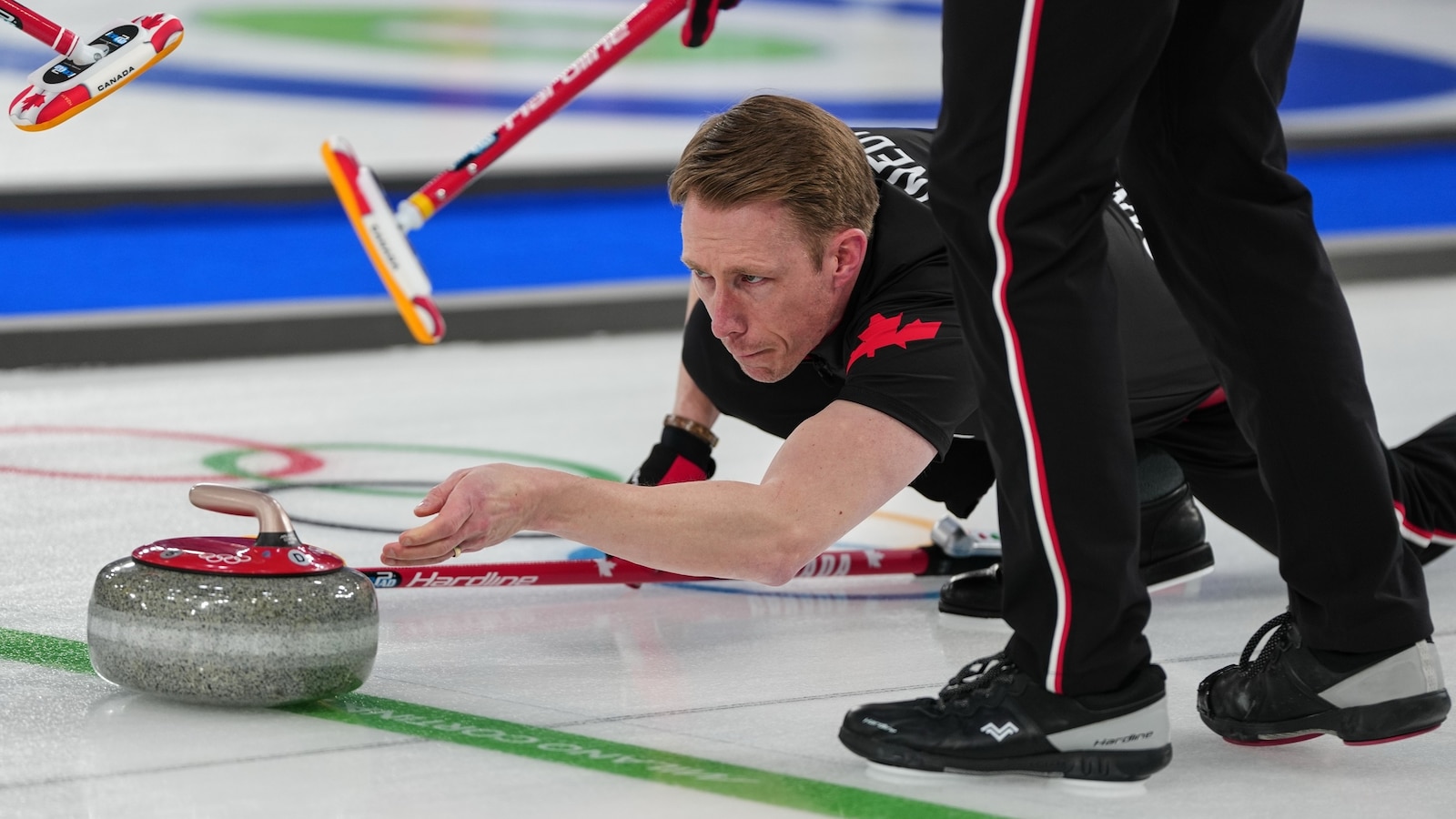

Olympic Curling Controversy: Drama Unfolds at Milan Cortina 2026
Unexpected Tension Takes Center Stage
The serene atmosphere typically associated with Olympic curling has been shattered at the Milan Cortina Winter Games, where the sport has unexpectedly become one of the most contentious and talked-about events of the competition. What should have been a showcase of precision, strategy, and sportsmanship has instead devolved into a series of heated exchanges and officiating disputes centered around “double touch” infractions. The controversy has swept through multiple teams and matches, creating an atmosphere of tension and uncertainty at the Cortina Curling Olympic Stadium, beautifully nestled in the heart of the Dolomites. While curling is traditionally known for its calm demeanor and gentlemanly conduct, the 2026 Games have revealed a different side of the sport, with teams pointing fingers at one another and questioning both opponents’ techniques and officials’ decisions. The drama has been so intense that it’s overshadowed some of the impressive athletic performances on the ice, leaving fans and participants alike wondering how this genteel sport became embroiled in such controversy.
Team USA Shines Amid the Chaos
While much of the curling competition has been consumed by controversy, Team USA has managed to stay above the fray and deliver impressive performances. The American women’s team pulled off a thrilling nail-biter victory over China on Sunday, securing their third consecutive win and improving their overall record to an impressive 4-1. The team, comprised of Cory Thiesse, Tabitha Peterson, Tara Peterson, and Taylor Anderson-Heide, demonstrated both skill and composure under pressure. Not to be outdone, the men’s team achieved a monumental upset on the same day, defeating the defending Olympic gold medalists from Sweden with a commanding 8-5 victory. This win was particularly sweet given that Sweden had been one of the teams most vocal about double-touch violations just days earlier. The American teams’ ability to maintain focus on their game while controversy swirled around them speaks to their mental fortitude and preparation. Their success has provided a welcome respite from the officiating debates, reminding viewers why curling deserves its place as an Olympic sport.
Understanding the Double-Touch Rule and the Controversy
At the heart of the current controversy is the double-touch rule, a regulation that prohibits illegal contact with the curling stone after its release. According to World Curling, the sport’s global governing body, a stone “must be clearly released from the hand before it reaches the hog line at the delivery end.” If a player fails to release the stone properly and maintains contact beyond this line, the stone is immediately removed from play by the delivering team. While this rule has existed for as long as the sport has been played at elite levels, its enforcement has rarely been this aggressive or prominent in previous competitions. The rule is designed to ensure fair play and prevent players from guiding stones beyond the acceptable release point, which could provide an unfair advantage. However, determining whether a violation has occurred can be subjective, as it requires officials to judge split-second moments with the naked eye. This inherent difficulty in enforcement has led to accusations of inconsistency, with some teams feeling targeted while others appear to escape scrutiny for similar actions.
Canada at the Center of the Storm
The Canadian curling teams have found themselves at the epicenter of the double-touch controversy, involved in multiple incidents over the weekend that have sparked debate and drawn criticism. The Canadian men’s team faced accusations from Sweden during their Friday night match, with the Swedish team claiming a violation had occurred. While Canadian players were not formally charged with a rule violation, they did receive a verbal warning for using “foul or offensive language” during the heated exchange that followed the Swedish accusation. The tension from that match appeared to carry over, as the Canadian women’s team had a stone removed the following day during their game against Switzerland, occurring amid heightened umpire surveillance following the previous day’s controversy. Videos circulating on social media appear to show Canadian players maintaining contact with stones beyond the acceptable release point, though the teams have vehemently denied any intentional rule violations. The Canadian teams have expressed frustration with what they perceive as inconsistent enforcement and selective scrutiny, arguing that if their deliveries are being questioned, similar examination should be applied universally across all competing teams.
Expanding Controversy and Officiating Challenges
The double-touch controversy hasn’t been limited to Canada, as Britain’s men’s team also found themselves penalized during the ninth end of their round-robin game against Germany on Sunday. British curler Bobby Lammie, who won a silver medal at the 2022 Beijing Games, was flagged by officials for making contact with the stone after its release. Despite this infraction, Britain managed to win the match 9-4, though the incident added fuel to the growing debate about enforcement consistency. Recognizing the escalating situation, World Curling took action on Saturday by assigning two officials to rotate among the sheets—the ice strips where curling matches are played—while acknowledging it was “not possible” to station umpires at every hog line. Following a meeting with representatives from competing National Olympic Committees on Sunday, the organization updated its monitoring protocol. Under the new system, two umpires remain available in the field of play but will only monitor athlete deliveries when requested by competing teams, and when requested, will monitor for a minimum of three ends. This compromise attempts to balance thorough enforcement with the practical limitations of officiating resources.
The Video Replay Debate and Future of the Sport
The controversy has sparked intense debate within the curling community about whether video replay technology should be implemented to resolve disputes and ensure consistent enforcement of rules. World Curling has stated explicitly that it “does not currently use video replay to re-umpire game decisions” and that “decisions made during a game are final,” placing enormous pressure on officials to make correct calls in real-time. Curlers themselves are divided on whether video technology represents a solution or would create new problems. Johanna Heldin, an alternate on the Swedish women’s team, expressed concern to The Associated Press that video reviews could disrupt “the speed of play” and fundamentally change the nature of the sport. She emphasized curling’s traditional values, stating, “We’ve always been a game that tries to play by the rules and have that high sportsmanship level, so hopefully we can figure that back out.” However, American curlers and sisters Tara Peterson and Tabitha Peterson took the opposite view, telling the AP they “absolutely” support implementing video replay. “There’s instances where an instant replay would be huge,” Tara Peterson explained, suggesting that technology could resolve disputes definitively and remove the subjective element that has caused so much controversy. As the Milan Cortina Games continue, the curling community faces important questions about how to preserve the sport’s traditional character while ensuring fair competition in an era where technology makes detailed review possible and fans expect transparency in officiating decisions.