
TSA Workers Finally Receiving Paychecks After 40 Days, But Airport Chaos Continues
A Long-Awaited Paycheck Brings Hope to Exhausted Workers
After more than six weeks of working without compensation, Transportation Security Administration employees across the United States are finally seeing some relief. On Monday, these dedicated security officers received their first full paycheck in over 40 days, marking a significant moment in what has been an exhausting ordeal for thousands of federal workers. The prolonged payment drought began in mid-February when a partial government shutdown left TSA employees, along with many other federal workers, in financial limbo. Despite showing up to work day after day at airports across the nation, these essential workers went home empty-handed, facing mounting bills and growing frustration.
The turning point came last Friday when President Donald Trump signed a presidential memorandum directing the Department of Homeland Security to start issuing paychecks to TSA employees. The directive instructed DHS Secretary Markwayne Mullin to collaborate with the Office of Management and Budget to identify and utilize funds “that have a reasonable and logical nexus to TSA operations.” While this action brought immediate relief to workers who have been struggling financially, it represents only a temporary fix rather than a permanent solution. The paychecks that hit bank accounts on Monday are expected to cover some of the back pay owed to TSA workers, but significant questions remain about the sustainability of these payments moving forward.
The Human Cost: Airport Security Lines Spiral Out of Control
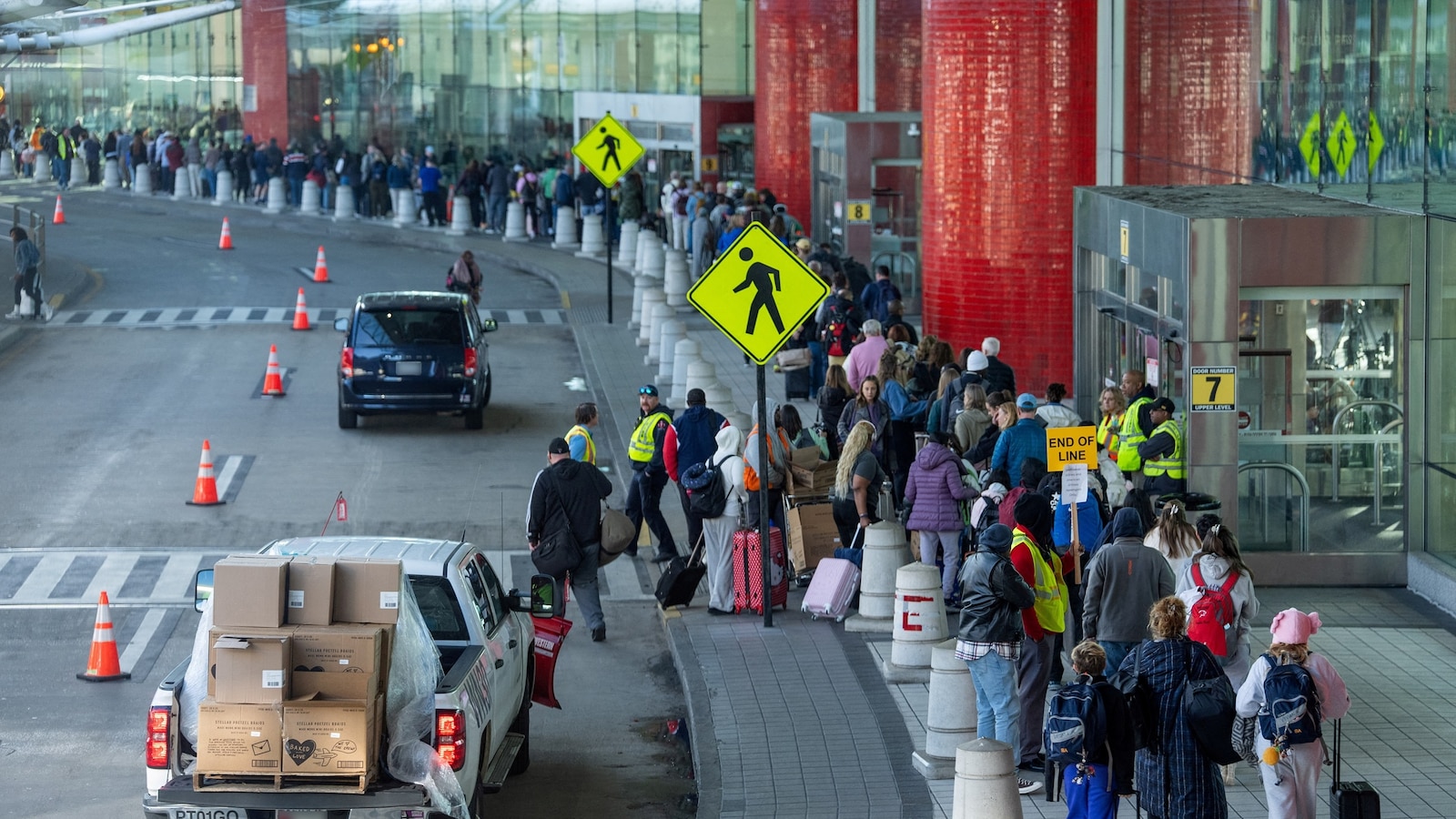
The consequences of the prolonged shutdown have been felt far beyond the TSA workers themselves. Travelers across the country have experienced the ripple effects firsthand, with security wait times ballooning to unprecedented levels at some of the nation’s busiest airports. As TSA staffing levels plummeted due to officer callouts—many workers simply couldn’t afford to continue working without pay—airports struggled to maintain normal operations. In some locations, passengers faced waits of several hours just to get through security checkpoints, transforming what should have been routine travel into a nightmare scenario.
The situation became so dire that major airports were forced to issue extraordinary advisories to travelers. Hartsfield-Jackson Atlanta International Airport, one of the world’s busiest aviation hubs, had been recommending that passengers arrive at least four hours before their flights—double the standard two-hour recommendation for domestic travel. This wasn’t a precautionary measure but a necessary response to the reality on the ground, where understaffed security checkpoints simply couldn’t process the usual volume of passengers in a timely manner. The images of security lines snaking through terminals, sometimes extending into parking garages, became symbols of the shutdown’s impact on everyday Americans.
A Mixed Picture: Some Improvement, But Problems Persist
As TSA employees began receiving their paychecks on Monday, airports reported a mixed picture regarding security wait times. Some facilities showed signs of improvement, while others continued to struggle with extended delays. At New York’s LaGuardia Airport, for instance, Terminal B reported security wait times exceeding one hour on Monday morning, affecting passengers flying with United, Southwest, and JetBlue. Meanwhile, the same airport’s Terminals A and C reported wait times under 10 minutes, illustrating the uneven nature of the recovery across different facilities and terminals.
Other major airports painted a more optimistic picture. Hartsfield-Jackson Atlanta International Airport, which had previously advised passengers to budget four hours for security screening, showed wait times under five minutes across its checkpoints by Monday morning. George Bush Intercontinental Airport in Houston reported waits of 10 minutes or less, while New York’s John F. Kennedy International Airport saw security wait times under 20 minutes. These improvements suggest that at least some TSA officers are returning to work now that paychecks are flowing again, but the situation remains fragile and subject to change.
The Bigger Problem: No Permanent Solution in Sight
While the presidential memorandum provides temporary relief, the underlying funding crisis remains unresolved. Congress continues to be deadlocked over legislation to fully fund the Department of Homeland Security, TSA’s parent agency. Last week, Senate Republicans attempted to broker a compromise with Democrats, proposing partial funding for DHS while excluding Immigration and Customs Enforcement and Customs and Border Protection, which continue to receive funding through Trump’s 2025 tax cut and spending legislation passed last July. However, this proposal immediately hit a wall when House Republicans rejected it, instead passing a short-term stopgap measure to fund the entire Department of Homeland Security for eight weeks.
Senate Minority Leader Chuck Schumer quickly pronounced the House’s stopgap measure “dead on arrival” in the Senate, signaling that Democrats would not support the legislation. This political impasse means that while TSA workers are receiving paychecks now, there’s no guarantee these payments will continue beyond the immediate future. The uncertainty is taking a toll on both workers and the traveling public, with no clear path forward to permanent funding. Jill DeJanovich, a TSA officer and member of AFGE local 1260, expressed the anxiety felt by many of her colleagues: “It’s not enough at all. We’re only gonna be back-paid for the paychecks that we missed. Moving forward, we don’t know if we’re gonna get paid in another two weeks.”
The Exodus Continues: TSA Losing Workers Despite Payments
Perhaps most troubling for the future of airport security is the ongoing exodus of TSA officers from the agency. According to the Department of Homeland Security, more than 500 TSA officers have left the agency since the shutdown began on February 14. This represents a significant loss of experienced security personnel who cannot easily be replaced, as new TSA officers require extensive training and security clearances before they can begin work. Even with paychecks resuming, callout rates remained disturbingly high over the weekend, with approximately 10% of TSA officers—2,890 workers nationwide—calling out on Saturday, March 28.
Some airports experienced even more severe staffing shortages, with facilities in Atlanta, New York City, Baltimore, and Houston seeing callout rates exceeding 30%. George Bush Intercontinental Airport in Houston topped the list with a staggering 38.3% of workers calling out on Saturday. These numbers suggest that simply resuming paychecks may not be enough to restore TSA staffing to normal levels. Workers who have endured weeks without pay may have found other employment, lost trust in the system, or simply decided that the stress and uncertainty aren’t worth it. President Trump, when asked about the sustainability of the payments, offered only vague assurances: “We’re gonna pay them for as long as we have to,” he told reporters Sunday night, declining to provide specific details about how many paychecks workers could expect.
For travelers trying to navigate this uncertain landscape, checking wait times before heading to the airport has become essential. While the official My TSA app has historically provided security line wait-time updates, it hasn’t been “actively managed” during the shutdown due to lack of funding. However, many individual airports share frequently updated, terminal-specific security wait times on their websites and apps. Major hubs like Dallas-Fort Worth, Denver, and the New York metropolitan area’s airports typically offer real-time updates online, and travelers can also check airport social media accounts for current information. As this situation continues to evolve, flexibility and extra time have become crucial components of travel planning for millions of Americans.