


Trump Administration Poised for Major Justice Department Shakeup
Leadership Changes Target Top DOJ Officials
The Trump administration is preparing to implement significant leadership changes at the Department of Justice, according to sources who spoke with CBS News over the weekend. The anticipated shake-up would affect two critical positions within the department’s hierarchy, specifically targeting Associate Attorney General Stanley Woodward, currently the third-ranking official at DOJ, and Harmeet Dhillon, who serves as Assistant Attorney General for the Civil Rights Division. Senior administration officials have been engaged in discussions about restructuring these positions, with plans reportedly including a promotion for Dhillon to one of the department’s most senior roles while simultaneously demoting Woodward from his current position. However, sources indicated that final decisions had not been confirmed at the time of reporting, suggesting these discussions remain fluid. When approached for comment, a Justice Department spokesperson declined to address what they characterized as personnel matters, maintaining the department’s typical stance of not publicly discussing internal staffing decisions before official announcements are made.
Context of the Reshuffling and Attorney General Turmoil
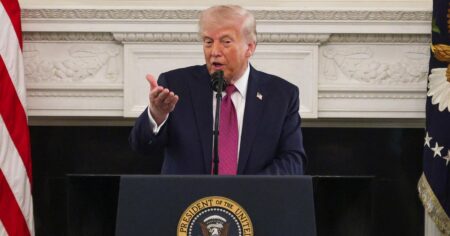
These potential changes come on the heels of significant turbulence at the very top of the Justice Department. Earlier in the week, President Trump made the dramatic decision to oust Attorney General Pam Bondi, a move that sent shockwaves through the department and the broader legal community. According to sources familiar with the president’s thinking, his frustrations with Bondi centered on what he perceived as her insufficient aggressiveness in pursuing criminal charges against individuals he considers political adversaries. This dismissal underscored Trump’s expectations that the Justice Department should function more directly in alignment with his political objectives, a stance that has raised concerns among legal experts about the traditional independence of the nation’s top law enforcement agency. Following Bondi’s removal, Trump quickly appointed Deputy Attorney General Todd Blanche to serve as acting attorney general, though uncertainty remains about whether Blanche will ultimately be nominated for the permanent position. CBS News has previously reported that other candidates under consideration for the permanent attorney general role include Lee Zeldin, a former congressman who currently heads the Environmental Protection Agency, indicating that the administration is considering various options as it seeks to install leadership that will more closely align with the president’s priorities and vision for the department.
Stanley Woodward’s Background and Controversial Connections
Stanley Woodward brings a complex professional history to his current role as Associate Attorney General, having previously worked as a defense attorney representing numerous prominent figures within Trump’s political orbit. His client list has included several high-profile Trump allies, such as White House adviser Peter Navarro, FBI Director Kash Patel, and Walt Nauta, who faced charges from Special Counsel Jack Smith in connection with the classified documents case that has been one of the most serious legal challenges facing the former and current president. Additionally, Woodward represented Kelly Meggs, one of the Oath Keepers members who was convicted of seditious conspiracy related to his participation in the January 6th Capitol attack, though President Trump later commuted Meggs’ sentence as part of his broader pardons and commutations for January 6th defendants. Despite his history of representing Trump allies, Woodward has recently become the target of criticism from some corners of Trump’s support base, most notably from far-right influencer Laura Loomer, who has attacked him over his wife’s support for progressive political causes. This criticism highlights the intense scrutiny that administration officials face not only for their own actions but also for their personal associations and family members’ activities. The Associate Attorney General position that Woodward currently occupies is one of tremendous responsibility within the Justice Department’s organizational structure, with oversight extending to the Civil Rights Division, the Antitrust Division, the Civil Division, and the Environment and Natural Resources Division, as well as managing the department’s grant-making offices and the trustee program, making any change in this position particularly significant for the department’s operations.
Harmeet Dhillon’s Rise and Loyalty to Trump
Harmeet Dhillon currently serves as Assistant Attorney General for the Civil Rights Division and has cultivated a reputation as an unwavering loyalist to President Trump throughout her tenure. This steadfast allegiance to the president and his policy agenda appears to be a key factor in the discussions about promoting her to a higher-ranking position within the Justice Department hierarchy. Dhillon has consistently demonstrated her willingness to implement Trump’s directives without the kind of hesitation or pushback that the president apparently found frustrating in other officials, including former Attorney General Bondi. Her approach to leadership has been characterized by decisive action in advancing the administration’s priorities, even when those priorities have represented significant departures from traditional Civil Rights Division operations. This track record of loyalty and aggressive implementation of presidential policy preferences makes her an attractive candidate for promotion in Trump’s view, as he seeks to surround himself with officials who will execute his vision for the Justice Department without question or delay. The potential promotion of Dhillon signals Trump’s intention to reward those within his administration who demonstrate complete alignment with his objectives, while simultaneously sending a message about the consequences for those perceived as insufficiently committed to his agenda.
Dramatic Transformation of the Civil Rights Division
Under Dhillon’s leadership, the Civil Rights Division has undergone what can only be described as a radical transformation that has fundamentally altered the office’s mission, personnel, and priorities. Perhaps most strikingly, more than 75% of the division’s attorneys have departed over the past year, an exodus of legal talent that represents one of the most significant personnel upheavals in the division’s history. Most of these departing attorneys accepted buy-out packages or early retirement offers, with many citing concerns about the new mission statements that Dhillon issued for the office, which they felt represented a fundamental departure from the division’s traditional mandate. Those who remained have witnessed a complete reorientation of the division’s work to align closely with President Trump’s policy directives. This reorientation has included launching investigations into diversity, equity, and inclusion policies at universities across the country, filing lawsuits specifically aimed at prohibiting transgender athletes from competing on girls’ and women’s sports teams, and pursuing litigation against dozens of states in an effort to obtain unredacted copies of their voter registration lists. Dhillon also took the significant step of creating an entirely new section within the division focused specifically on gun rights issues, a priority that reflects conservative policy preferences but represents a novel interpretation of the Civil Rights Division’s traditional scope. Additionally, she made headlines by upending efforts to reach consent decrees with police departments in Minneapolis and Louisville, abandoning agreements that had been under negotiation following Biden-era investigations that found both departments had engaged in systemic constitutional abuses and violations of citizens’ civil rights.
Criticism and Concerns About the Division’s Future
The dramatic changes implemented under Dhillon’s leadership have not gone unnoticed or uncriticized by those familiar with the Civil Rights Division’s history and traditional mission. Last year, more than 200 former Civil Rights Division attorneys took the extraordinary step of signing an open letter that accused Dhillon of systematically destroying the Civil Rights Division, an office that holds special significance in American legal history. The division was originally created by the 1957 Civil Rights Act, landmark legislation that was enacted during a pivotal moment in the American civil rights movement with the specific purpose of helping to dismantle the discriminatory Jim Crow racial segregation laws that had enforced racial hierarchy throughout the South and protecting the voting rights of Black Americans who had been systematically disenfranchised. The former attorneys who signed the letter expressed deep concern that Dhillon’s reorientation of the division represented not merely a change in priorities but an abandonment of the office’s core mission to protect vulnerable populations from discrimination and civil rights violations. These critics argue that the division’s new focus on issues like challenging diversity initiatives and transgender athletes’ participation in sports represents a fundamental misunderstanding of or deliberate departure from what civil rights enforcement should mean in the American legal system. As discussions about potentially promoting Dhillon to an even more powerful position within the Justice Department continue, these concerns have only intensified among civil rights advocates, former Justice Department officials, and legal scholars who worry about the long-term implications for civil rights enforcement across the federal government and the precedent being set for future administrations.