

Britain’s Political Earthquake: Keir Starmer’s Labour Party Faces Historic Defeat
A Government in Crisis Mode
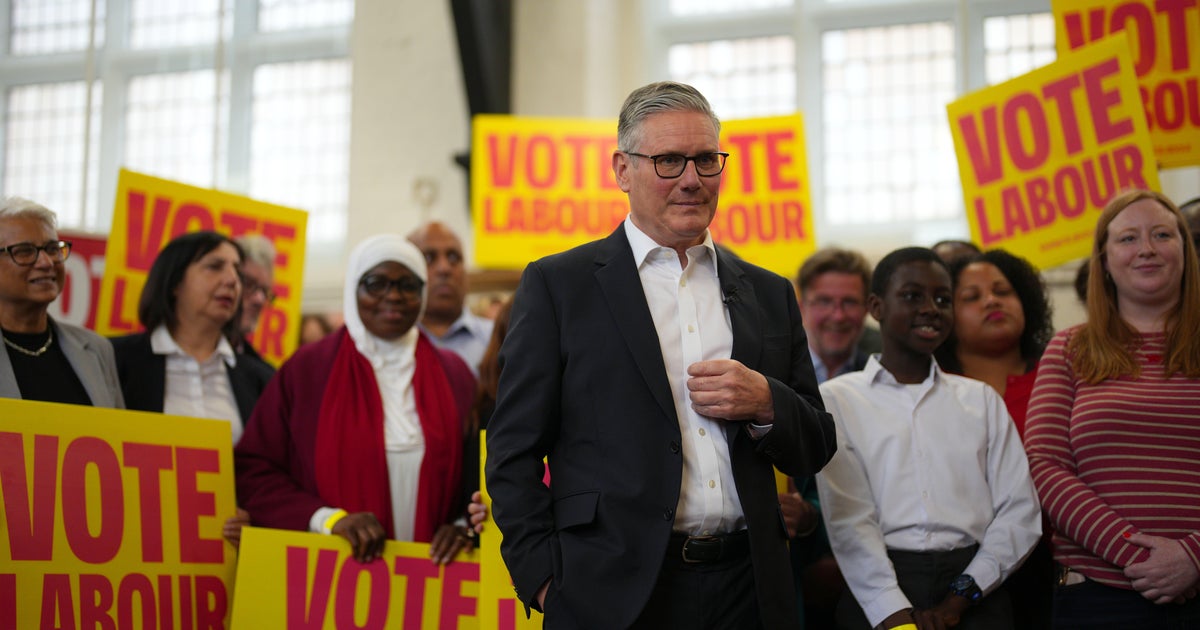
British Prime Minister Keir Starmer finds himself at the center of a political firestorm following what can only be described as a catastrophic performance in local and regional elections. The results, which came in over the weekend, delivered a devastating blow to his Labour Party, wiping out approximately 1,000 local council seats across England and ending Labour’s remarkable 27-year hold on power in Wales. The magnitude of these losses has sent shockwaves through British politics and raised serious questions about Starmer’s leadership and the future direction of the country. Despite mounting pressure and growing calls for his resignation, Starmer has dug in his heels, insisting that he won’t abandon ship and “plunge the country into chaos.” The prime minister appears determined to weather this political storm, though the path forward looks increasingly treacherous as voters have delivered what many interpret as a harsh judgment on his time in office.
The election results represent more than just a bad day at the polls for Labour—they reflect a fundamental shift in the British political landscape. The anti-immigration party Reform UK emerged as the real victor of these elections, capturing nearly 1,300 seats across England, finishing second in Wales, and making notable advances in Scotland. This surge represents a seismic shift in voter sentiment, particularly in traditional Labour strongholds that have supported the party for generations. Political analysts are viewing these elections as an unofficial referendum on Starmer himself, whose popularity has nosedived since he led the center-left Labour Party to power less than two years ago with such promise and optimism. What was supposed to be a fresh start for Britain after 14 years of Conservative rule has instead turned into a nightmare scenario for Labour, with voters clearly expressing their dissatisfaction with the government’s performance and direction.
Internal Party Tensions and Leadership Questions
While Starmer has declared his intention to “rebuild and show the path forward” in the coming days, the reality within the Labour Party tells a more complicated story. Although his Cabinet colleagues have publicly expressed support and no immediate challenge to his leadership has materialized, there’s an unmistakable undercurrent of discontent brewing within party ranks. Several high-profile Labour politicians who could potentially challenge Starmer—including Health Secretary Wes Streeting, former Deputy Prime Minister Angela Rayner, and Greater Manchester Mayor Andy Burnham—have remained conspicuously silent, neither defending the prime minister nor calling for his departure. This calculated silence speaks volumes about the delicate political maneuvering taking place behind the scenes as party members assess their options and gauge public sentiment.
An increasing number of Labour lawmakers have begun openly urging Starmer to establish a clear timetable for his departure later this year. Legislator Clive Betts stated bluntly that “there has to be a timetable,” while fellow lawmaker Tony Vaughan called for an “orderly transition of leadership.” This represents a significant escalation in internal party pressure, as members of his own team are essentially asking the prime minister to plan his exit strategy. The British political system allows parties to change leaders midterm without triggering a new general election, which makes such transitions theoretically smoother but politically fraught with risk. In an apparent attempt to demonstrate that he’s capable of making changes and adapting his approach, Starmer made a tactical move on Saturday by bringing back veteran Labour figures from previous governments. He appointed former Prime Minister Gordon Brown as a special envoy on global finance and named ex-deputy leader Harriet Harman as an adviser on women and girls, hoping these experienced voices might help steady the ship and restore some credibility to his struggling administration.
The Rise of Reform UK and Political Fragmentation
The 2024 local elections marked a genuine breakthrough moment for Reform UK, the latest incarnation of Britain’s hard-right political movement led by Nigel Farage, the veteran nationalist politician who has been a disruptive force in British politics for years. Running on a platform centered on anti-establishment sentiment and strict anti-immigration policies, Reform UK captured hundreds of local council seats in working-class areas throughout England’s north—regions like Sunderland that had been considered unshakeable Labour territory for decades. The party also made significant inroads in traditionally Conservative areas, such as Essex county east of London, demonstrating its appeal across different demographics and geographies. Farage triumphantly declared that the results represented a “historic change in British politics” and expressed confidence that “voters who have come to us are not doing it as a short-term protest,” suggesting he believes this support represents a lasting realignment of British political loyalties.
However, significant questions remain about whether Reform UK can translate local election success into national power. The party currently holds just eight of the 650 seats in Parliament, and the dynamics of a general election—with its focus on national issues, greater media scrutiny, and different electoral calculations—could prove quite different from local contests. The election results also produced semiautonomous administrations in Scotland and Wales that are led by parties dedicated to independence and potentially breaking up the United Kingdom, though neither has made this contentious issue a current priority. The overall picture that emerges from these elections is one of dramatic political fragmentation, with the traditional two-party dominance of Labour and the Conservatives crumbling as voters increasingly turn to alternative parties representing a broader spectrum of political viewpoints. The Conservative Party, which governed Britain for 14 years before Labour’s victory, also suffered major losses, confirming that voter dissatisfaction extends across the traditional political establishment.
Economic Struggles and the Cost of Living Crisis
At the heart of Labour’s electoral disaster lies the economy—an issue that has proven to be the Achilles’ heel of incumbent governments across the democratic world in recent years. Since taking power and ending 14 years of Conservative rule that was characterized by harsh austerity measures and the massive disruption of the Covid-19 pandemic, Labour has struggled mightily to address the cost of living crisis and revive Britain’s sluggish economy. The government faces enormous challenges navigating a difficult international economic environment shaped by the ongoing war in Ukraine and more recent tensions involving Iran, both of which have contributed to energy price volatility and economic uncertainty. These external pressures have made it extremely difficult for Starmer’s government to deliver the economic improvements that voters desperately want to see in their daily lives.
Starmer has also managed to alienate some of his own supporters through controversial attempts to cut welfare spending, some of which were eventually reversed following rebellions within the Labour Party itself. These policy reversals have created an impression of a government that lacks a clear direction and is willing to abandon its principles under pressure. Some within Labour argue that the government’s genuine achievements—including stronger protections for renters and an increase in the minimum wage—are going unnoticed by a public focused on immediate economic hardships. Many Labour insiders place the blame squarely on Starmer himself, characterizing him as an uninspiring leader who has been distracted by various scandals. The most damaging of these was his controversial decision to appoint Peter Mandelson, a figure tarnished by scandal and criticized for his friendship with convicted sex offender Jeffrey Epstein, as Britain’s ambassador to Washington. This appointment struck many as tone-deaf and raised serious questions about Starmer’s judgment.
Deeper Structural Issues and the Path Forward
However, not everyone believes that changing leaders will solve Labour’s fundamental problems. Stephen Houghton, the outgoing leader of Barnsley council in northern England where Labour lost ground to Reform UK, offered a sobering assessment that goes beyond personalities and points to deeper structural issues. “This has been coming for 30 years around the country, in post-industrial communities, coastal communities, that have been left behind,” Houghton explained. “You can change prime ministers all day long. If you don’t change policy, it’s not going to change.” This perspective suggests that Labour’s electoral troubles reflect decades of economic transformation and regional neglect that have left certain communities feeling abandoned by the political establishment, regardless of which party holds power. These post-industrial and coastal areas have seen traditional industries decline without adequate replacement, creating economic hardship and social dislocation that feeds anger and resentment toward mainstream politicians.
The election results reveal a fundamental transformation of the British political landscape after decades of domination by the Labour and Conservative parties. Voters now have access to a rainbow of political choices, including the centrist Liberal Democrats, nationalist parties in Scotland and Wales, and insurgent populist movements. Besides Reform UK, the Green Party emerged as another significant winner, having expanded its focus beyond environmental issues to encompass social justice and the Palestinian cause under its self-described “eco populist” leader Zack Polanski. The Greens won hundreds of council seats from Labour in urban centers and university towns, even taking control of several local authorities. Tony Travers, a professor of government at the London School of Economics, suggested that these results indicate the next general election, due by 2029, is unlikely to produce a clear majority for any single party. “So then you’re in the world of, after the election, two or three big minority parties trying to work out how they would govern,” he said—a scenario traditionally considered “very un-British” in a country accustomed to clear electoral outcomes and stable single-party governments. As Starmer prepares to deliver a crucial speech on Monday in an attempt to regain momentum, and as the government sets out its legislative plans on Wednesday in a speech delivered by King Charles III at the State Opening of Parliament, the prime minister faces perhaps the most challenging moment of his political career, with the future of his leadership and his party hanging in the balance.