


Inside the Near-Impossible Challenge of Seizing Iran’s Nuclear Stockpile
The Monumental Task Ahead
President Trump has made it clear that eliminating Iran’s nuclear weapons capability stands as a central goal of his military strategy against the Islamic Republic. However, according to U.S. military experts, such an operation would rank among the most dangerous and complex missions ever contemplated by American forces. While the United States managed to significantly damage Iran’s nuclear infrastructure last June using massive “bunker buster” bombs designed to penetrate deeply buried facilities, the International Atomic Energy Agency reports that Iran still possesses approximately 972 pounds of uranium enriched to 60% purity. This material sits dangerously close to the 90% enrichment level required for high-yield nuclear warheads. Without a diplomatic agreement to peacefully remove or eliminate this stockpile, military planners are left with an extraordinarily risky option: deploying troops deep into Iranian territory to physically seize or destroy the material. Though an aerial bombardment using bunker-busting munitions could potentially entomb the stockpile underground, there’s no guarantee such an approach would completely eradicate the enriched uranium. For decades, U.S. Special Forces have been training specifically for missions to neutralize Tehran’s uranium supplies, practicing repeatedly at American facilities designed to replicate the underground tunnel systems protecting Iran’s nuclear material. These elite operators represent the pinnacle of military training, having undergone intensive physical and technical preparation. Yet even for these exceptional warriors, securing Iran’s nuclear stockpile would surpass anything U.S. Special Operations forces have previously attempted in terms of difficulty and complexity.
Haunted by Past Failures
The specter of previous high-risk operations that ended in disaster weighs heavily on current military planners, operators, and undoubtedly on President Trump and his advisers. Operation Eagle Claw remains a painful memory from 1980, when the United States attempted to rescue 53 American hostages held captive following the ayatollahs’ rise to power in Iran. That mission collapsed under a cascade of problems including an unexpected sandstorm, mechanical failures, and ultimately a helicopter collision that forced mission commanders to abort. No hostages were rescued, and eight American service members lost their lives. Thirteen years later came another devastating setback in Somalia, where U.S. Special Operations forces attempted to capture a warlord in downtown Mogadishu. That operation resulted in the deaths of 18 U.S. Army rangers in what became known as the “Black Hawk Down” incident, an event that seared itself into the consciousness of generations of military officials and national security policymakers. These catastrophes taught crucial lessons that inform current planning, particularly the principle that speed is paramount in special operations. The faster forces can reach their target, accomplish their objective, and extract, the less opportunity exists for things to go wrong. America’s most successful operations have been remarkably swift—the 2011 raid that killed Osama Bin Laden in Pakistan lasted only 38 minutes, while the January operation that captured Venezuelan leader Nicolas Maduro saw Special Operations Forces on the ground for less than an hour. However, Aaron MacLean, a CBS News national security analyst and Marine veteran, warns that securing Iran’s nuclear stockpile could require many hours or possibly even days, creating extended exposure to danger.
The Operational Blueprint
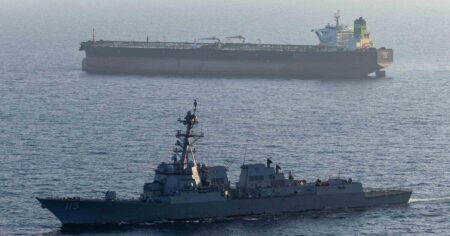
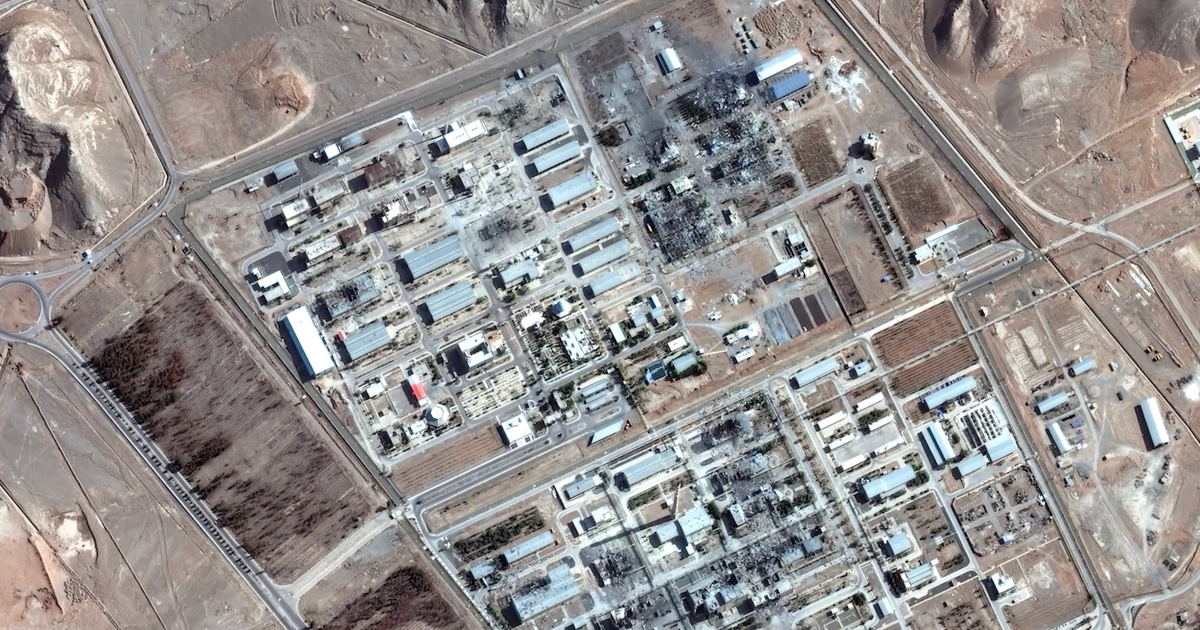
According to the IAEA, Iran’s nuclear stockpile is dispersed across two or possibly three locations, sites that U.S. and Israeli intelligence agencies have focused on with singular intensity. The enriched uranium is stored in large steel canisters approximately the size of residential propane tanks—far too bulky to carry in backpacks, necessitating truck transport. At least half of these canisters are buried deep underground at Iran’s Isfahan facility, located in the country’s interior, with the remainder likely stored beneath the Natanz facility, approximately 70 miles from Isfahan. Evidence also suggests that Iranians may have relocated some enriched uranium to a site called Pickaxe Mountain, near Natanz. Securing all these stockpiles would require multiple simultaneous or sequential missions, exponentially increasing the operation’s logistical complexity. The primary American force would consist of highly specialized Delta Force units trained in “rendering safe” nuclear materials. These operators would likely deploy from U.S. Naval vessels in the Arabian Sea, nearly 1,000 miles from their targets, though launching from Kuwait or Eastern Iraq would offer shorter transit distances. To maintain stealth and preserve the element of surprise, operators might establish a staging area several miles from their objective, potentially constructing a makeshift landing strip before proceeding on foot to minimize detection. The commandos would include not just combat operators but also technical experts capable of handling radioactive materials safely and determining which canisters actually contain enriched uranium versus decoys.
The Scale of Force Required
Executing this operation in an active war zone demands extensive force protection for American service members. Military experts estimate that as many as 1,000 troops might be necessary to establish and maintain a secure perimeter around the target sites. This protective cordon typically falls to U.S. Army Rangers, though for such a specialized mission, planners might also deploy elements of the 82nd Airborne Division. Notably, some 82nd Airborne units have already begun moving into the Middle East, fueling speculation about preparation for operations against Iran’s nuclear facilities. Beyond ground security, the military would need to establish complete air supremacy and create layered defenses against Iranian drone and missile attacks. This defensive network might include small interceptor drones launched from ground positions and electronic warfare systems to jam incoming threats’ guidance signals. One particularly alarming scenario that concerns war planners, according to MacLean, involves the Iranian regime potentially firing ballistic missiles at American forces even at the cost of destroying its own nuclear infrastructure, prioritizing killing U.S. troops over preserving its nuclear program. Once the perimeter is secured, commandos would face the formidable challenge of breaching fortified tunnels leading to the uranium stockpiles. Many tunnels collapsed during last June’s massive precision air strikes, and while satellite images indicate Iran subsequently cleared the tunnel entrances to access nuclear materials, more recent imagery suggests they’ve resealed these entrances with substantial amounts of dirt and possibly concrete specifically to defend against ground operations. Breaching would require heavy earth-moving equipment and explosives teams to blast pathways into the facilities, a process that could consume hours while forces remain exposed.
Inside the Danger Zone
Once teams penetrate the tunnel systems, challenges intensify dramatically. Military planners anticipate—and essentially expect—that Iranians have extensively booby-trapped the sites with mines, trip-wire explosives, and improvised explosive devices. Explosive ordnance disposal teams would need to methodically identify and neutralize these threats before the mission could proceed, further extending the time operators remain in harm’s way. Additionally, the danger of contamination from fissile material requires personnel to wear breathing apparatus, radioactive protective equipment, and chemical protective gear, according to Joseph Rodgers, deputy director and fellow at the Center for Strategic and International Studies’ Project on Nuclear Issues. This specialized equipment, while necessary for survival, reduces mobility and increases fatigue. Upon reaching the uranium canisters, Delta Force operators and technical specialists would face one of their most critical tactical decisions: remove the canisters and transport them out of Iran, or destroy the stockpile in place? Removal represents the most desirable option from a strategic standpoint, but it would also consume the most time, partly because intelligence suggests Iranians have likely mixed hundreds of decoy canisters among those actually containing highly enriched uranium. Distinguishing authentic from fake canisters would require specialized detection equipment and time—and time means risk. The alternative of destroying the stockpile by detonating the canisters presents serious environmental hazards. As Rodgers explains, such an approach would create significant chemical contamination, since uranium hexafluoride produces poisonous gases when it contacts oxygen. Moreover, even after canisters are destroyed, Iran might be able to retrieve some enriched uranium from the wreckage, meaning the mission’s primary objective might not be fully achieved despite the extraordinary risks taken.
The Perilous Journey Home
Military professionals often note that extraction—what the military calls “exfiltration”—frequently represents the most dangerous phase of any operation. By this point, the element of surprise has completely evaporated, enemy reinforcements may have arrived, and the operators’ physical and mental exhaustion increases the likelihood of fatal mistakes. “Coming home is always more dangerous,” MacLean emphasizes, a sobering reality that mission planners must account for when calculating acceptable risk levels. Forces would need to transport either the secured uranium canisters or themselves back to extraction points while potentially under fire, managing casualties if any have occurred, and maintaining operational security despite Iranian knowledge of their presence and likely route of withdrawal. The success or failure of this final phase could determine whether the operation is remembered as a historic achievement or another catastrophic setback. If American forces successfully extract or destroy the nuclear material without suffering significant casualties, they will have delivered the most devastating blow to Iran’s nuclear program in its history, potentially setting the regime’s weapons development back by years or even decades. Such a success would represent an extraordinary achievement in special operations history and might fundamentally alter the strategic balance in the Middle East. However, if the mission goes wrong—if forces become trapped, suffer mass casualties, or fail to secure the nuclear material—the operation would join Eagle Claw and Black Hawk Down in the unfortunate gallery of American military disasters, with profound implications for U.S. military prestige, regional stability, and the political fortunes of those who ordered it. The stakes could hardly be higher, and the margin for error could hardly be thinner.