
Olympic Champion Hilary Knight Speaks Out on Trump’s “Distasteful” Phone Call to Men’s Hockey Team
A Moment of Celebration Turned Controversial
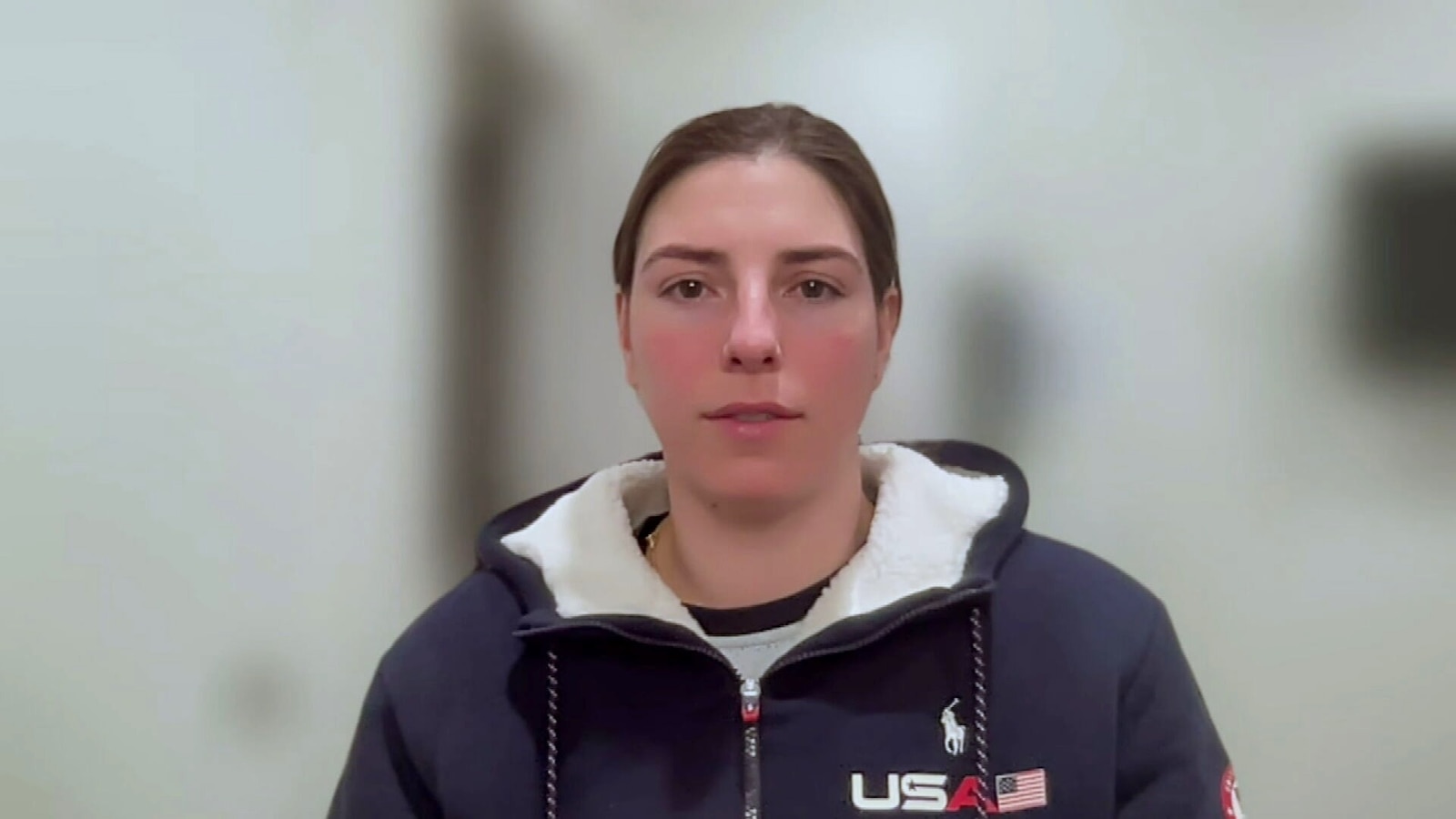
In what should have been a pure celebration of American athletic excellence, a phone call from President Donald Trump to the U.S. men’s Olympic hockey team became a flashpoint for discussion about how we value and speak about women athletes. Hilary Knight, a legendary figure in women’s hockey and fresh off her fifth Olympic Games, didn’t mince words when addressing the controversy on “Good Morning America.” The gold medalist called Trump’s comments during the now-viral phone call “distasteful” and highlighted it as an important teaching moment about the language we use when discussing women’s achievements. Knight emphasized that words carry weight and that how society speaks about women in sports—and women in general—truly matters. Her response wasn’t just about one phone call; it was about the broader conversation surrounding respect, recognition, and the ongoing struggle for equality in athletics.
The controversy stems from Trump’s February 22nd call to the men’s hockey team following their gold medal victory at the 2026 Milan Cortina Olympics. During what started as a congratulatory conversation, the president invited the men’s team to attend his State of the Union address in Washington, D.C. However, it was his follow-up comment about the women’s team that sparked widespread criticism. “I must tell you, we’re gonna have to bring the women’s team. You do know that,” Trump said during the call, adding, “I do believe I probably would be impeached.” The comment prompted laughter from the men’s team members on the call, but the reaction from fans of women’s hockey and supporters of gender equality in sports was decidedly different. The implication that inviting successful women athletes would somehow be politically problematic or controversial struck many as dismissive of the women’s team’s remarkable achievements.
A Gold Medal Performance That Deserved Better
The timing of Trump’s comments made them particularly galling to many observers because the U.S. women’s hockey team had just delivered one of the most thrilling performances in Olympic hockey history. On February 19th at Santagiulia Arena in Milan, the American women faced off against their longtime rivals, the Canadian women’s hockey team, in a game that epitomized everything great about Olympic competition. Knight herself played a pivotal role in the victory, scoring the crucial goal that tied the game at 1-1 and sent it into overtime. In that extra period, defender Megan Keller became the hero, scoring the game-winning goal that secured Team USA’s third Olympic gold medal in women’s hockey and their eighth overall Olympic medal in the sport. This wasn’t just any victory—it was a testament to years of dedication, sacrifice, and the highest level of athletic competition on the world stage.
Knight’s reflection on that golden moment reveals what the victory truly meant to the athletes who earned it. “It was just incredible… pure joy,” she told “Good Morning America,” her words capturing the emotion of that triumphant moment. But more than just the immediate thrill of victory, Knight spoke to something deeper about the team itself. “That team is so special, one of the best teams I’ve ever been a part of,” she said, “and really encouraged that we get to celebrate our journey forever and cement that legacy together.” For Knight, who has now completed her fifth and final Olympics, this gold medal represented the culmination of an extraordinary career and the collective effort of teammates who pushed each other to excellence. The fact that such an achievement was treated as an afterthought or political liability in Trump’s call to the men’s team underscored exactly why Knight felt compelled to speak out.
The Invitation That Became a Controversy
The aftermath of Trump’s phone call created a logistical and symbolic mess that highlighted the complicated relationship between sports, politics, and gender equality. Following the president’s comments, USA Hockey found itself navigating a delicate situation. A spokesperson for the organization eventually declined the invitation for the women’s team to attend the State of the Union, citing logistical challenges and the timing of the event. “We are sincerely grateful for the invitation extended to our gold medal–winning U.S. Women’s Hockey Team and deeply appreciate the recognition of their extraordinary achievement,” USA Hockey stated on February 23rd. “Due to the timing and previously scheduled academic and professional commitments following the Games, the athletes are unable to participate. They were honored to be included and are grateful for the acknowledgment.”
Meanwhile, members of the men’s hockey team did visit President Trump at the White House and attended the State of the Union on Tuesday, where they received enthusiastic applause. During his speech, Trump acknowledged the men’s team members in attendance and also mentioned the women’s team, saying, “But they beat a fantastic Canadian team in overtime, as everybody saw, as did the American women who will soon be coming to the White House.” However, when Knight appeared on “Good Morning America” on Thursday, she expressed uncertainty about whether such a visit would actually happen. “I’m not sure. I’m not really sure where that stands,” she said, adding, “I know there was some sort of announcement the other day. As far as my knowledge, like, I haven’t seen anything.” The White House later responded to Knight’s remarks by stating it looked forward to hosting the U.S. women’s hockey team following their victory and celebration, though specific details remained unclear.
A Career Defined by Excellence and Advocacy
As Knight closes the chapter on her Olympic career, she’s thinking about legacy—both her personal legacy and the legacy of women’s hockey as a whole. When asked how she hopes to be remembered, Knight’s answer reflected both her competitive spirit and her understanding of the platform that comes with being an elite athlete. “Honestly, [I just want to be] remembered as an awesome competitor and a great teammate and somebody who moved the needle in the sport and pushed it forward,” she explained. For Knight, being a champion has never been just about winning medals; it’s been about advancing the entire sport and opening doors for the next generation of women hockey players.
Knight also spoke eloquently about what it means to represent Team USA on the world’s biggest sporting stage. “I think what’s special and what’s sort of an innate responsibility of representing Team USA is you can have a positive impact through sport,” she said. This perspective reveals an athlete who understands that her role extends far beyond the ice rink. “We are America’s team, and so, every stride of every single shift, we need to bring that inspiration. And I think we did that.” Throughout five Olympic Games, Knight has indeed brought that inspiration, becoming one of the most decorated and recognizable figures in women’s hockey. Her willingness to speak up about how the sport and its athletes are discussed publicly is simply an extension of that leadership—using her platform not just to celebrate victories but to challenge the narratives and attitudes that diminish women’s achievements.
The Broader Conversation About Women in Sports
The controversy surrounding Trump’s phone call and Knight’s response are part of a much larger, ongoing conversation about how society values women’s sports. Despite decades of progress, female athletes continue to fight for equal recognition, equal pay, equal media coverage, and equal respect. When a president suggests that inviting gold medal-winning women athletes to a national address might lead to his impeachment—even in jest—it reinforces harmful stereotypes about women’s sports being somehow less worthy of celebration than men’s sports. The laughter from the men’s hockey team in response to Trump’s comment, whether nervous or genuine, also raises questions about how male athletes can be better allies in the fight for gender equality in sports.
Knight’s description of the incident as “an awesome learning moment to refocus the narrative” offers a path forward. Rather than simply condemning the comments and moving on, she’s calling for a deeper examination of how we talk about women athletes and why those conversations matter. The women’s hockey team delivered an extraordinary performance under the most pressure-packed circumstances imaginable, defeating a fierce rival in overtime on the Olympic stage. They deserve to have that achievement celebrated without qualification, without jokes, and without being treated as a political afterthought. Knight’s advocacy, both during her playing career and in moments like this, helps ensure that future generations of women athletes will compete on a more level playing field—not just in terms of rules and resources, but in terms of respect and recognition. As she hangs up her Olympic skates, Hilary Knight leaves behind not just a legacy of gold medals and spectacular goals, but a model of how athletes can use their voices to create meaningful change beyond the game itself.