



The Recovery of the Final Hostage and Gaza’s Uncertain Future
A Family’s Long Wait Finally Ends
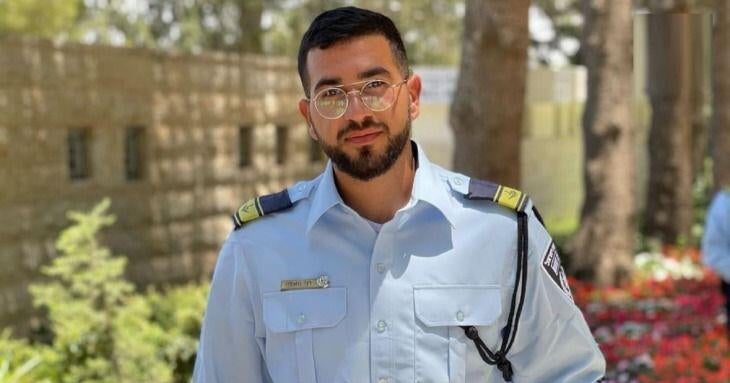
After months of agonizing uncertainty, the family of Ran Gvili can finally lay their loved one to rest. On Monday, Israel announced that the remains of the last hostage still in Gaza had been recovered, marking a significant milestone in the fragile ceasefire that halted the devastating Israel-Hamas war. The 24-year-old police officer, affectionately known as “Rani” to those who loved him, was killed while heroically fighting Hamas militants during the brutal terrorist attack on southern Israel on October 7, 2023. His body had been held in Gaza ever since that dark day when approximately 1,200 people lost their lives and 251 others were taken hostage in an attack that would trigger one of the most destructive conflicts the region has seen in years.
The Israeli Defense Forces conducted what they described as a “large-scale operation” in a cemetery in northern Gaza to locate and retrieve Gvili’s remains, working in an area near the Yellow Line that has divided the territory since the ceasefire took effect. For his grieving family, the wait had been unbearable, and they had made their position crystal clear to the Israeli government: do not move forward to the next phase of the ceasefire until Rani comes home. Their plea was heard, and IDF representatives were finally able to inform them that their loved one had been identified and would be given a proper burial. With Gvili’s return, all abductees have now been brought back from the Gaza Strip, clearing a major obstacle to advancing the peace process.
The Long Road of Prisoner Exchanges
The return of hostages, both living and deceased, has been one of the most emotionally charged aspects of the ceasefire agreement that brought an end to the fighting. Before Gvili’s remains were recovered, the ceasefire process had already seen the return of 20 living hostages and the remains of 27 others to Israel, with the most recent returns occurring in early December. Each reunion has been a moment of profound relief for families who had spent over a year not knowing if they would ever see their loved ones again, while the return of remains, though heartbreaking, has at least provided closure and the ability to properly mourn and remember those lost.
In exchange for the return of Israeli hostages, Israel has released the bodies of hundreds of Palestinians to Gaza, a somber transaction that underscores the immense human cost this conflict has exacted on both sides. These exchanges have been carefully negotiated as part of the broader ceasefire framework, with mediators including the Trump administration working tirelessly to ensure compliance from both parties. However, the process has been far from smooth, with both Israel and Hamas accusing each other of violations and delays throughout the implementation period.
Accusations, Violations, and the Fragile Peace
Despite the ceasefire officially taking effect on October 10, the peace has been anything but stable. Israel had repeatedly accused Hamas of deliberately dragging its feet in the recovery of Gvili’s remains, while Hamas countered that they had provided all available information about the location of his body and that Israel was actually obstructing search efforts in areas under Israeli military control. This blame game has been characteristic of the entire ceasefire period, with both sides pointing fingers at the other for various violations of the agreement.
The human cost of these violations has been tragically real. Dozens of Palestinians have been killed since October, including three journalists who died in an Israeli strike last week. One of these journalists had worked extensively for CBS News, bringing the tragedy close to home for international media organizations covering the conflict. Israel’s military has maintained that it is investigating these incidents, claiming in each case that its forces struck individuals who posed a threat to the safety of troops. However, these explanations have done little to ease tensions or restore trust between the parties.
Hamas spokesman Hazem Qassem used the recovery of Gvili’s body as an opportunity to emphasize Hamas’s commitment to the ceasefire terms, stating that the successful return “confirms Hamas’s commitment to all the terms of the agreement to halt the war on the Gaza Strip, including the exchange track and its full completion in accordance with the agreement.” He pledged that Hamas would continue adhering to all aspects of the agreement, including facilitating the work of the National Committee for the Administration of Gaza. At the same time, Qassem called on ceasefire mediators, particularly the United States, to compel Israel to stop what he characterized as violations of the agreement and to fulfill its required obligations.
The Devastating Toll and What Comes Next
The war that this ceasefire aims to end has left an almost incomprehensible trail of destruction. The October 7, 2023, Hamas-led terrorist attack on southern Israel was a day of horror that claimed about 1,200 lives and saw 251 people dragged away as hostages. What followed was a military response that, according to Gaza’s Hamas-run Ministry of Health, has killed more than 71,000 people in the territory. While this figure cannot be independently verified by international media and is disputed by Israel, the United Nations has acknowledged it as the most accurate death toll estimate currently available. Behind these statistics are tens of thousands of individual tragedies—families torn apart, children orphaned, homes destroyed, and communities shattered beyond recognition.
The next phase of the comprehensive 20-point ceasefire plan outlines ambitious goals that will test the commitment of all parties involved. It calls for creating an international stabilization force to help maintain security, forming a technocratic Palestinian government that could provide legitimate governance, and perhaps most controversially, disarming Hamas. This last point has been a particular focus of President Trump, who has warned repeatedly and in characteristically blunt terms that if Hamas refuses to disarm in accordance with the agreement, “there will be hell to pay.” These warnings reflect the high stakes involved and the fragility of the current arrangement, where trust is minimal and the potential for renewed conflict remains ever-present.
Trump’s Board of Peace: Ambitious Vision or Vague Promise?
In a move characteristic of his unconventional approach to diplomacy, President Trump has launched what he calls the Board of Peace, an international initiative that invites dozens of nations to join his administration in what has been described as a mission to end conflicts in the Middle East and potentially beyond. The initiative was unveiled with considerable fanfare during the World Economic Forum in Davos last week, where Mr. Trump and approximately 20 other national leaders signed the board’s founding charter. While the Board of Peace was frequently mentioned by Trump as an entity focused on rebuilding the decimated Gaza Strip, the Palestinian territory was notably absent from explicit mention in the board’s founding document, raising questions about the initiative’s actual priorities and scope.
The international response to the Board of Peace has been mixed at best, revealing the complex diplomatic challenges facing any attempt to bring lasting peace to this troubled region. Perhaps most tellingly, European nations—America’s oldest and closest allies—have thus far declined to join the board, suggesting skepticism about its structure, goals, or likelihood of success. Major rival powers China and Russia have similarly adopted a cautious, wait-and-see approach to the initiative, unwilling to commit to an American-led framework without clearer details about what participation would entail. This hesitancy from key international players raises serious questions about whether the Board of Peace can achieve the broad international cooperation that would be necessary to successfully stabilize Gaza, facilitate reconstruction, and create the conditions for lasting peace. As the region stands at this critical juncture, with all hostages finally returned and the second phase of the ceasefire on the horizon, the world watches to see whether this fragile peace can hold and whether initiatives like the Board of Peace represent genuine pathways to resolution or merely add another layer of complexity to an already impossibly complicated situation.