


UK Police Investigate Former Ambassador Over Jeffrey Epstein Document Scandal
A Shocking Turn for Britain’s “Prince of Darkness”
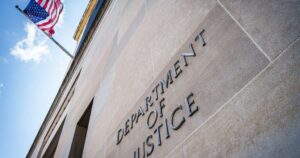
London is reeling from a political scandal that reads like a thriller novel. Peter Mandelson, a veteran British politician who once served as the United Kingdom’s Ambassador to the United States, now finds himself at the center of a criminal investigation. The allegations are serious: police are looking into whether he improperly shared confidential government documents with Jeffrey Epstein, the disgraced financier and convicted sex offender who died in 2019. The investigation stems from millions of pages of court documents released last week by the U.S. Department of Justice, which have pulled back the curtain on relationships between Epstein and powerful figures across the globe. For Mandelson, a man who spent decades navigating the treacherous waters of British politics and earned the nickname “the Prince of Darkness” for his cunning political maneuvering, this may be his most perilous moment yet.
The Metropolitan Police confirmed on Tuesday that they’ve launched a formal investigation into a 72-year-old former government minister for misconduct in public office—a description that clearly points to Mandelson, though police didn’t name him directly. Commander Ella Marriott explained that the investigation followed the massive document release from Washington and included a referral from the UK government itself. The emails at the heart of the controversy date back to 2009 and 2010, when Mandelson served as Britain’s Business Secretary during one of the most turbulent economic periods in modern history. As governments worldwide scrambled to contain the global financial crisis, these communications allegedly show Mandelson sharing highly sensitive, market-moving information with Epstein—a private citizen with no official role in government and someone who, by that time, was already a convicted sex offender.
The Damning Details: What the Emails Reveal
The released documents paint a disturbing picture of information-sharing between a senior government official and a controversial financier. In one particularly striking email from 2009, Mandelson apparently confirmed rumors about a massive €500 billion eurozone bailout to Epstein, even telling him that an official announcement would come that very night. This kind of advance notice about market-sensitive government actions could potentially be worth millions to someone positioned to act on it. Financial markets move dramatically on such news, and knowing it ahead of public announcements gives traders an almost unfair advantage. Another exchange from 2010 shows Mandelson forwarding what appears to be an internal government communication to Epstein with the casual note: “Interesting note that’s gone to the PM.” The memo in question was apparently from an advisor to then-Prime Minister Gordon Brown and discussed Britain’s struggling economy, including policy recommendations to sell government-held assets to raise revenue—again, exactly the kind of sensitive information that could move markets and inform investment strategies.
But the documents reveal more than just information sharing. They also suggest financial transactions that raise troubling questions about the nature of the relationship between these two men. According to the Justice Department releases, Epstein made three separate payments of $25,000 each to Mandelson in 2003 and 2004, totaling $75,000. Mandelson was not in government during those years, but the payments establish a financial connection that predates his return to public office. Additionally, documents indicate that in 2009—while Mandelson was serving as Business Secretary—Epstein sent nearly $12,000 to Reinaldo Avila da Silva, Mandelson’s husband, allegedly to pay for an osteopathy course. Critics are now asking whether these payments created a relationship that influenced Mandelson’s judgment about sharing confidential information, and whether they represent an improper—or even corrupt—relationship between a public official and a private citizen with significant financial interests.
Political Fallout and Prime Minister Under Pressure
The scandal has created a political firestorm for Prime Minister Keir Starmer, whose decision to appoint Mandelson as Britain’s ambassador to the United States last year now looks increasingly problematic. Starmer’s office conducted its own review of the newly released documents and concluded that “safeguards were compromised” regarding the handling of sensitive information. This finding prompted the Cabinet Office to refer the material to police, essentially forcing the criminal investigation. In a remarkable statement to Parliament on Wednesday, Starmer didn’t mince words: “Mandelson betrayed our country, our parliament, and my party.” The prime minister revealed that Mandelson’s connections to Epstein had been vetted during the ambassadorship appointment process, but that Mandelson had lied about how extensive his relationship with the American financier actually was. This admission is particularly damaging because it suggests either that the vetting process was inadequate or that Mandelson successfully deceived his own party leadership about matters of national security concern.
The timing of the appointment made it all the more significant. Many political observers believed Mandelson’s reputation as a well-connected political operator and problem-solver made him an ideal choice for the ambassadorship as Donald Trump began his second term as U.S. president. The relationship between London and Washington is often called the “special relationship,” and the ambassador’s role is considered one of Britain’s most important diplomatic positions. However, that appointment came crashing down in September when earlier releases of Epstein-related documents by the U.S. House of Representatives revealed that Mandelson had maintained a close relationship with Epstein for years after the financier’s 2008 conviction on charges involving solicitation of prostitution and procuring a child for prostitution. Starmer fired Mandelson from the ambassadorship, but the damage was done—and now, with these newest revelations, it’s gotten dramatically worse.
Mandelson’s Defense and Denials
For his part, Mandelson has maintained his innocence, though his explanations have evolved as more information has come to light. In an interview with the BBC last month, he categorically denied any knowledge of or involvement in Epstein’s sexual crimes. In a letter formally resigning from the Labour Party earlier this week—a move that distances him from Starmer’s government—Mandelson denied receiving payments from Epstein, describing them as “allegations which I believe to be false that he made financial payments to me 20 years ago, and of which I have no record or recollection, need investigating by me.” This carefully worded statement suggests he doesn’t remember or have records of such payments, rather than flatly denying they occurred. Regarding the payment to his partner for the osteopathy course, Mandelson has been more dismissive. In an interview published by the Times of London this week, he characterized the suggestion that such a payment would influence his government decisions as absurd: “The idea that giving Reinaldo an osteopath bursary is going to sway mine or anyone else’s views about banking policy is risible,” he said.
However, critics point out that it’s not just about a single payment for an educational course—it’s about a pattern of financial and informational exchanges that suggest an inappropriate relationship between a senior government official and a private citizen with considerable wealth and interests that could be affected by government policy. The fundamental question investigators will be asking is whether Mandelson abused his position of trust and potentially compromised national security by sharing confidential information with someone outside government. The offence being investigated—misconduct in public office—is a serious common law crime in the UK that can carry significant prison time. It applies when a public official wilfully neglects or fails to perform their duty, or wilfully misconducts themselves to such a degree as to amount to an abuse of the public’s trust.
Broader Implications and What Comes Next
This scandal touches on several sensitive issues that extend far beyond one politician’s career. First, it raises fundamental questions about how thoroughly officials are vetted for sensitive positions and what happens when they aren’t fully forthcoming about their connections. If Mandelson indeed lied about his relationship with Epstein during the vetting process for the ambassadorship, it suggests that even high-level security screenings can be circumvented by officials willing to be dishonest. Second, the case highlights the persistent questions around Jeffrey Epstein’s network of relationships with powerful people. Even years after his death, the release of documents continues to reveal connections that shock the public and implicate respected figures in potentially improper or illegal conduct. The massive trove of documents released by the Justice Department has already touched numerous prominent individuals, and investigators continue to pursue leads that emerge from these materials.
The investigation into Mandelson is just beginning, and it could take months or even years to conclude. Police will need to examine not just the emails themselves but also the context around them—what information was actually shared, what the potential consequences were, whether any financial gain resulted, and what Mandelson’s intentions were. They’ll also need to determine whether the payments from Epstein were truly innocent or represented something more problematic. For Britain’s political establishment, the scandal serves as an uncomfortable reminder that even the most experienced and supposedly sophisticated politicians can become entangled in relationships that compromise their judgment and potentially their country’s interests. As for Mandelson himself, the man who survived numerous political scandals during his decades-long career and earned his dark nickname through sheer political survival instinct now faces perhaps his greatest test. Whether he can navigate this storm as he has others remains to be seen, but unlike previous controversies, this one involves not just political misjudgment but potential criminal conduct, making it far more serious than anything he’s faced before.