
Deadly Cross-Border Conflict Escalates Between Pakistan and Afghanistan
Nine Days of Unrelenting Violence
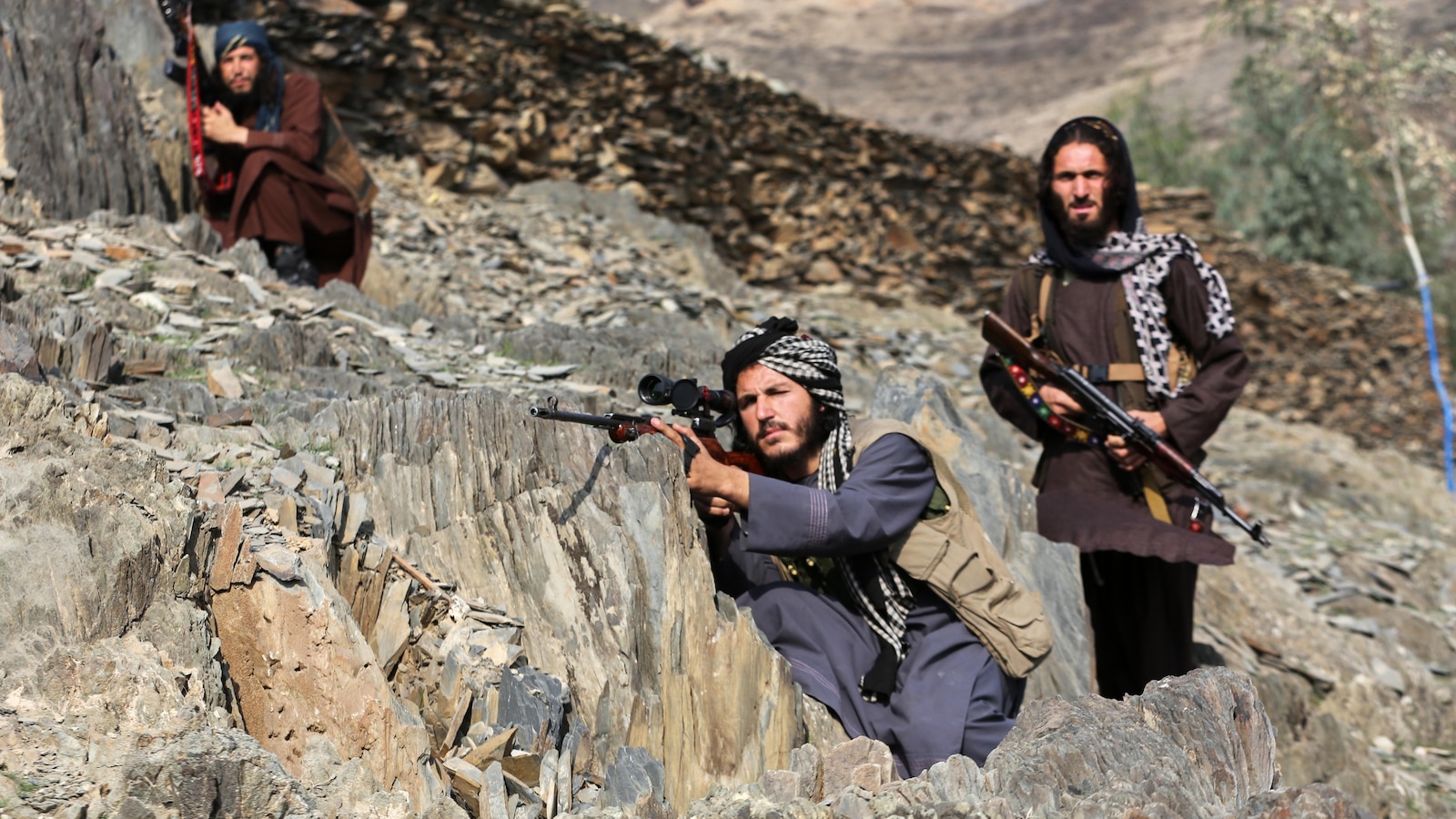
The situation along the Pakistan-Afghanistan border has deteriorated dramatically, with both nations engaged in what Pakistani officials are now calling an “open war.” For nine consecutive days, military forces from both sides have exchanged devastating strikes, resulting in mounting casualties and a humanitarian crisis that shows no signs of abating. Despite numerous international appeals for restraint and de-escalation, the violence has continued unabated, marking the deadliest confrontation between these two neighboring nations in recent memory. The conflict has engulfed multiple border provinces, with fighting reported across Nangarhar, Kandahar, Kunar, Paktia, and Khost provinces on the Afghan side, while Pakistani districts in Khyber Pakhtunkhwa province have also come under fire.
The Taliban-run Afghan government’s Defense Ministry has claimed significant military successes, reporting that their forces have destroyed numerous Pakistani military installations positioned along the contested border. Meanwhile, Pakistan’s state media has countered with its own claims of inflicting heavy casualties through coordinated air and ground operations. Pakistani military operations have reportedly targeted both Afghan Taliban forces and members of the Tehrik-e-Taliban Pakistan (TTP), a militant organization that Pakistan considers a terrorist threat. The fighting has created a fog of war where accurate information is difficult to obtain, as the border region remains largely inaccessible to independent journalists and international observers, making it impossible to verify the conflicting claims from either side.
Disputed Casualty Figures and Civilian Suffering
The human cost of this conflict has been staggering, though the exact numbers remain hotly disputed between the warring parties. Afghanistan’s government has claimed that Pakistani forces have killed 28 Afghan troops while losing 150 of their own soldiers since hostilities began. Pakistan’s Information Minister, Attaullah Tarar, has painted a dramatically different picture, asserting that Pakistani military operations have resulted in 527 Afghan soldier deaths. These wildly divergent figures highlight the propaganda war being waged alongside the actual military conflict, with each side attempting to demonstrate superiority and justify continued military action to their domestic populations.
Beyond the military casualties, the civilian population is bearing an unbearable burden. The United Nations Assistance Mission in Afghanistan (UNAMA) has confirmed that at least 56 civilians have been killed inside Afghanistan as a result of the fighting. This number likely represents only a fraction of the true civilian toll, as many remote border areas remain cut off from humanitarian observers. On Friday alone, several people were injured when Afghan mortar shells struck a village in Mohmand district in northwestern Pakistan’s Khyber Pakhtunkhwa province, according to local official Mohammad Asif. The U.N. mission has urgently called for an immediate halt to hostilities, warning that the violence is compounding Afghanistan’s already catastrophic humanitarian situation, where millions already face food insecurity, economic collapse, and limited access to basic services.
The Root Causes: Militancy and Cross-Border Tensions
At the heart of this conflict lies a fundamental disagreement over militant groups operating in the border region. Pakistan has repeatedly and forcefully accused Afghanistan’s Taliban government of providing safe haven to the Tehrik-e-Taliban Pakistan (TTP), an allegation that Kabul consistently denies. The TTP, which shares ideological similarities with the Afghan Taliban but operates primarily against the Pakistani state, has significantly intensified its attacks inside Pakistan since the Afghan Taliban returned to power in August 2021. This resurgence of militant violence has created enormous political pressure on Pakistan’s government to take decisive action, leading to the current military campaign.
Islamabad has made its position clear: military operations will continue until Afghanistan’s government takes concrete, verifiable steps to dismantle TTP operations and prevent other militant groups from using Afghan territory as a base for attacks against Pakistan. This ultimatum places the Taliban government in a difficult position, as many observers believe there are close ties between the Afghan Taliban and the TTP, making it politically and practically challenging for Kabul to crack down on these groups. The border region has long been a haven for various extremist organizations, including al-Qaida and Islamic State affiliates, creating a complex security environment where multiple armed groups operate with varying degrees of autonomy and territorial control.
International Mediation Efforts and Failed Ceasefires
The international community has watched with growing alarm as this conflict has escalated, with several Muslim-majority nations stepping forward to offer mediation services. Turkish President Recep Tayyip Erdogan has offered to facilitate negotiations between the two sides, speaking directly with Pakistani Prime Minister Shehbaz Sharif on Wednesday to propose a new ceasefire framework. Similarly, Malaysian Prime Minister Anwar Ibrahim engaged with Afghanistan’s Prime Minister Mullah Mohammad Hassan Akhund in an attempt to find diplomatic pathways toward peace, according to Taliban government spokesman Zabihullah Mujahid.
These current mediation efforts are particularly urgent because they’re attempting to rebuild trust after the collapse of a previous ceasefire that had been painstakingly brokered by Qatar and Turkey last October. That earlier truce had come about when Pakistan and Afghanistan had previously teetered on the brink of war, and it had initially appeared successful. The ceasefire agreement was signed in Qatar and was followed by six days of substantive talks in Istanbul, which resulted in an agreement to extend the truce and schedule a third round of negotiations for November. However, those planned talks never materialized, and the fragile peace eventually shattered, leading to the current outbreak of violence. The failure of that ceasefire has made the current situation even more challenging, as both sides now have less trust in diplomatic processes and less confidence that negotiated agreements will hold.
The Humanitarian Crisis and Uncertain Future
As the conflict enters its second week, the humanitarian situation grows increasingly dire with each passing day. Afghanistan, already struggling with economic collapse, drought, and the international community’s withdrawal of financial support following the Taliban’s return to power, can ill afford another crisis. The fighting has displaced families, disrupted trade routes, destroyed infrastructure, and diverted scarce resources toward military operations rather than humanitarian needs. On the Pakistani side, border communities live in constant fear of mortar attacks and cross-border raids, with normal life completely disrupted in many districts.
The path forward remains uncertain, with both governments seemingly committed to military solutions rather than diplomatic compromise. Pakistan feels it cannot back down without concrete action against the TTP, viewing the militant threat as an existential challenge to its national security. The Taliban government in Afghanistan, meanwhile, cannot easily comply with Pakistan’s demands without potentially fracturing its own coalition and admitting that it lacks control over its territory. Until one side decides that the costs of continued fighting outweigh the political risks of negotiation, or until international pressure becomes sufficient to force both parties to the bargaining table, civilians on both sides of this arbitrary border will continue to pay the price for their governments’ inability to find peaceful solutions to legitimate security concerns. The international community’s challenge is to find leverage that can convince both nations that dialogue, rather than violence, offers the only sustainable path toward addressing the complex mix of terrorism, border security, and regional stability that has fueled this devastating conflict.