
Israel Intensifies Campaign Against Hezbollah in Beirut’s Dahiyeh Suburb
Devastating Strikes Rock Lebanon’s Capital
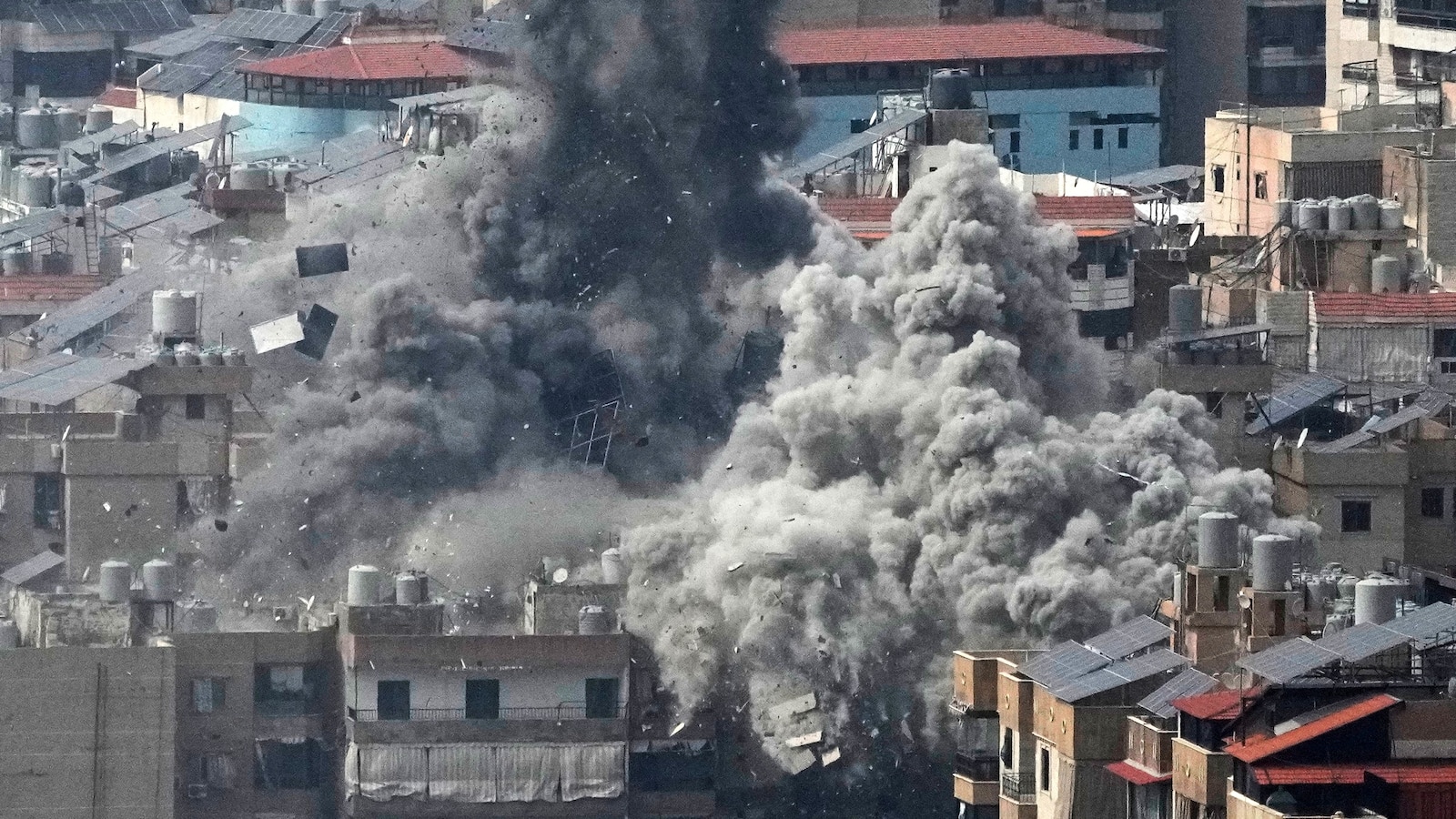
The peaceful night over Beirut was shattered beginning just after midnight on Friday as Israeli forces unleashed a devastating wave of airstrikes on the Dahiyeh suburb, a known Hezbollah stronghold in Lebanon’s capital. According to the Israel Defense Forces (IDF), the military operation specifically targeted what they described as Hezbollah command centers and multi-story structures throughout the densely populated neighborhood. An ABC News crew stationed on the ground witnessed the terrifying intensity of the assault, counting nearly two dozen separate missile strikes hitting Dahiyeh alone in just a matter of hours. The sky lit up repeatedly with explosions as buildings crumbled to the ground, sending massive plumes of smoke billowing into the night sky. This latest escalation represents a significant intensification of Israeli military action against Hezbollah positions in Lebanon, marking the first time Israel has struck central Beirut since June of the previous year. The humanitarian toll has been staggering, with Lebanon’s Ministry of Public Health reporting that at least 217 people have been killed and 798 others wounded in Israeli attacks that commenced early Monday morning and continued through Thursday.
Widespread Destruction and Military Claims
The scope of Israel’s military operation has been enormous, with IDF spokesperson Brigadier General Effie Defrin announcing at a Friday briefing that Israeli forces had attacked more than 500 targets throughout Lebanon. According to Defrin, these strikes resulted in the deaths of more than 70 Hezbollah members, though these figures have not been independently verified. The IDF spokesperson framed the military action as necessary, stating that “Hezbollah and the Iranian regime are one. They continue to destroy the state of Lebanon and harm the lives of Lebanese residents.” The Israeli military has characterized its campaign as a targeted effort to dismantle Hezbollah’s infrastructure and eliminate its leadership, particularly focusing on what they describe as the organization’s command and control capabilities in the Dahiyeh area. ABC News teams on the ground documented numerous buildings collapsing as the death toll continued to climb throughout Friday. The strikes have been described as some of the most intense bombardments the area has experienced in recent years, with the constant sound of explosions echoing through the city and emergency services struggling to respond to the overwhelming number of casualties and structural collapses.
Hezbollah’s Response and Escalating Tensions
Hezbollah did not remain passive in the face of Israel’s assault. The Iran-backed militant organization responded by launching several rockets southward toward Israeli territory overnight, as observed by ABC News personnel stationed in Lebanon. This exchange of fire represents a dangerous escalation in the ongoing conflict between Israel and Hezbollah, with both sides demonstrating their willingness to engage in sustained military operations. The Israeli military had previously warned that Hezbollah “will pay a heavy price” following rocket fire into northern Israel that occurred overnight from Monday into Tuesday. The current wave of strikes appears to be Israel’s follow-through on that warning, with IDF officials stating they are targeting what they call “senior commanders” and “some of the last surviving senior veterans of this organization.” The back-and-forth attacks have created a cycle of violence that shows no signs of abating, with each side citing the other’s aggression as justification for their own military actions. This dynamic has trapped the civilian population of both Lebanon and northern Israel in an increasingly dangerous situation, with ordinary people bearing the brunt of a conflict driven by regional political and military considerations beyond their control.
Massive Displacement and Humanitarian Crisis
Before launching their most recent wave of strikes, the Israeli military issued evacuation warnings to residents of Dahiyeh on Thursday afternoon, as well as to anyone living south of the Litani River in southern Lebanon. These warnings, while potentially saving some lives, triggered a massive humanitarian crisis as hundreds of thousands of people were forced to flee their homes with little notice and few resources. Lebanese officials reported that the exodus from Dahiyeh was unprecedented, with families grabbing whatever belongings they could carry and seeking safety wherever they could find it. The scenes witnessed by ABC News crews on the ground were heartbreaking: families who had fled the neighborhood were observed lighting fires for warmth in the cold night air, huddled together on streets and sidewalks. Some of the displaced had managed to secure tents for temporary shelter, but many others had nothing more than blankets to protect them from the elements as they slept on the streets, transformed overnight from residents with homes into refugees in their own city. The displacement has overwhelmed Lebanon’s already strained social services and infrastructure, with local authorities struggling to provide adequate shelter, food, and medical care to the sudden influx of people needing assistance. This humanitarian catastrophe adds another layer of suffering to a country already facing severe economic challenges and political instability.
Diplomatic Efforts to Stop the Violence
As the bombardments continued, the Lebanese government scrambled to engage international intermediaries in an effort to bring an end to the attacks. According to Lebanese officials, the government has been actively working with both French diplomats and the American ambassador to Lebanon, seeking to leverage international pressure to convince the Israeli government to cease its military operations. These diplomatic efforts reflect Lebanon’s limited options in confronting Israel’s military superiority directly, forcing Lebanese authorities to rely on international mediation and appeals to the global community for intervention. However, as the strikes continued despite these diplomatic overtures, questions have arisen about the effectiveness of such efforts and the willingness of international powers to exert meaningful pressure on Israel to halt its campaign. The situation has highlighted the complex regional dynamics at play, with various international actors having different relationships with and interests in both Lebanon and Israel. Meanwhile, the people of Dahiyeh and other affected areas have been left waiting anxiously to see whether diplomacy can succeed where direct appeals have failed, hoping that international intervention might bring an end to the violence that has upended their lives and destroyed their communities.
Historical Context and Future Implications
This week’s strikes on Beirut represent a significant escalation in Israel’s long-running conflict with Hezbollah, breaking a period of relative calm that had existed since June 2025, when Israel last struck the Lebanese capital. In February, ahead of attacks on Iran, Israel had launched strikes against targets in Baalbek in eastern Lebanon, claiming to have killed “several” members of Hezbollah’s missile unit in three different locations, but those strikes were in a different region and did not target Beirut itself. The resumption of strikes on central Lebanon signals a potentially dangerous new phase in the conflict, one that could have far-reaching consequences for regional stability. IDF spokesperson Defrin noted that military “forces are deployed along the border in front and are prepared to continue the defense and attack as long as they require,” suggesting that Israel is prepared for a sustained campaign rather than a limited operation. This commitment to ongoing military action, combined with Hezbollah’s demonstrated willingness to respond with rocket attacks of its own, creates a worrying scenario in which the conflict could expand further, potentially drawing in additional regional actors and creating an even larger humanitarian crisis. For the residents of Lebanon and northern Israel, the future remains uncertain and frightening, with the specter of continued violence hanging over communities that have already suffered too much, and no clear path toward a peaceful resolution visible on the horizon.