

USS Abraham Lincoln Strike Group Enters Middle East Waters Amid Rising Tensions with Iran
A Show of Naval Force in the Persian Gulf Region
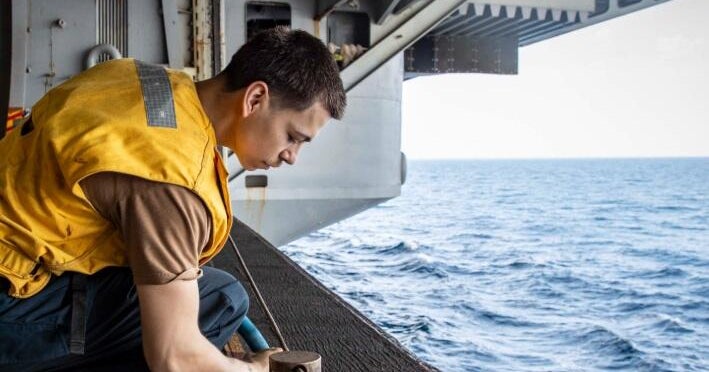
The waters of the Middle East have become considerably more crowded with American military hardware as the USS Abraham Lincoln aircraft carrier strike group officially entered the U.S. Central Command’s area of responsibility, which encompasses the volatile region including Iran. This significant naval deployment, confirmed by CENTCOM on Monday through social media channels, represents a substantial show of American military presence in response to escalating tensions with the Islamic Republic. The deployment marks the first official public acknowledgment from the Department of Defense that this powerful collection of warships has arrived in the region, with officials stating the move is intended “to promote regional security and stability.” The Abraham Lincoln doesn’t travel alone—it’s accompanied by an impressive escort of three guided missile destroyers: the USS Frank E. Petersen, Jr., the USS Spruance, and the USS Michael Murphy. Together, these vessels form what President Trump has dramatically referred to as an “armada” heading toward Iranian waters, a characterization that underscores both the scale of the deployment and the seriousness with which the administration views the current situation.
The Military Arsenal Heading to the Region
The firepower aboard the USS Abraham Lincoln represents some of the most advanced military technology the United States possesses. The carrier’s flight deck serves as home to multiple squadrons of cutting-edge aircraft, including F/A-18E/F Super Hornets—the Navy’s primary strike fighters capable of both air-to-air combat and precision ground attacks. Also aboard are EA-18G Growlers, specialized electronic warfare aircraft designed to jam enemy radar and communications systems, giving American forces a crucial advantage in any potential conflict. Perhaps most notably, the carrier hosts F-35C fighter jets, the Navy’s newest and most technologically sophisticated stealth fighters, which can penetrate heavily defended airspace while remaining virtually invisible to enemy radar systems. Rounding out the air wing are MH-60R/S helicopters, versatile aircraft used for anti-submarine warfare, search and rescue operations, and transport missions. This diverse array of aircraft gives the strike group the ability to respond to virtually any scenario, from humanitarian assistance to full-scale combat operations. According to U.S. officials speaking with CBS News, while the strike group had entered CENTCOM’s area of responsibility as of Monday morning Eastern time, it hadn’t necessarily arrived “on station”—military terminology meaning it hadn’t yet reached its final intended position in the region.
Presidential Warnings and the Threat of Force
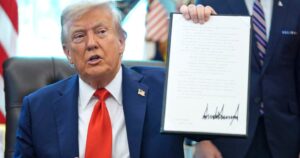
President Trump has been characteristically blunt about the purpose of this naval deployment, stating on Thursday that the United States had dispatched a “massive fleet” toward Iran “just in case” he decides to take military action, though he carefully added the qualifier, “maybe we won’t have to use it.” This statement walks a careful line between deterrence and diplomacy, simultaneously warning Iranian leaders of potential consequences while leaving the door open for de-escalation. The president’s warnings to Iran have been multifaceted and persistent, first addressing the Iranian government’s response to widespread demonstrations that erupted in late December—protests that represented the most significant challenge to the country’s ruling regime in years. Trump specifically cautioned Iranian authorities against killing peaceful demonstrators who had taken to the streets in cities across the country. As the situation evolved and Iranian security forces detained large numbers of protesters, the president escalated his rhetoric, warning against the mass execution of those who had been arrested during the civil unrest. This naval deployment serves as the military backing to these diplomatic warnings, a tangible demonstration that American threats carry real weight and potential consequences.
Iran’s Defiant Response to American Pressure
Rather than backing down in the face of this impressive display of American naval power, Iranian military leaders have responded with their own threatening rhetoric, making clear they won’t be intimidated by the approaching fleet. General Mohammad Pakpour, commander of Iran’s powerful Islamic Revolutionary Guard Corps—an elite military force that operates somewhat independently from Iran’s regular armed forces and answers directly to the country’s Supreme Leader—issued a stark warning over the weekend. Speaking through Nournews, a media outlet with close ties to Iran’s Supreme National Security Council, Pakpour directed his message specifically at both the United States and Israel, Iran’s two primary adversaries, urging them “to avoid any miscalculation.” His choice of words was deliberately provocative and designed to signal Iran’s readiness for conflict: “The Islamic Revolutionary Guards and dear Iran stand more ready than ever, finger on the trigger, to execute the orders and directives of the Commander-in-Chief,” Pakpour declared, according to reports from The Associated Press. This “finger on the trigger” language represents more than mere rhetoric—it’s a direct response to Trump’s “armada” and a signal that Iran won’t be cowed by American military superiority.
Additional Iranian Warnings Raise Stakes Further
The Iranian military establishment continued its defiant messaging into Monday, with additional high-ranking officials issuing their own warnings to the United States and its allies. General Reza Talaei-Nik, serving as spokesperson for Iran’s Defense Ministry, took the threats a step further by promising that any attack on Iranian territory or interests by either Israel or the United States “would be met with a response that is more painful and more decisive than in the past.” This particular phrasing is significant because it references Iran’s previous military responses and promises an escalation beyond what the country has demonstrated before. Iran has a long history of asymmetric warfare—using proxy forces, cyber attacks, and unconventional military tactics to strike at more powerful adversaries without engaging in direct, conventional military confrontation. The country’s military leadership has frequently demonstrated creativity in how it projects power throughout the Middle East, supporting allied militia groups in Iraq, Syria, Lebanon, and Yemen, while also possessing substantial missile arsenals and the ability to threaten shipping in the strategically vital Strait of Hormuz, through which approximately one-fifth of the world’s oil supply passes daily.
The Broader Context of Middle Eastern Tensions
This latest military standoff between the United States and Iran doesn’t exist in isolation but rather represents the continuation of decades of hostility between the two nations, dating back to the 1979 Islamic Revolution that overthrew the U.S.-backed Shah and led to the hostage crisis at the American embassy in Tehran. The current escalation comes at a particularly sensitive moment in Middle Eastern geopolitics, with Iran facing significant internal challenges from a population increasingly frustrated with economic hardship—partly caused by American sanctions—and demanding greater political freedoms. The protest movements that triggered Trump’s initial warnings represent a genuine threat to the Islamic Republic’s governing system, as they’ve spread across class and geographic boundaries within Iranian society. Meanwhile, the deployment of the Abraham Lincoln strike group serves multiple strategic purposes beyond simply threatening Iran: it reassures American allies in the region, particularly Saudi Arabia and the United Arab Emirates, who view Iranian regional influence with alarm; it demonstrates American commitment to maintaining freedom of navigation in international waters; and it provides the president with military options should he choose to order strikes against Iranian nuclear facilities, military installations, or other strategic targets. As this naval armada continues its journey toward its ultimate station somewhere in the waters near Iran, the world watches nervously, hoping that this show of force serves as an effective deterrent rather than a prelude to military conflict that could destabilize the entire Middle Eastern region and potentially draw in other global powers with interests in the area.