

Deadly Factory Fire in South Korea Claims 14 Lives and Injures Dozens
Catastrophic Explosion Rocks Industrial Complex
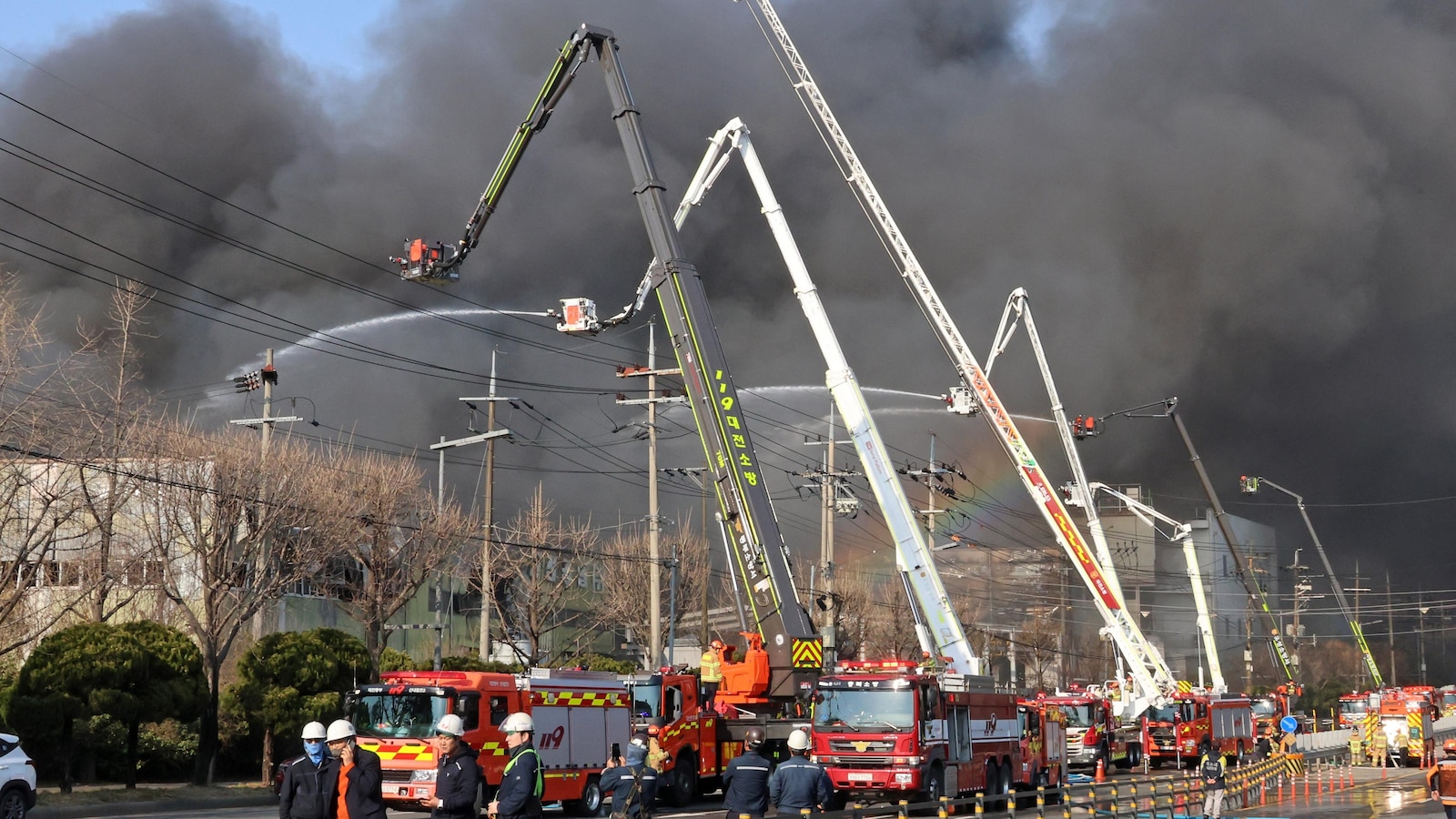
A devastating tragedy unfolded in the heart of South Korea’s central city of Daejeon on Friday afternoon when an auto parts factory became engulfed in flames following a massive explosion. The disaster at Anjun Industrial’s facility has left fourteen workers dead and at least fifty-nine others injured, many of them critically. What began as a regular workday quickly turned into a nightmare scenario as thick, choking gray smoke billowed from the industrial complex, prompting workers to make desperate attempts to escape, with some jumping from the building in a bid to save their lives. The fire broke out around 1:18 p.m., and within moments, the situation escalated into one of the deadliest industrial accidents South Korea has witnessed in recent times. Witnesses at the scene reported hearing a powerful explosion before the fire rapidly consumed the factory building, creating scenes of chaos and panic that would haunt the community for years to come.
Massive Emergency Response and Challenging Recovery Operation
The scale of the disaster demanded an extraordinary response from South Korean emergency services. More than five hundred firefighters, police officers, and emergency personnel descended upon the site to battle the inferno and search for survivors trapped within the burning structure. The response team deployed an impressive array of equipment including approximately 120 vehicles, aircraft for aerial assessment, unmanned water cannon vehicles, and specialized firefighting robots designed to reach areas too dangerous for human rescuers. Despite this massive mobilization, firefighters initially faced significant challenges accessing the main factory building due to serious concerns about structural collapse. The intense heat from the blaze had severely compromised the building’s integrity, making it too dangerous for rescue workers to enter immediately. It wasn’t until late Friday evening that operations could begin in earnest, but only after officials deployed unmanned firefighting robots to cool down the structure and engineering teams conducted thorough safety inspections to determine which areas could be safely accessed without risking additional casualties among the rescue workers themselves.
Discovery of Victims and Accounting for the Missing
The grim task of recovering victims began in earnest late Friday night and continued through Saturday morning as rescue teams carefully navigated through the charred remains of the factory. The search efforts yielded heartbreaking results as fourteen bodies were eventually recovered from various locations within the destroyed building. Nine victims were discovered in what investigators believe was a gymnasium area on the third floor, suggesting that workers may have fled to this space hoping to find safety from the advancing flames. Three more bodies were found near a water tank on the second floor, perhaps indicating that these individuals had attempted to use the water source for protection or had been overcome by smoke while trying to reach it. The remaining two victims were located in other areas of the devastated structure. Nam Deuk-woo, the fire chief for Daejeon’s Daedeok district, confirmed by Saturday that all missing workers had been accounted for, bringing some measure of closure to the agonizing wait endured by families who had gathered at the site, desperately hoping their loved ones would be found alive. The confirmation that no one remained unaccounted for allowed rescue operations to transition from search and rescue to recovery and investigation mode.
Extent of Injuries and Medical Response
Beyond the tragic loss of life, the disaster left dozens of survivors dealing with serious injuries that will require extensive medical treatment and rehabilitation. Fire officials reported that at least twenty-five people sustained serious injuries, though authorities cautioned that it remained unclear in the immediate aftermath whether any of the injured were in life-threatening condition. The nature of the injuries varied widely, reflecting the different ways workers had attempted to escape the inferno. Some individuals suffered traumatic injuries from jumping from the building’s upper floors in desperate attempts to escape the flames and toxic smoke. Others were hospitalized for severe smoke inhalation, which can cause lasting damage to the lungs and respiratory system. By Saturday morning, twenty-eight people remained hospitalized, with four of them having undergone emergency surgical procedures to address broken bones, fractures, and other serious injuries sustained during their escape attempts. The medical facilities in Daejeon mobilized their trauma teams to handle the influx of patients, with doctors and nurses working around the clock to stabilize the injured and provide the critical care needed during those crucial first hours following such a catastrophic event. The long-term physical and psychological impact on survivors will likely require months or even years of ongoing medical support and counseling.
Presidential Response and Calls for Enhanced Safety
The severity of the disaster prompted South Korean President Lee Jae Myung to personally visit the site on Saturday afternoon, demonstrating the national significance of this tragedy. During his visit, the president met with grieving relatives of the victims who had gathered at the scene, offering condolences and support during their darkest hours. Beyond expressing sympathy, President Lee used the occasion to emphasize the critical importance of implementing comprehensive safety measures to prevent further casualties during the ongoing recovery operations. His specific concern focused on ensuring that the damaged structure, already weakened by fire and at risk of collapse, would not claim additional lives among rescue workers as they continued their grim task of processing the scene and investigating the cause of the disaster. The presidential visit underscored broader questions about industrial safety standards in South Korea’s manufacturing sector, and whether adequate protocols had been in place to prevent such a catastrophe. This tragedy joins a troubling history of industrial accidents in South Korea’s rapidly developed economy, raising uncomfortable questions about whether worker safety has been adequately prioritized alongside economic growth and productivity demands in the country’s competitive manufacturing industry.
Investigation into Cause and Hazardous Materials
As rescue operations concluded and attention turned toward understanding what triggered this devastating event, investigators faced the complex task of determining the explosion’s cause while also managing significant ongoing dangers at the site. Fire Chief Nam acknowledged that the exact cause of the fire remained unknown in the immediate aftermath, but witness accounts of an explosion suggested a sudden, catastrophic event rather than a slowly developing fire. The speed with which the flames spread through the facility pointed toward the possible involvement of flammable or explosive materials. These suspicions were confirmed when recovery workers discovered more than 100 kilograms (approximately 220 pounds) of highly reactive chemicals stored at the facility. The presence of such substantial quantities of dangerous materials raised serious questions about storage protocols and whether proper safety measures had been implemented to prevent exactly this type of disaster. Firefighters had to focus significant resources on isolating these explosive chemicals and preventing the fire from spreading to an adjacent facility where additional hazardous materials might be stored, potentially creating an even larger catastrophe. The discovery of these chemicals will likely become a central focus of the investigation, as authorities examine whether proper handling procedures were followed, whether workers received adequate safety training, and whether the facility’s design appropriately separated dangerous materials from general work areas. The findings from this investigation could lead to significant changes in how South Korean industries handle and store hazardous materials, potentially preventing future tragedies and ensuring that the fourteen lives lost in Daejeon were not sacrificed in vain.