
Exploring the Depths: A 16th-Century Shipwreck Discovered Off the French Coast
A Delicate Dance on the Ocean Floor
Picture this: more than 1.5 miles beneath the shimmering surface of the Mediterranean Sea, in the cold, dark depths where sunlight never reaches, a sophisticated underwater robot carefully maneuvers its mechanical pincer around a centuries-old ceramic jug. The scene might sound like something from a science fiction movie, but it’s actually a cutting-edge archaeological mission unfolding off the French Riviera. Navy officer Sebastien, whose full identity remains classified for security purposes, watches intently as the remotely operated vehicle works with painstaking precision. “You have to be extremely precise so as not to damage the site, so as not to stir up sediment,” he explains, his words highlighting the delicate balance between exploration and preservation that defines modern underwater archaeology. This isn’t just any dive site—it’s the deepest shipwreck ever discovered in French territorial waters, a time capsule from the 1500s that has remained untouched for centuries. The wreck was stumbled upon quite by accident during a routine military survey of the seabed last year, lying silently in the waters off Ramatuelle, not far from the glamorous resort town of Saint-Tropez. What makes this discovery particularly remarkable isn’t just its depth, but the pristine condition of the artifacts and the glimpse it offers into a world of maritime trade from half a millennium ago.
The Discovery That Changed Everything
The story of how this remarkable shipwreck came to light reads like something from an adventure novel, except it’s entirely real. During what should have been a standard military mapping operation of the Mediterranean seabed, naval personnel noticed something extraordinary on their sonar readings. What they had discovered was a merchant vessel from the 16th century, believed to have been sailing from northern Italy with a cargo hold packed with ceramics and metal bars when disaster struck and it plunged to the ocean floor. The French navy, working in close collaboration with the culture ministry’s underwater archaeology department, has since returned to the site multiple times to conduct detailed inspections of the artifacts scattered across the seabed. They’ve given the site the codename “Camarat 4,” and they’re keeping its exact coordinates a closely guarded secret—though as officials point out, even if someone wanted to loot the site, reaching depths of over 1.5 miles would be beyond the capabilities of most people or even most organizations. The secrecy also helps protect the wreck from disturbance while researchers work to document everything before attempting to recover selected items for further study and eventual public display.
A High-Tech Treasure Hunt
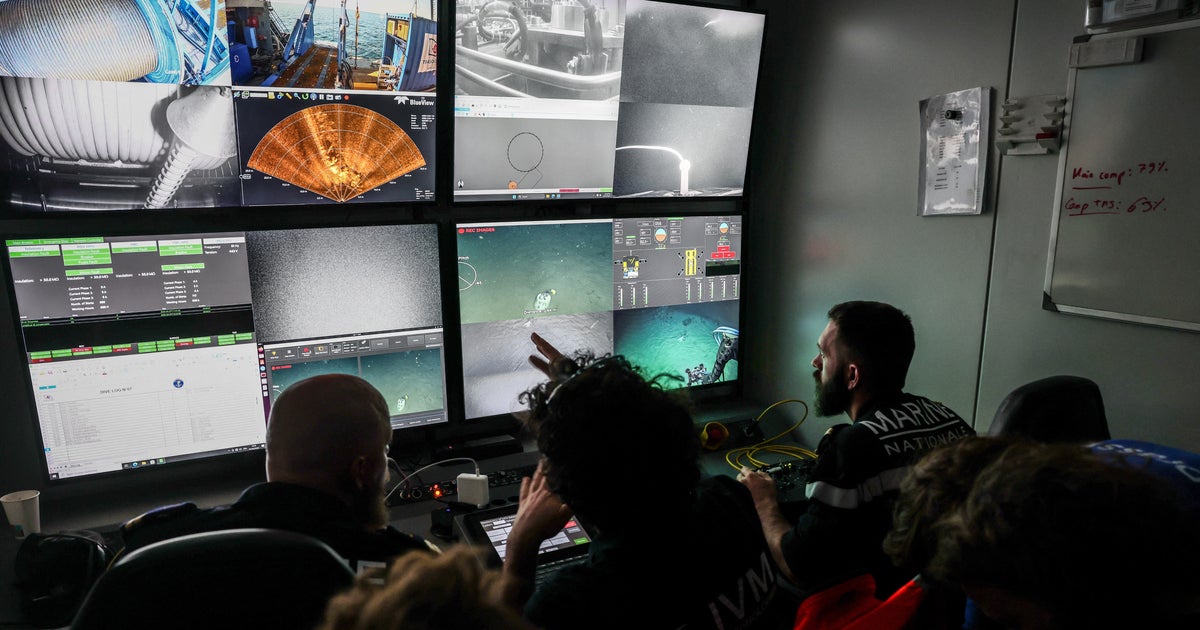
The day of the expedition begins before dawn has even broken over the French coastline. The navy tugboat, specially equipped for this unique mission, makes its way to the secret coordinates, carrying aboard a state-of-the-art remotely operated vehicle (ROV) and two large shipping containers that have been converted into temporary offices for the marine archaeologists who will oversee the operation. The scene is a fascinating blend of military precision and scholarly enthusiasm. Once on site, the crew begins the careful process of deploying the underwater robot, a sophisticated piece of machinery equipped with high-definition cameras and delicate mechanical pincers capable of handling fragile artifacts. A navy officer takes control of the ROV, which remains connected to the surface vessel through a lengthy umbilical cable that provides both power and communication. On deck, experts huddle around monitors, watching with bated breath as the robot begins its hour-long descent through the dark water column. The ROV, designed to operate at depths of up to 4,000 meters (about 2.5 miles), eventually reaches the seafloor and begins to glide over an astonishing sight: piles upon piles of round ceramic pitchers, lying where they fell centuries ago. Through the robot’s camera feeds, the team on the surface gets their first clear look at the wreck site, and what they see takes their breath away.
Treasures Frozen in Time
As the ROV methodically surveys the wreck site, it reveals a treasure trove of historical artifacts that have remained remarkably well-preserved in the cold, dark conditions of the deep sea. The robot’s cameras capture footage of a cannon—a reminder that even merchant ships of that era needed to defend themselves against pirates—as well as hundreds of pitchers and decorative plates. What makes these ceramics particularly special is their intricate decoration: floral motifs, crosses, and fish patterns that speak to the artistic sensibilities and religious beliefs of 16th-century Mediterranean culture. The robot works tirelessly, capturing eight photographs per second for three hours straight, accumulating more than 86,000 individual images that researchers will later use to create a detailed 3D model of the entire site. Archaeologist Franca Cibecchini can barely contain her excitement, particularly because the visibility at this depth is exceptional. “The visibility is excellent. You almost can’t tell it’s so deep,” she marvels. Based on the style and characteristics of the pottery, Cibecchini believes this was a merchant vessel carrying glazed pottery from Liguria, a coastal region in northwestern Italy. The ship was likely loaded at one of the major ports of that area—possibly Genoa or the nearby city of Savona—before setting out on what would become its final voyage. Previous surveys had already identified two cauldrons, an anchor, and six cannons at the site. Interestingly, the pristine historical artifacts aren’t the only objects on the seabed; modern detritus has also found its way to these depths, including a soda can and an empty yogurt container—a sobering reminder of how even the most remote corners of our oceans aren’t immune to contemporary pollution.
Unlocking Maritime History’s Secrets
For lead archaeologist Marine Sadania, this shipwreck represents far more than just a collection of old pottery and cannons—it’s a key that can help unlock mysteries about trade networks, navigation routes, and daily life in the 16th-century Mediterranean. “We don’t have very detailed texts about merchant ships in the 16th century, so this is a valuable source of information on maritime history,” she explains. Written records from this period are frustratingly sparse when it comes to the mundane details of how trade actually functioned, which makes physical evidence like this shipwreck invaluable. The recovery process is nerve-wracking to watch. The team on deck holds their collective breath as the ROV carefully lowers a pitcher into a protective case, moving as gently as possible to avoid damaging the fragile ceramic. The stakes are high—Sadania notes that roughly one-third of all ceramics extracted from underwater sites end up breaking during the recovery process, despite everyone’s best efforts. Over the course of the mission, the team successfully retrieves several jugs and plates, each one a small victory against the challenges of deep-sea archaeology. Back on solid ground, in a laboratory in the historic port city of Marseille, Sadania carefully runs water over one of the recovered jugs, revealing its true colors for the first time in centuries. Dark blue lines create rectangular patterns across the jug’s rounded surface, with some rectangles filled in with turquoise blue or decorated with symbols rendered in saffron yellow. The craftsmanship is remarkable, speaking to the skill of artisans who lived and worked half a millennium ago. “It’s one of the deepest objects ever recovered from a wreck in France,” Sadania says with justifiable pride.
Setting New Records and Looking Forward
This discovery doesn’t just rewrite our understanding of 16th-century maritime trade—it also sets new records for French underwater archaeology. Prior to finding this merchant vessel, the deepest shipwreck French authorities had ever located was about 1.4 miles below sea level, discovered off the southern city of Toulon in 2019. However, that wreck was of much more recent vintage: it was La Minerve, a French submarine that tragically sank in 1968 with all 52 crew members aboard, just four minutes after beginning what should have been a routine assignment. The contrast between these two shipwrecks—one from the age of sail, one from the modern era—highlights how the Mediterranean has been a crossroads of maritime activity for countless centuries. Interestingly, this French discovery isn’t happening in isolation. Just this week, officials announced that another 16th-century shipwreck was discovered by a naval vessel during a military exercise off the coast of Sweden, suggesting that we may be entering a golden age of deep-sea archaeological discoveries as technology improves and makes previously inaccessible sites reachable for the first time. As researchers continue to study the artifacts recovered from the Camarat 4 site and prepare for future missions to document the wreck more thoroughly, they’re not just piecing together the story of one ill-fated merchant vessel—they’re illuminating an entire chapter of human history that had been hidden in darkness at the bottom of the sea. Each jug, each plate, each cannon tells a story about the people who made them, traded them, and sailed with them on journeys across the ancient Mediterranean, making this discovery a genuine treasure for anyone interested in how our ancestors lived, worked, and traveled across the seas.