


Iranian Women’s Soccer Team’s Dramatic Asylum Decision in Australia
A Heart-Wrenching Departure from Sydney Airport
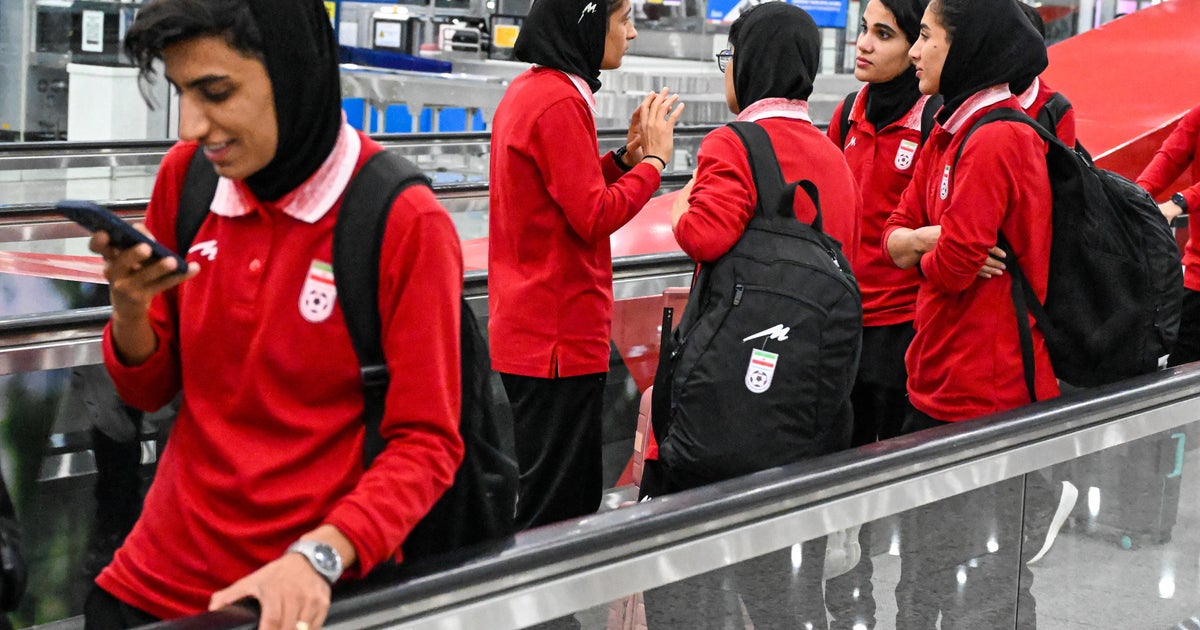
The departure of Iran’s women’s soccer team from Australia became one of the most emotionally charged moments in recent sports history. What should have been a routine end to a tournament transformed into a desperate humanitarian intervention at Sydney Airport, where Australian officials made last-minute efforts to offer safety to women potentially facing persecution at home. As the team prepared to board their flight on Tuesday evening, each player was discreetly separated from the group and taken to private meetings with government officials and interpreters. In these emotional encounters, they were individually informed that they had the choice to remain in Australia permanently rather than return to Iran. The scene was tense and chaotic, with tearful protests erupting as some teammates realized they might be saying goodbye forever. Ultimately, seven women initially chose to accept humanitarian visas and stay behind, while the rest of the team boarded the flight. The decision-making process revealed the complexity and pressure these young athletes faced—torn between their families back home, their teammates, and their own safety and future.
The Silent Protest That Started Everything
The drama began weeks earlier during the team’s first match at the Asian Cup soccer tournament held on the Gold Coast. When Iran’s national anthem played before the game, the women’s team stood in silence rather than singing along—a gesture that resonated around the world. While the players themselves never publicly explained their actions or disclosed their personal views, observers interpreted the silence in various ways. Some saw it as an act of defiance against Iran’s theocratic government, which has faced widespread protests and international criticism for its treatment of women. Others viewed it as a solemn act of mourning for those who have suffered under the regime. In subsequent matches, the team did sing the anthem, adding another layer of mystery to their situation. Australian Home Affairs Minister Tony Burke captured the significance of that first silent moment when he said, “When those players were silent at the start of their first match in Australia, that silence was heard as a roar all around the world.” That silence opened the door for Australia to extend protection, with Burke adding, “We responded by saying, the invitation is there. In Australia you can be safe.” The incident highlighted how even seemingly small acts of protest or non-compliance can have enormous consequences for people living under authoritarian regimes.
International Pressure and Political Complications
The situation quickly escalated beyond sports into the realm of international politics and human rights. The women’s team had arrived in Australia before war broke out in Iran on February 28, and by the time they were eliminated from the tournament, they faced the prospect of returning to a country under bombardment and political turmoil. Iranian Australian community groups raised the alarm, warning that the players could face severe punishment from Iran’s government simply for their silent stance during the anthem, regardless of whether it was intentional protest. The issue caught the attention of President Trump, who criticized the Australian government on social media for not immediately offering asylum and declared, “The U.S. will take them if you won’t.” Meanwhile, Iranian officials denied any danger to the women and pushed back against international interference. Iranian first Vice President Mohammad Reza Aref stated, “Iran welcomes its children with open arms and the government guarantees their security,” and added that “No one has the right to interfere in the family affairs of the Iranian nation and play the role of a nanny who is kinder than a mother.” Iran’s football federation even asked international soccer bodies to investigate what they called Trump’s “direct political interference in football,” warning it could disrupt the 2026 World Cup.
The Agonizing Final Moments at the Airport
As the team’s departure time approached, Australian officials worked frantically to ensure each woman understood she had a genuine choice to stay. The airport meetings were deliberately designed to give the players privacy from their coaches and team minders, with interpreters present to ensure clear communication. Burke described the encounters as “emotional” and acknowledged the impossible position the women found themselves in. “Everything was about ensuring the dignity for those individuals to make a choice,” he explained. “We couldn’t take away the pressure of the context for these individuals, of what might have been said to them beforehand, what pressures they might have felt there were on other family members.” The officials even arranged for the women to have time to call their families before making their final decisions. Despite these efforts, the pressure was immense—these young athletes had to weigh their personal safety against loyalty to teammates, obligations to families back home, and uncertainty about what life in a foreign country would mean. Some reports included a disturbing photograph that appeared to show one woman being led by the wrist toward the departure bus, with another teammate’s hand on her shoulder, raising questions about whether all the players were truly free to choose their own paths. After no additional women decided to stay beyond the initial seven, Burke said the exhausted officials feared they had somehow failed the women who were leaving.
One Woman Changes Her Mind Again
The complexity and trauma of the situation became even clearer the day after the team’s departure. Burke announced that one of the seven women who had initially accepted asylum had changed her mind and decided to return to Iran after all. “In Australia, people are able to change their mind,” Burke said, though the circumstances surrounding this reversal raised serious concerns. According to Burke, the woman made this decision after conversations with her departed teammates and coach, who then “advised her to contact the Iranian embassy and to get collected.” This communication meant that Iranian officials now knew the location where the asylum-seeking women were being housed, creating an immediate security threat. The six remaining women who had chosen to stay were quickly relocated to a different, undisclosed location for their protection. This incident highlighted the ongoing pressure and influence that governments can exert on their citizens even when they’re outside the country, through family connections, cultural obligations, and direct intimidation. Burke pledged that the six remaining women would receive full government support, including health care, housing assistance, and a streamlined path to permanent residency without lengthy legal battles. He also revealed that not all members of the delegation had been offered visas—some individuals with connections to Iran’s paramilitary Revolutionary Guard were deliberately excluded from asylum offers.
The Uncertain Road Ahead
As the dust began to settle, the remaining team members flew from Sydney to Kuala Lumpur, Malaysia, where they were housed in a hotel while awaiting their return to Iran. The Asian Football Confederation confirmed it would “provide all necessary support to the team during their stay until their onward travel arrangements are confirmed” and pledged to “continue to prioritize the welfare and safety of the players and officials.” For the six women who remained in Australia, their brave decision was celebrated on newspaper front pages under headlines like “Brave new Aussies,” but their journey was just beginning. They faced the daunting task of building new lives in a foreign country, likely separated permanently from family members back in Iran. Iranian opposition figure and exiled crown prince Reza Pahlavi publicly named five of the women and claimed they had “joined Iran’s national Lion and Sun Revolution”—a reference to the flag used before Iran’s 1979 Islamic Revolution—potentially putting their families back home at risk. The entire episode illustrated the impossible choices facing people from authoritarian countries and the limitations of international protection. While Australia provided these women with options and safety, officials couldn’t eliminate the pressures they faced from family obligations, cultural ties, government intimidation, and the traumatic nature of making such life-altering decisions under extreme stress. The story of Iran’s women’s soccer team serves as a powerful reminder of how sports and politics inevitably intersect, and how the simple act of remaining silent can speak volumes about courage, fear, and the universal human desire for freedom and dignity.