


American and Ecuadorian Forces Join Operations Against Narco-Terrorist Organization
Joint Military Mission Targets Criminal Network on Ecuador’s Coast
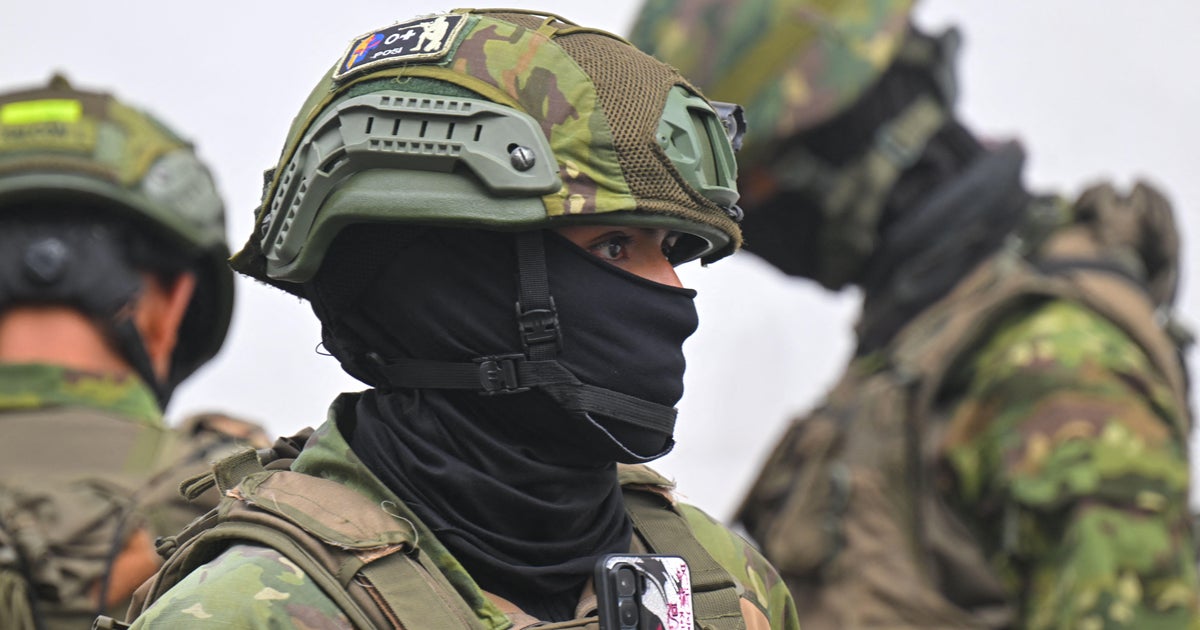
In a significant collaborative effort to combat drug trafficking and organized crime, American special operations forces recently participated alongside Ecuadorian military units in a targeted mission against a suspected criminal compound operated by Los Choneros, one of Ecuador’s most powerful and dangerous criminal organizations. The operation, named Lanza Marina (Marine Spear), focused on dismantling what authorities believe was a critical operational hub used for launching high-speed boats involved in drug smuggling activities along Ecuador’s coastal regions. According to U.S. officials who spoke anonymously to CBS News, the American commandos served primarily in advisory capacities, providing expertise, guidance, and on-the-ground support to their Ecuadorian counterparts as they executed the mission. This joint operation represents part of a broader international strategy aimed at disrupting and dismantling the sophisticated maritime trafficking networks that criminal organizations have developed to move illegal drugs across international waters and borders.
The collaboration between American and Ecuadorian forces didn’t happen in isolation but rather exists within a complex framework of international security cooperation agreements and legal authorities that govern how U.S. military personnel can assist foreign nations in combating terrorism and transnational crime. The Defense Department operates under several established legal mechanisms that permit American special operations forces to support partner nations in their security efforts. One particularly relevant authority is known as “127 Echo missions,” which refers to the legal provision outlined in Title 10 of the U.S. Code, Section 127e. This legislative authority specifically enables the U.S. military to provide support to foreign military forces engaged in operations against terrorist organizations. These types of missions, while coordinated at multiple levels of military and civilian leadership, fall under the oversight of the Assistant Secretary of Defense for Special Operations and Low-Intensity Conflict. Historically, such operations have required approval from the Secretary of Defense, who must also sign congressional notification letters informing lawmakers of these activities, ensuring appropriate civilian oversight of military operations conducted in partnership with foreign nations.
Expanded Authorization and Recent Policy Changes
The operational landscape for American military involvement in counterterrorism and counter-narcotics operations underwent significant changes under recent policy decisions. CBS News reported exclusively last year that President Trump implemented policy changes that rolled back previous restrictions on American military commanders, granting them broader authority to authorize airstrikes and special operations raids in areas outside conventional battlefields. This expansion of authority has practical implications for how quickly and flexibly U.S. forces can respond to emerging threats and support partner nations without waiting for approval through lengthy bureaucratic channels. Defense Secretary Pete Hegseth subsequently confirmed that the CBS News reporting on these expanded authorities was accurate, validating the significant shift in operational protocols. These policy changes have enabled a more aggressive posture toward disrupting drug trafficking organizations and have contributed to the intensification of military operations against suspected smuggling operations throughout the region.
The joint operations between the United States and Ecuador officially launched in early March, specifically targeting organizations that have been formally designated as terrorist entities by the U.S. government. These collaborative efforts occurred alongside unilateral U.S. military strikes against boats in the Caribbean Sea and Eastern Pacific Ocean that the Trump administration identified as being involved in drug smuggling activities. The military campaign against suspected drug-running vessels has been particularly intensive, with strike operations beginning in September 2025 and continuing through subsequent months. According to available data, these operations have resulted in at least 47 separate strikes, which have collectively resulted in the deaths of approximately 163 individuals suspected of involvement in drug trafficking operations. Marine General Francis Donovan, who serves as the commander of U.S. Southern Command, the military organization responsible for American defense operations in Central and South America, publicly praised the Ecuadorian armed forces last month, stating: “We commend the men and women of the Ecuadorian armed forces for their unwavering commitment to this fight, demonstrating courage and resolve through continued actions against narco-terrorists in their country.”
Formal Designation of Los Choneros as Terrorist Organization
The legal and policy framework supporting these military operations received significant reinforcement when Secretary of State Marco Rubio officially announced that Los Choneros had been designated both as a Foreign Terrorist Organization and as Specially Designated Global Terrorists. These two designations, while related, carry different implications and operate through different governmental mechanisms, creating a comprehensive approach to targeting the organization. The Foreign Terrorist Organization designation, which is conferred by the State Department, carries substantial weight under both criminal law and national security doctrine, creating legal consequences for anyone providing material support to the organization and establishing immigration-related repercussions for members and associates. The Specially Designated Global Terrorist designation, administered by the Treasury Department rather than the State Department, operates through a different mechanism focused on financial warfare. This designation targets the economic infrastructure that enables terrorist organizations to operate, allowing authorities to freeze assets, prevent financial transactions, and cut off the monetary lifelines that these organizations depend upon to fund their operations, pay their members, and expand their influence.
The Evolution and Structure of Los Choneros
Understanding the threat posed by Los Choneros requires examining the organization’s history and evolution over the past three decades. For many years, this criminal network has exerted tremendous influence over Ecuador’s security situation, playing a major role in the country’s escalating violence and instability. The organization’s origins trace back to the 1990s, when it emerged as a regional gang operating in specific areas of Ecuador. However, unlike many traditional criminal hierarchies with clear command structures and centralized leadership, Los Choneros adopted a notably different organizational model. According to assessments by the National Counter Terrorism Center, the group developed a decentralized structure that functions more like a franchise operation than a conventional pyramid-style organization. This innovative structure has proven remarkably resilient and adaptable, allowing loosely aligned factions to operate semi-independently under the Los Choneros name while still benefiting from the organization’s reputation, resources, and connections. This decentralized approach has enabled the network to expand its operations and adapt to changing circumstances even when authorities successfully target and eliminate individual leaders, as new factions can emerge or existing cells can continue operations without requiring direction from a central command.
The international connections that Los Choneros has cultivated represent a particularly concerning aspect of the organization’s evolution and capabilities. Beyond Ecuador’s borders, the group has established important relationships with some of the world’s most powerful and sophisticated transnational criminal networks. Most notably, Los Choneros has forged operational ties with Mexico’s infamous Sinaloa cartel, one of the most powerful and sophisticated drug trafficking organizations in the world, known for its extensive smuggling infrastructure, corruption networks, and violent enforcement capabilities. Additionally, the Ecuadorian organization has developed connections with criminal groups operating in Albania, creating a truly global network that spans multiple continents. These international partnerships have elevated Los Choneros from a regional criminal problem to a significant player in global drug trafficking routes, enabling the organization to move cocaine and other drugs from South American production areas through multiple transit routes to lucrative markets in North America and Europe. According to current intelligence assessments from the National Counter Terrorism Center, Los Choneros now comprises approximately 12,000 members, making it a substantial force within the criminal landscape. While the organization’s primary operational base remains in Manabi province in Ecuador, the group’s presence has expanded significantly beyond this core territory. Intelligence indicates that Los Choneros maintains active operations in at least ten additional Ecuadorian provinces, demonstrating its nationwide reach within the country, and has established presences in neighboring countries including Colombia and Peru, enabling cross-border operations and providing safe havens when pressure from law enforcement intensifies in any single jurisdiction. This joint operation between American and Ecuadorian forces represents an important step in the ongoing effort to dismantle this dangerous organization and reduce its capacity to contribute to violence, instability, and the flow of illegal drugs that ultimately reach communities throughout the Americas.