

A Night of Terror at the White House Correspondents’ Dinner: An Inside Account
The Unthinkable Becomes Reality
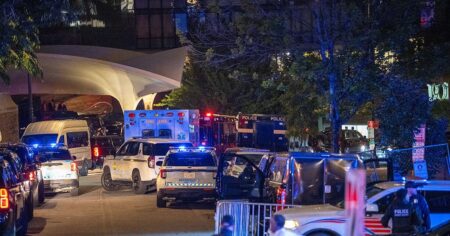
The annual White House Correspondents’ Association dinner, traditionally an evening of light-hearted celebration of press freedom and the First Amendment, transformed into a scene of chaos and terror when gunfire erupted in the ballroom of the Washington Hilton. What was supposed to be a glamorous gathering honoring journalism instead became yet another stark reminder that political violence has seeped deeply into American public life. For those of us in attendance, the contrast couldn’t have been more jarring – one moment we were enjoying entertainment and camaraderie, and the next we were diving under tables as shots rang out and the smell of gunpowder filled the air.
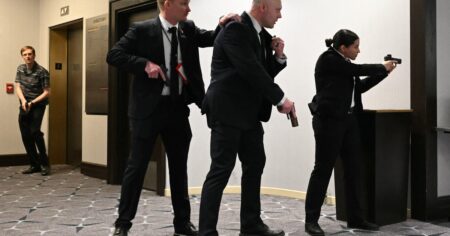
The assailant, identified as 31-year-old Cole Tomas Allen from Torrance, California, managed to breach a security checkpoint with a shotgun, handgun, and multiple knives before being tackled by Secret Service agents mere feet from entering the ballroom where President Trump, Vice President, Cabinet members, Congressional leaders, and hundreds of journalists had gathered. In those terrifying seconds, the professionalism and quick response of law enforcement prevented what could have been an unthinkable tragedy. A Secret Service agent was struck during the brief exchange of gunfire but was protected from serious injury by his bulletproof vest – a small mercy in an otherwise harrowing night.
The Investigation Unfolds
Acting Attorney General Todd Blanche, who was also in attendance at the dinner, provided crucial updates about the ongoing investigation in the hours following the attack. According to Blanche, Allen appeared to be targeting Trump administration officials broadly, though investigators were still working to understand his specific motivations and whether he acted alone or had connections to any larger group. The suspect had traveled from Los Angeles to Washington, D.C. by train, stopping in Chicago along the way, and had been staying at the Washington Hilton in the days leading up to the attack. This detail raised important questions about how someone could transport multiple firearms across state lines without detection – a loophole that doesn’t exist when traveling by air, where weapons must be declared.
The FBI worked through the night executing search warrants on Allen’s hotel room, his residence in California, and his electronic devices. White House officials reported that authorities discovered anti-Trump and anti-Christian rhetoric on the suspect’s social media accounts. Perhaps most chillingly, Allen’s own brother had alerted local police about alarming writings he had shared with family members before the incident, highlighting once again the warning signs that often precede acts of violence. Allen, described as a teacher who had recently completed a master’s degree in computer science and had been named “teacher of the month” in 2024, purchased both firearms legally in California. He faces federal charges including using a firearm during a violent crime and assault on a federal officer with a dangerous weapon, with the possibility of additional charges as the investigation continues.
Voices from Inside the Ballroom
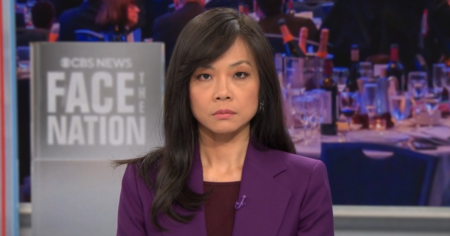
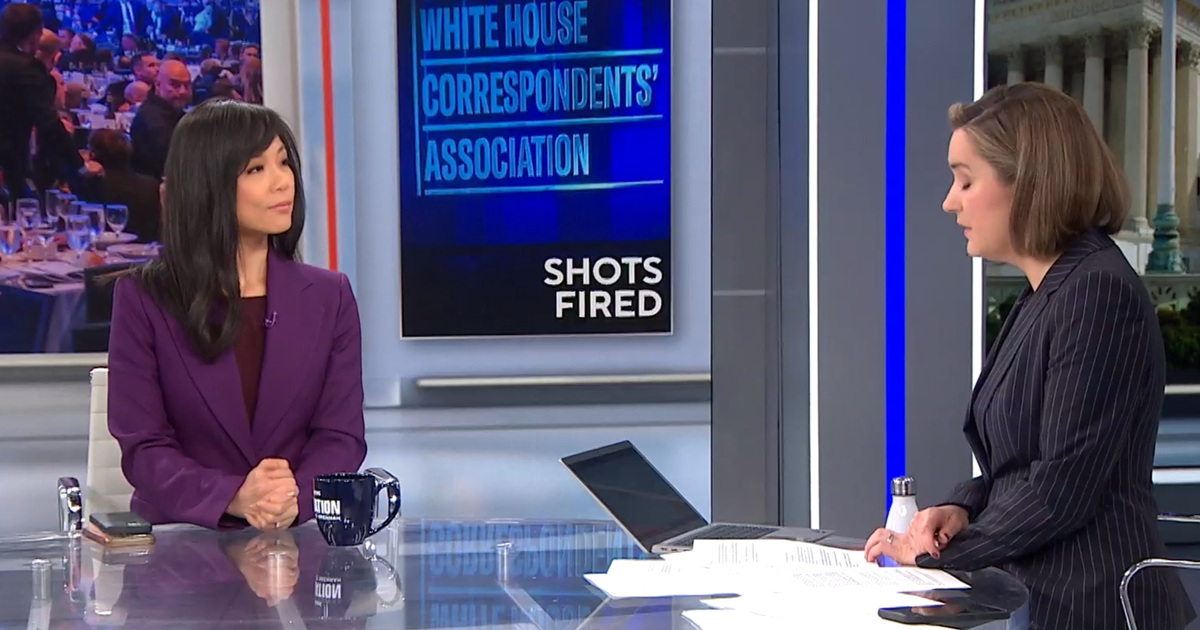
CBS White House correspondent Weijia Jiang, serving as president of the White House Correspondents’ Association, had the impossible task of hosting an evening that began in celebration and ended in terror. She had just welcomed everyone and introduced the evening’s entertainer when chaos erupted. Jiang described seeing SWAT team members rush to the head table and order everyone to the ground, crawling off stage as the president was whisked away by Secret Service. Her grace under pressure was remarkable as she later had to address the shaken crowd, not knowing whether there was still an active threat, all while worrying about her own family – her 7-year-old daughter, parents, and husband – who were all in the audience for what should have been a proud moment in her career.
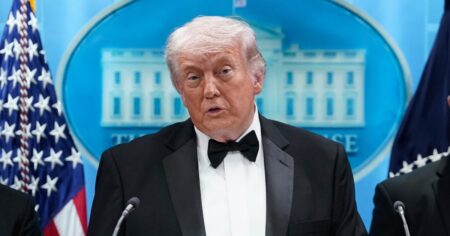
President Trump, characteristically defiant, insisted on returning to address both the press and the nation rather than simply leaving for the White House. He called the situation “shocking” but said such incidents were part of what he considers “a dangerous profession.” His message emphasized resilience, stating that America would not be intimidated by such violence and calling on all Americans to “recommit with their hearts to resolve our differences peacefully.” It was a tone of unity rarely heard from this president, who has frequently attacked the press as “the enemy of the people” and engaged in numerous lawsuits against media organizations.
A Broader Crisis of Political Violence
Congressman Jamie Raskin of Maryland, himself a survivor of the January 6th Capitol attack, brought important perspective to the conversation about what happened. Sitting near the perimeter when the shooting began, Raskin found himself on the floor once again, this time alongside Carrie Kennedy, whose father Robert F. Kennedy was assassinated by a gunman. Her observation was particularly poignant: schoolchildren across America deal with this kind of terror regularly without the resources to process their trauma or the protection that surrounded those in that ballroom. Raskin emphasized that while the White House Correspondents’ Dinner attack grabbed national attention, somewhere between 275 and 300 people are shot every day in America, with more than a hundred losing their lives daily. The violence we experienced, he argued, is not an isolated incident but part of a larger epidemic tearing at the fabric of American society.
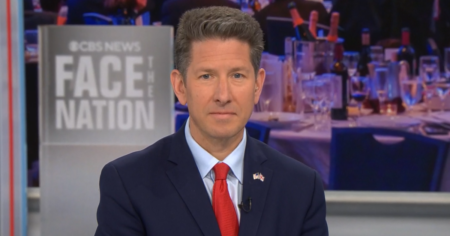
The threat environment, as homeland security expert Samantha Vinograd explained, is the most complex in our nation’s history. Lone actors who radicalize to violence, often through online echo chambers, represent a particularly challenging threat that traditional security paradigms may no longer be sufficient to address. We’re facing a moment where Americans must honestly ask themselves: is anywhere truly safe? The answer appears increasingly uncertain, as threats against Supreme Court justices have surged to 564 incidents last year, and U.S. Capitol Police reported nearly 15,000 threats against lawmakers, staff, and their families. Multiple Cabinet members now live on military bases for protection, while federal and state officials across the country face growing harassment without such fortress-like security.
International Implications and Moving Forward
Even America’s closest allies are feeling the reverberations of this volatile security environment. British Ambassador Sir Christian Turner, who was also in the ballroom, spoke about how his training from postings in unstable countries around the world unexpectedly came into play in what should have been one of the safest rooms in America. Despite the attack occurring just before King Charles and Queen Camilla’s planned state visit to Washington, Turner expressed confidence that security professionals would ensure the safety of the British monarchs while acknowledging that his teams worked through the night reassessing operational plans. The incident serves as a sobering backdrop to what was meant to be a celebration of 250 years of diplomatic relations between the United States and the United Kingdom.
The deeper question facing America is how we address not just the security failures that allowed someone with multiple weapons to get as close as he did to such a heavily protected event, but the underlying hatred and division that motivates such violence in the first place. As Margaret Brennan powerfully noted in her closing remarks, “A night to celebrate the First Amendment abruptly ended by a gunman permitted by the Second Amendment to own those weapons.” This tension between constitutional freedoms and public safety has never felt more urgent. The threat of violence is now simply a cost of public life in America, permeating our politics and discouraging good people – particularly women and mothers – from entering public service at all.
We must find a way to stop the hate that corrodes our democracy before it completely destroys our civility and our ability to disagree without resorting to violence. This means looking beyond just security protocols and metal detectors to address the radicalization happening in online spaces, the dehumanizing rhetoric aimed at public officials and journalists, and the toxic political environment where attacking “the other side” has become more important than solving problems. Every American has a role to play in this effort – speaking up when they see someone in their circle showing signs of radicalization, demanding better from our political leaders regardless of party, and rediscovering what Congressman Raskin called “the great American tradition of non-violence” exemplified by leaders like Dr. Martin Luther King Jr. The Secret Service may have successfully prevented tragedy that night, but preventing the next attempt requires something much harder: changing hearts and minds across a deeply divided nation. Until we address the root causes of political violence, we’ll continue living in a country where attending a dinner honoring freedom of the press requires the same security as a war zone.