


Senator Tillis Clears Path for New Federal Reserve Chairman After Investigation Ends
The Breakthrough That Ended the Standoff
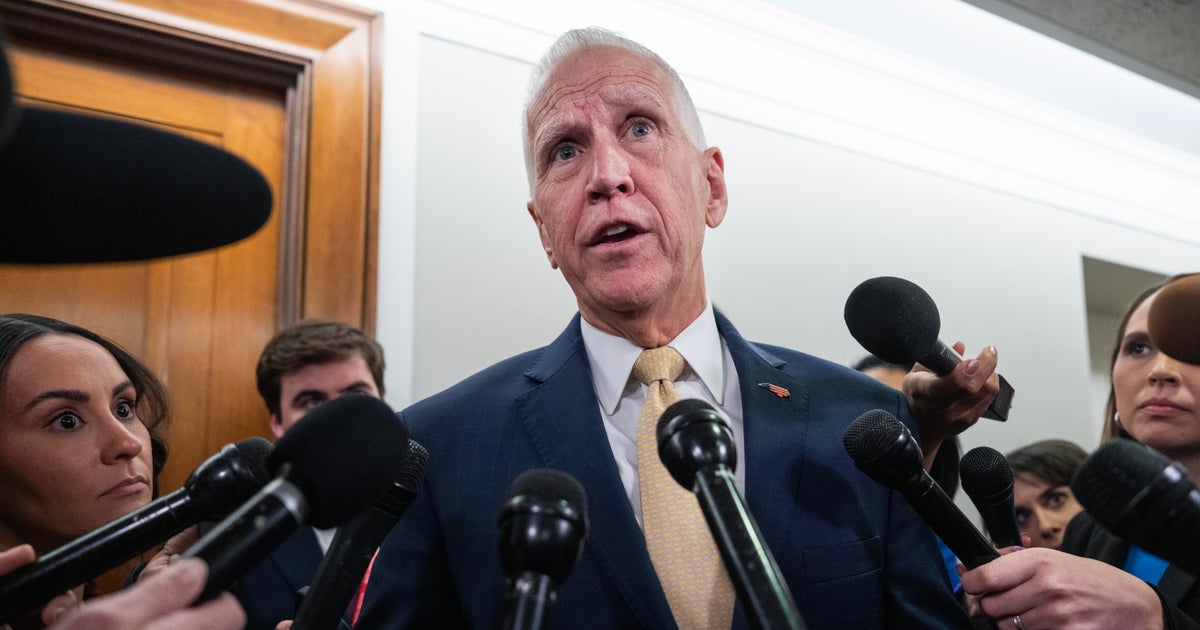
After weeks of tension and political maneuvering, Senator Thom Tillis of North Carolina has announced he’s ready to support Kevin Warsh’s nomination as the next chairman of the Federal Reserve’s Board of Governors. This decision marks a significant turning point in what had become a contentious political standoff. The Republican senator, who serves on the influential Senate Banking Committee, had previously blocked all nominations to the central bank, refusing to move forward until the Justice Department closed its investigation into current Fed Chairman Jerome Powell. That breakthrough finally came on Friday when U.S. Attorney Jeanine Pirro announced her office would be ending its probe into Powell and the Fed’s controversial $2.5 billion renovation project of its Washington, D.C., headquarters. Speaking on NBC’s “Meet the Press” Sunday, Tillis confirmed he had received concrete assurances from the Justice Department that the investigation is genuinely closed and would only be reopened under very specific circumstances—namely, if the Fed’s inspector general, who is conducting a separate examination of the renovation project, makes a criminal referral. With these guarantees in hand, Tillis expressed his confidence in the nominee, stating plainly, “I am prepared to move on with the confirmation of Mr. Warsh. I think he’s going to be a great Fed chair.”
The Senator’s Position on Federal Reserve Independence
Senator Tillis has been unwavering in his reasoning for blocking the nominations, framing his opposition not as a rejection of Kevin Warsh’s qualifications but as a principled stand for the independence of the Federal Reserve. In a statement he shared on social media platform X, Tillis emphasized that “it is time for the Federal Reserve to move beyond this distraction and return its full attention to its mission.” He elaborated on his position, explaining that from the very beginning, he viewed the U.S. Attorney’s Office criminal investigation into Chairman Powell as a serious threat to the Fed’s independence—something that simply couldn’t be allowed to continue while confirming a new leader. The senator made clear that his blockade wasn’t about the individual being nominated but about the integrity of the institution itself. Interestingly, while Tillis celebrated the end of the criminal investigation, he explicitly welcomed the inspector general’s separate investigation into the renovation project, calling it “a necessary and appropriate measure” and expressing confidence that it would be “conducted thoroughly and professionally.” This distinction is important because it shows Tillis isn’t opposed to oversight of the Fed’s spending decisions; rather, he objected to what he and others viewed as politically motivated criminal prosecution that could undermine the central bank’s ability to make decisions free from political pressure.
The Timeline and What Comes Next
The timing of this development is particularly significant given the approaching deadline for leadership transition at the Federal Reserve. Jerome Powell’s term as Fed chairman is set to expire on May 15, creating a relatively narrow window for the Senate to confirm his successor. President Trump announced back in January that he had selected Kevin Warsh to lead the central bank’s board, and Warsh has already appeared before the Senate Banking Committee for his confirmation hearing last week. During that hearing, Tillis made his position crystal clear, reiterating that while he supported Warsh’s nomination and believed he was qualified for the position, he simply wouldn’t vote to confirm him until the Justice Department ended its investigation into Powell. Now, with that obstacle removed, the process can move forward rapidly. The Banking Committee is scheduled to convene on Wednesday to vote on Warsh’s nomination, and the math appears favorable for his confirmation. The committee consists of 13 Republicans and 11 Democrats, meaning that if Republicans vote along party lines, Warsh should easily advance to a full Senate vote. This Wednesday vote will be closely watched as an indicator of whether there will be any remaining opposition to the nomination or if the path is now clear for Warsh to take the helm of the nation’s central bank in mid-May.
The Controversial Investigation That Started It All
The investigation that caused all this political turbulence centered on the Federal Reserve’s massive renovation of its Washington, D.C., headquarters—a project that has been plagued by delays and cost overruns. Powell revealed back in January that the Fed had received grand-jury subpoenas as part of a criminal probe involving the years-long renovation project. The situation took a dramatic turn in March when U.S. District Judge James Boasberg stepped in and blocked the subpoenas, issuing a ruling that was remarkable in its directness. Judge Boasberg found that the subpoenas were part of an effort to pressure Powell into either voting to lower interest rates or resigning from his position altogether. This ruling essentially validated concerns that the investigation was politically motivated rather than a legitimate criminal inquiry. Despite this judicial rebuke, U.S. Attorney Jeanine Pirro has vowed to appeal the judge’s decision, which initially raised questions about whether the investigation would truly be closed. However, Senator Tillis clarified on Sunday that the Justice Department had assured him any appeal would be narrowly focused on the judge’s legal basis for quashing the subpoenas rather than serving as a vehicle for resuming the investigation itself. This distinction was apparently enough to satisfy Tillis’s concerns about the Fed’s independence moving forward.
The Political Context and Presidential Pressure
Understanding this situation requires acknowledging the broader political context, particularly President Trump’s well-documented frustrations with Jerome Powell over interest-rate decisions. The president has frequently and publicly vented his dissatisfaction with Powell’s approach to monetary policy, believing that interest rates should be lower to stimulate economic growth. Last year, Trump even suggested that the construction problems at the Fed could potentially be grounds to fire Powell—a remarkable statement that blurred the lines between legitimate oversight of a spending issue and political pressure on monetary policy. The renovation project itself has become a symbol of government waste and mismanagement in some political circles. First approved back in 2017, the project encompasses two buildings and is now set to be completed next year—years behind schedule. More troubling to critics, the estimated cost has ballooned from an initial $1.9 billion to nearly $2.5 billion. The Federal Reserve has attributed this massive cost increase to several factors, including significant rises in the cost of materials, equipment, and labor—explanations that mirror cost overruns in construction projects across the country during the same period. It’s worth noting that the Federal Reserve is self-funded, meaning taxpayers aren’t directly paying for the renovation, but the size of the cost increase has still drawn scrutiny and criticism from lawmakers concerned about financial management at one of the nation’s most important institutions.
Ongoing Oversight and What It Means for the Federal Reserve’s Future
While the criminal investigation has ended, oversight of the renovation project is far from over, and this continuing scrutiny may actually be healthier for the institution than the criminal probe. The Fed’s inspector general’s office, led by Michael Horowitz, has already conducted two audits regarding the bank’s renovation projects, demonstrating that there are proper channels for investigating spending issues without resorting to criminal subpoenas. Notably, Powell himself told the Senate last year that he had asked the watchdog to take another look at the ongoing overhaul of the Fed’s headquarters, showing a willingness to submit to appropriate oversight. The inspector general’s office confirmed on Friday that it is “actively working” to finish its review of the project and committed to making its findings available to both the public and Congress. This approach—using an independent inspector general rather than criminal investigators—represents exactly the kind of accountability mechanism that protects institutional independence while still ensuring responsible spending. As Kevin Warsh prepares to potentially take over leadership of the Federal Reserve, he’ll be inheriting an institution that has been through significant political turbulence but has ultimately maintained its independence. The resolution of this standoff, with the criminal investigation ended but appropriate oversight continuing, may actually set a positive precedent for how to balance accountability with the institutional independence that is so crucial for a central bank’s effectiveness. For the Federal Reserve, for the Senate, and for the American economy that depends on a well-functioning central bank, the end of this particular political drama comes not a moment too soon.